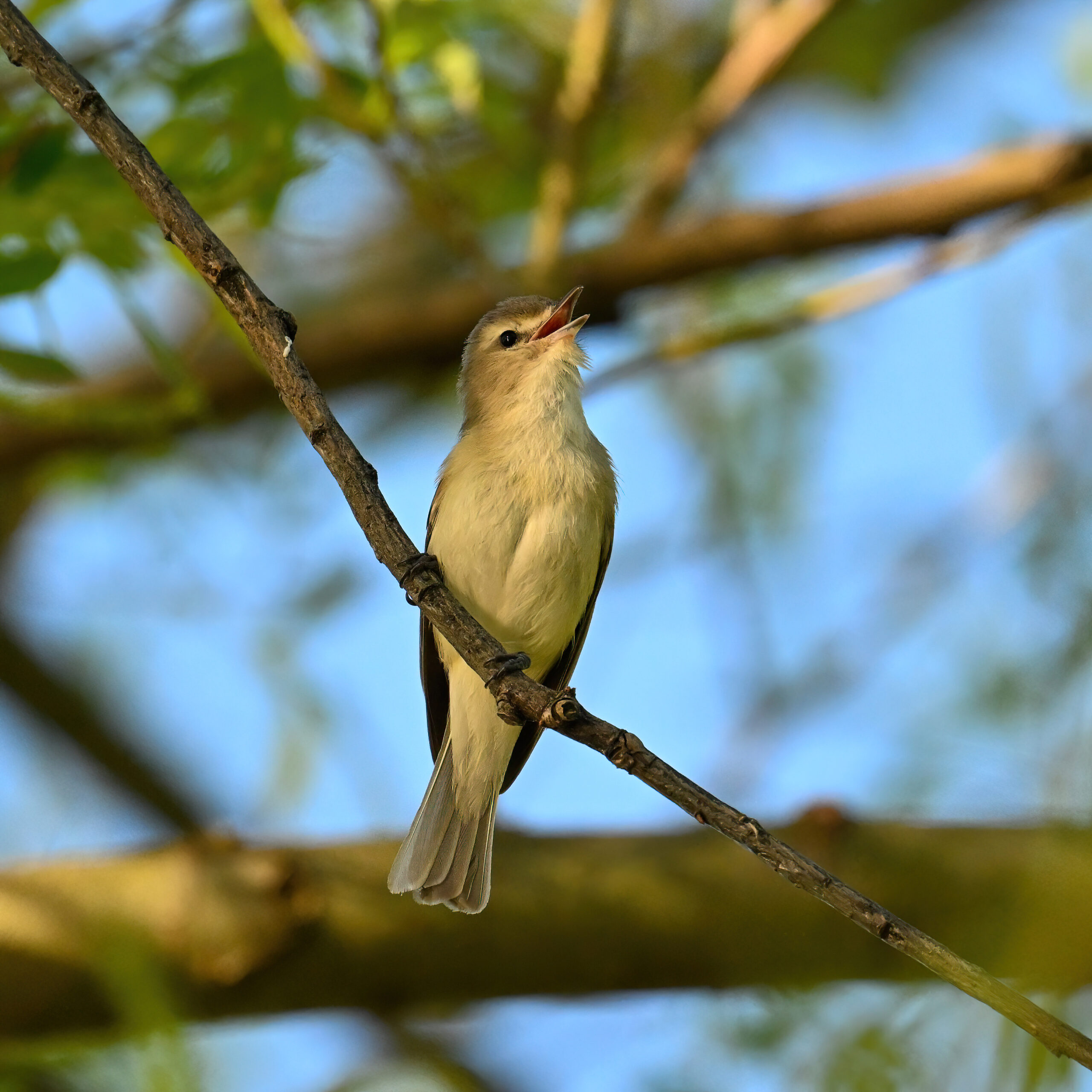
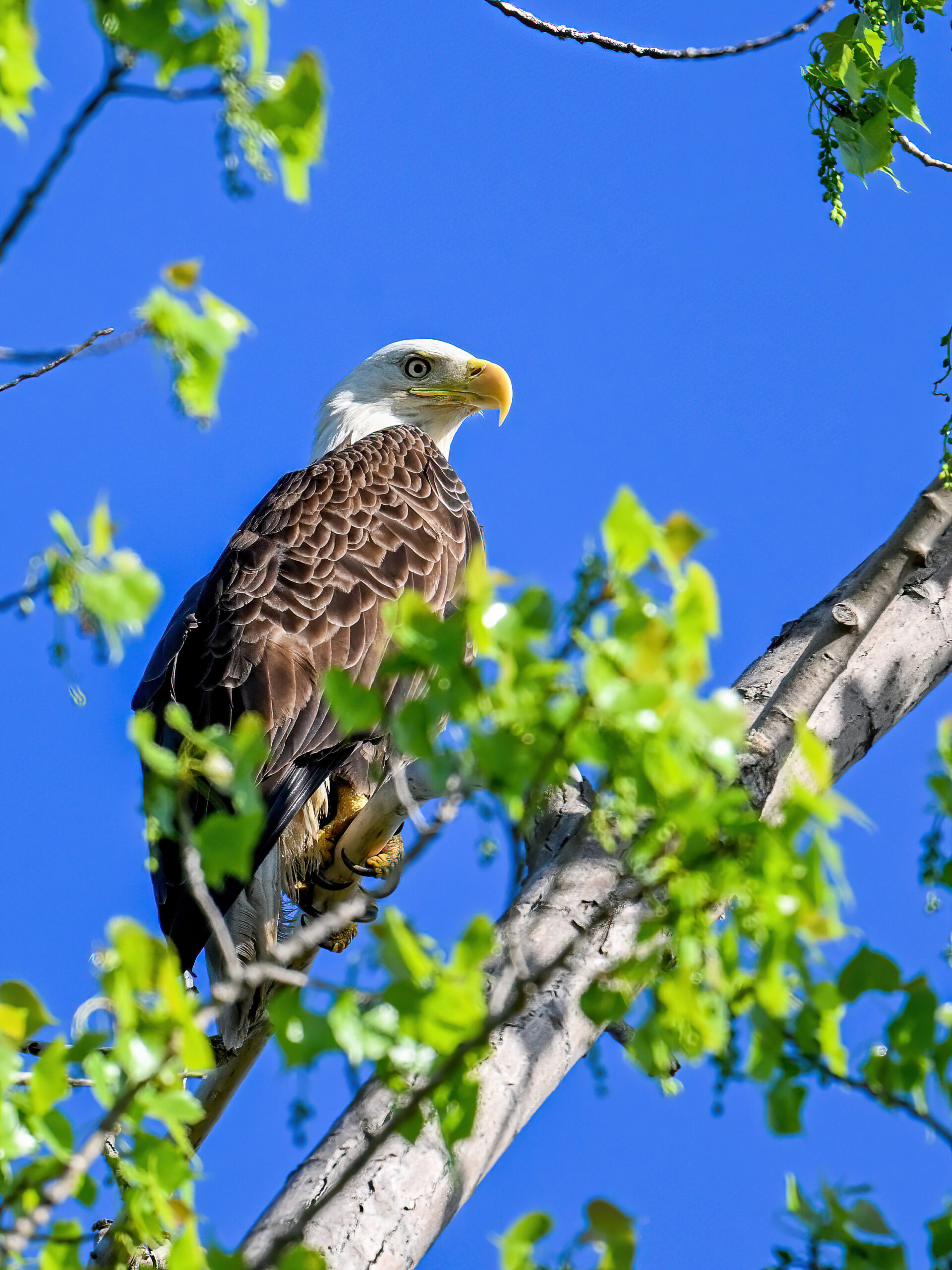
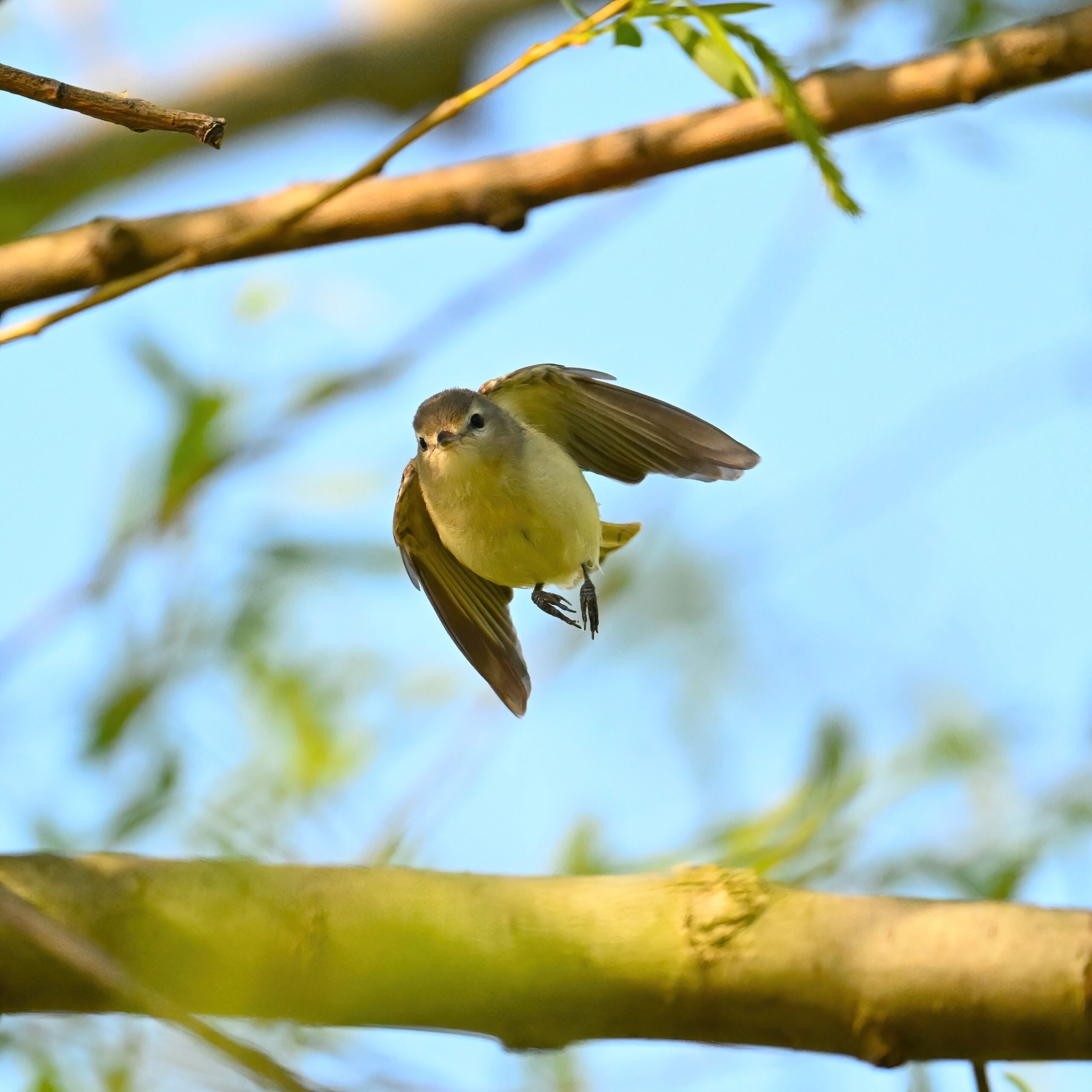
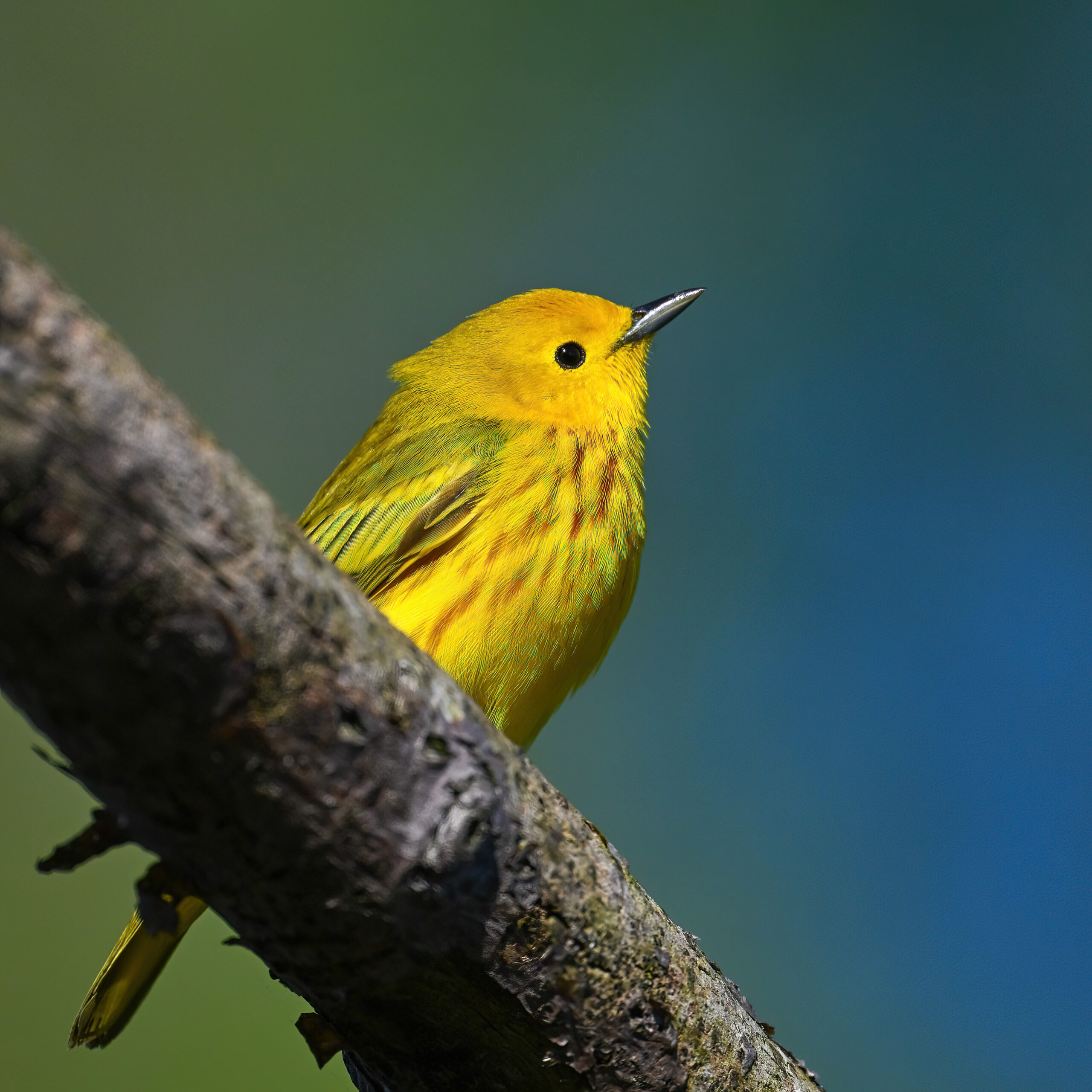
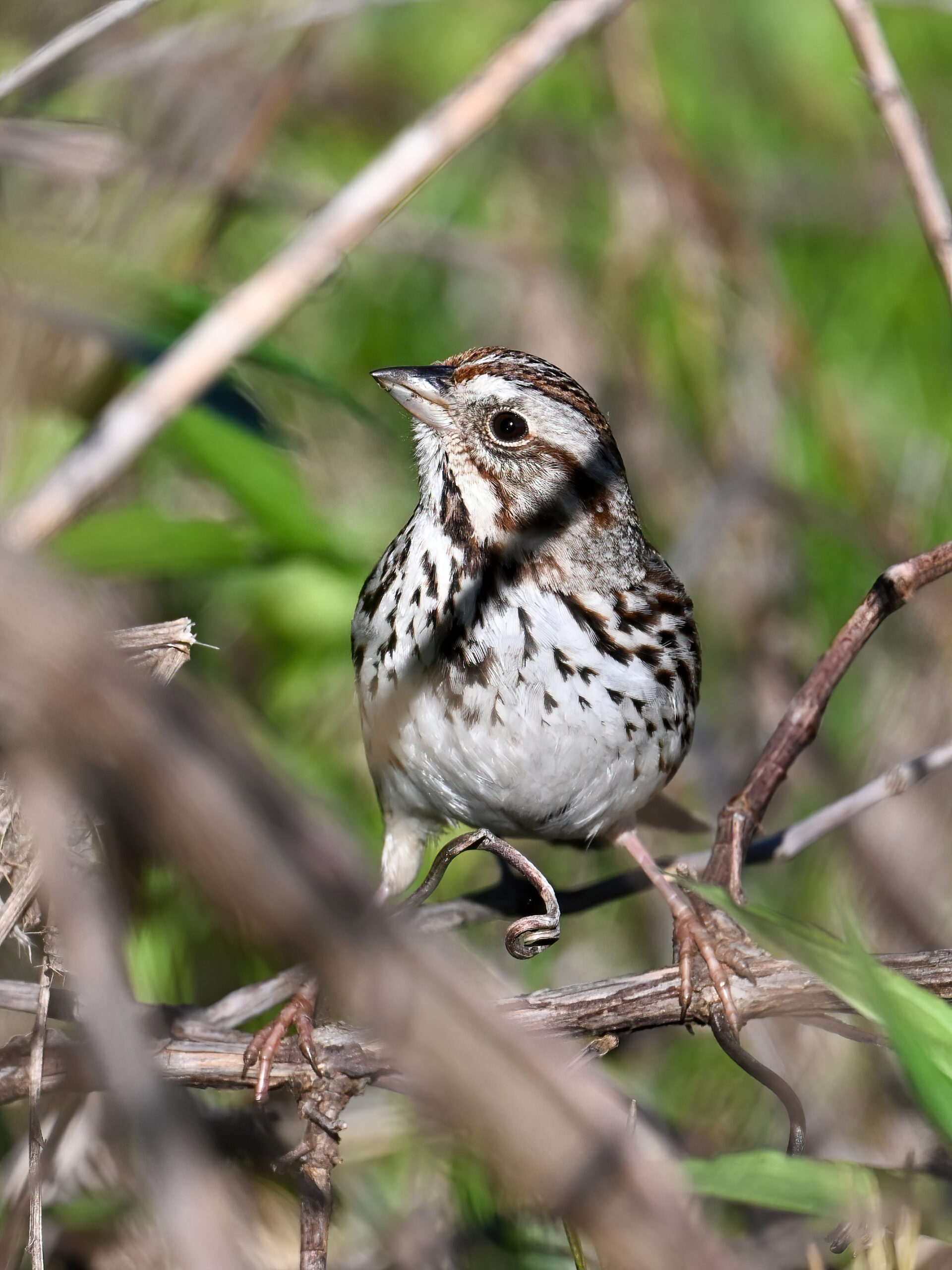
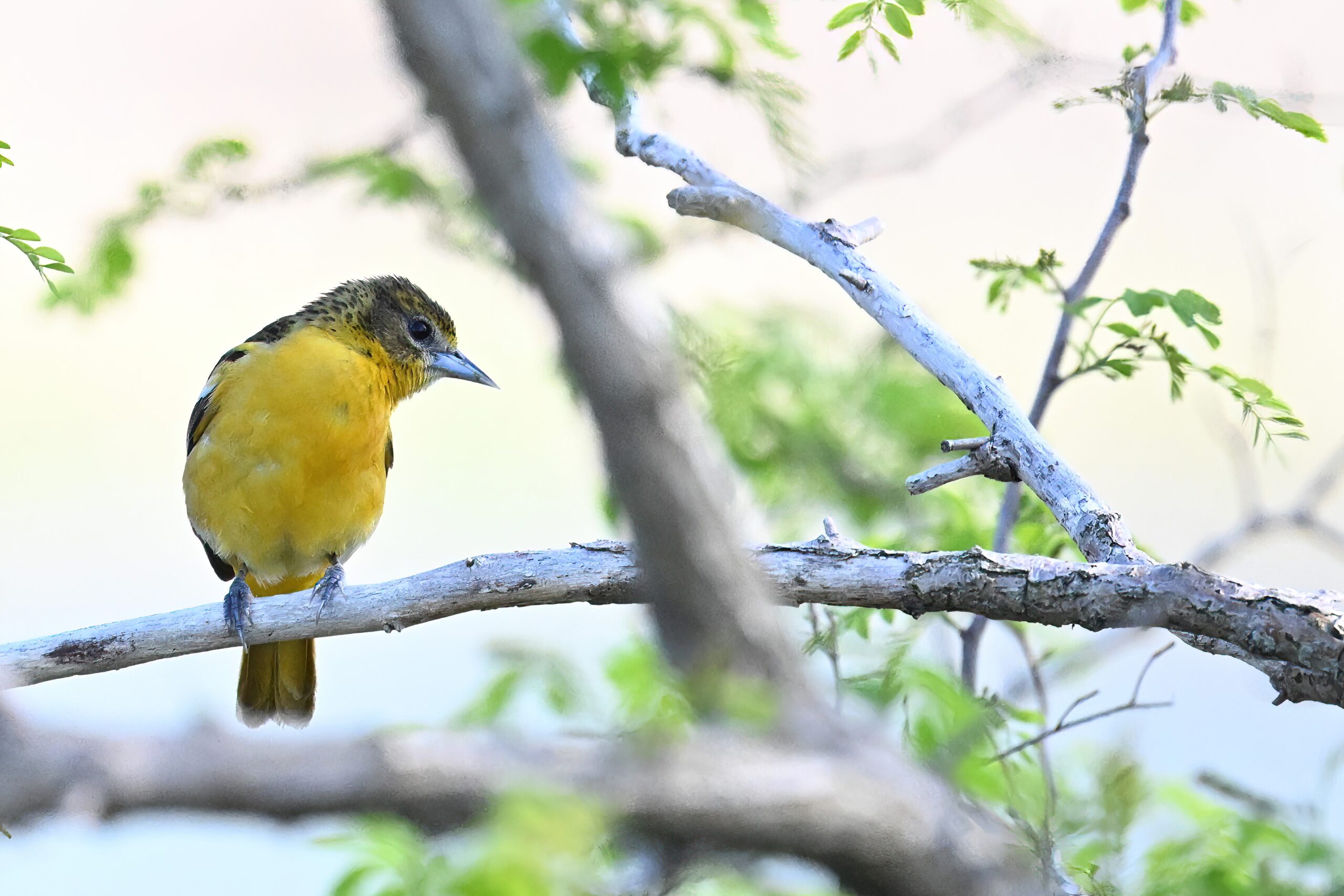
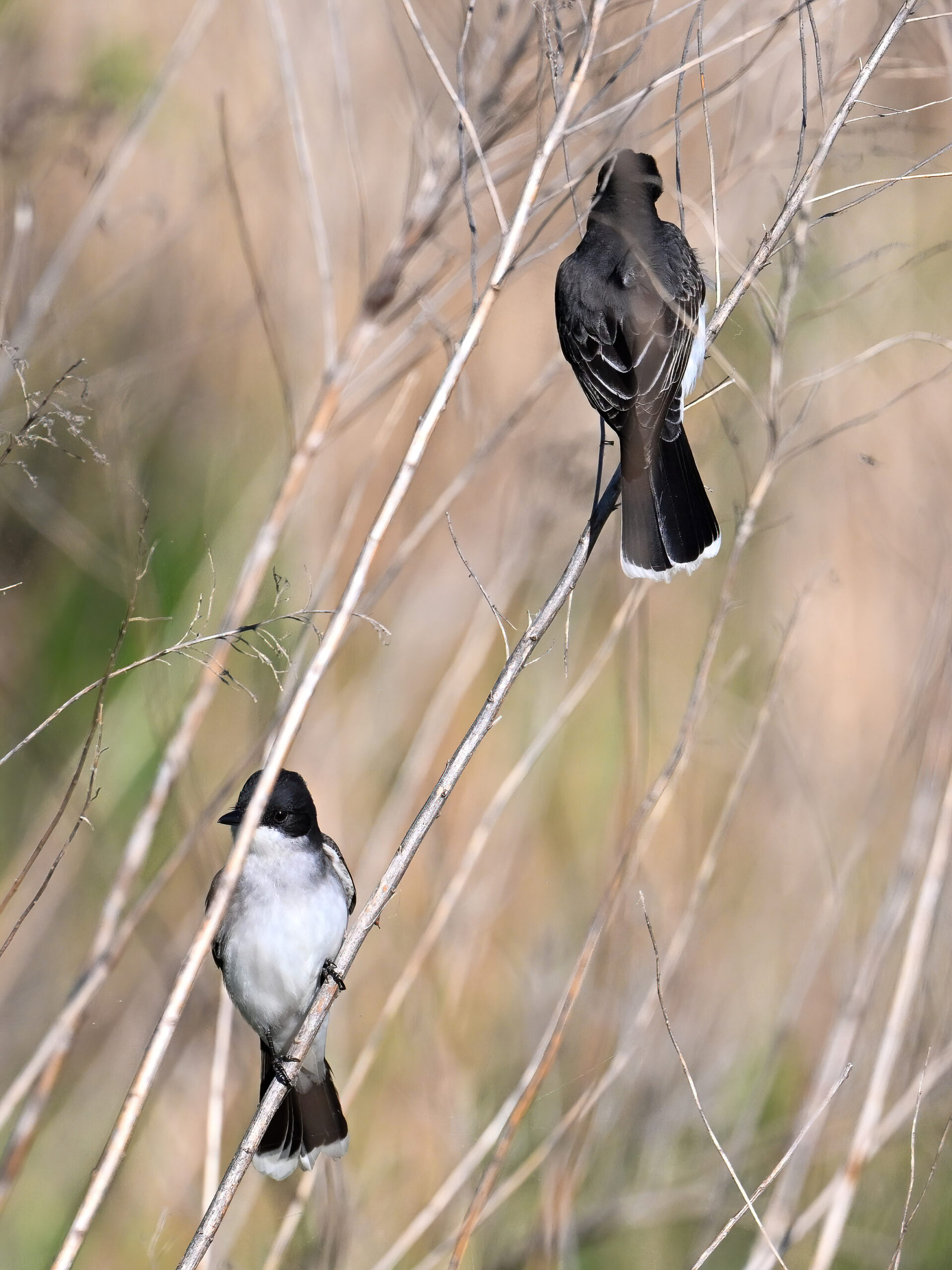
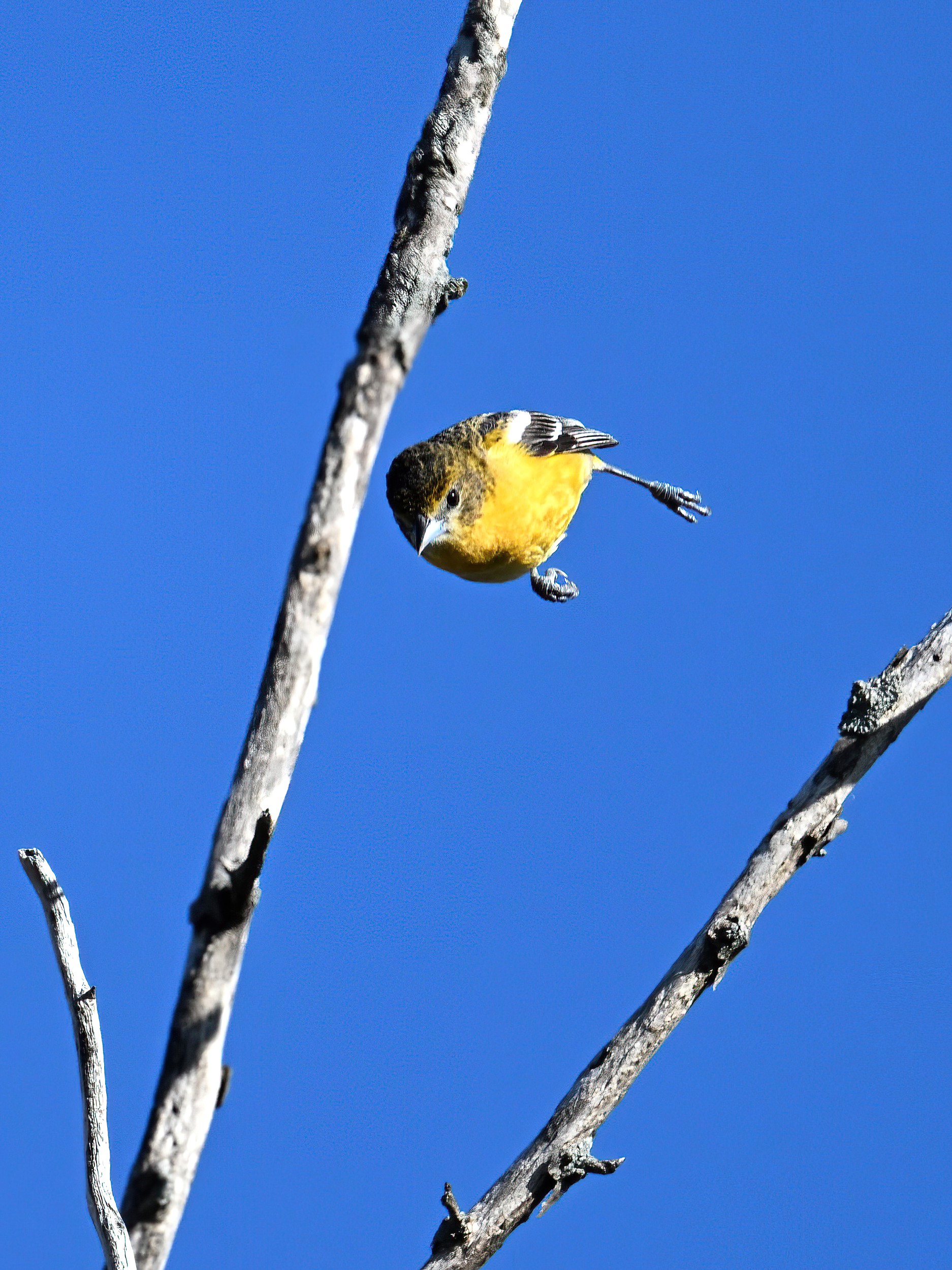
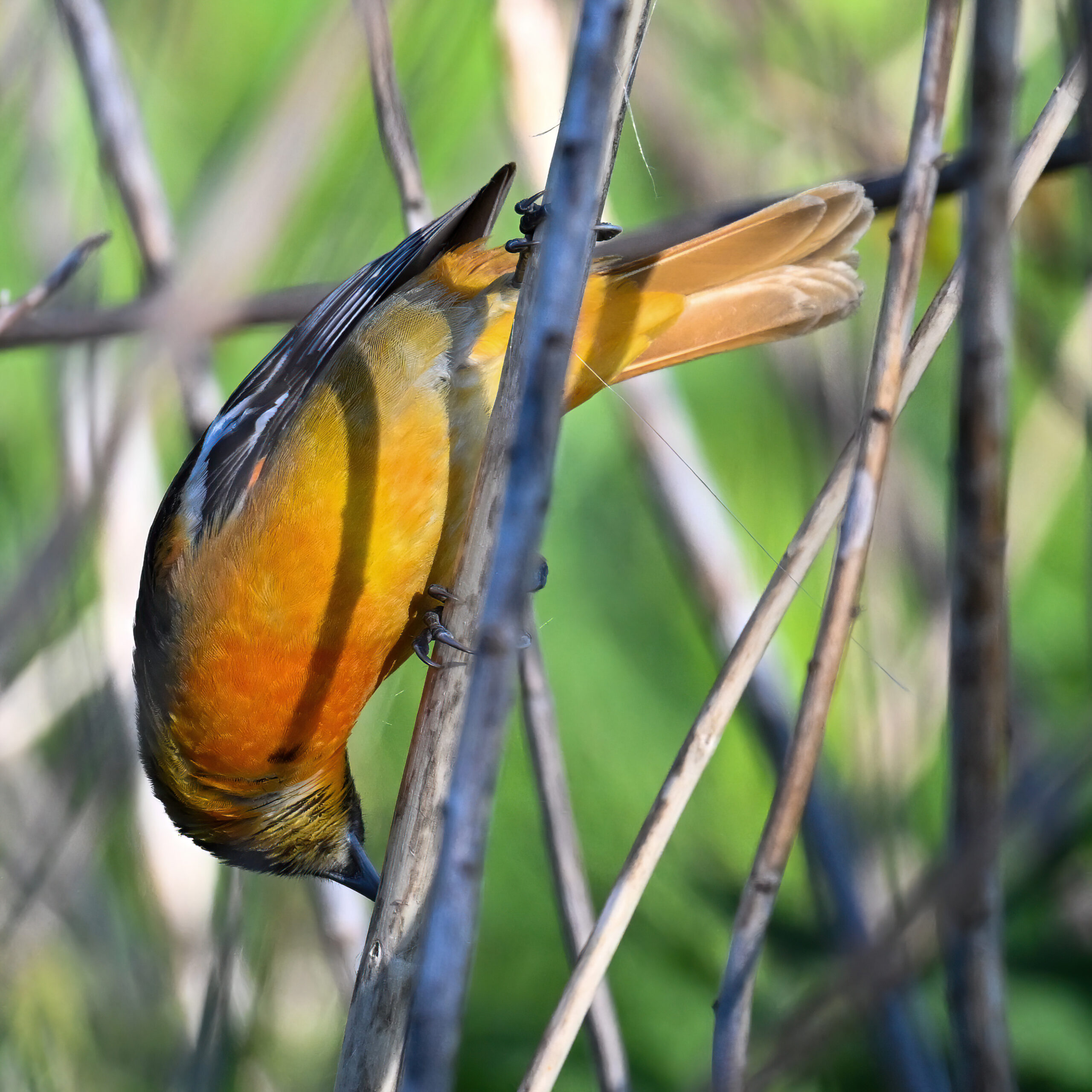
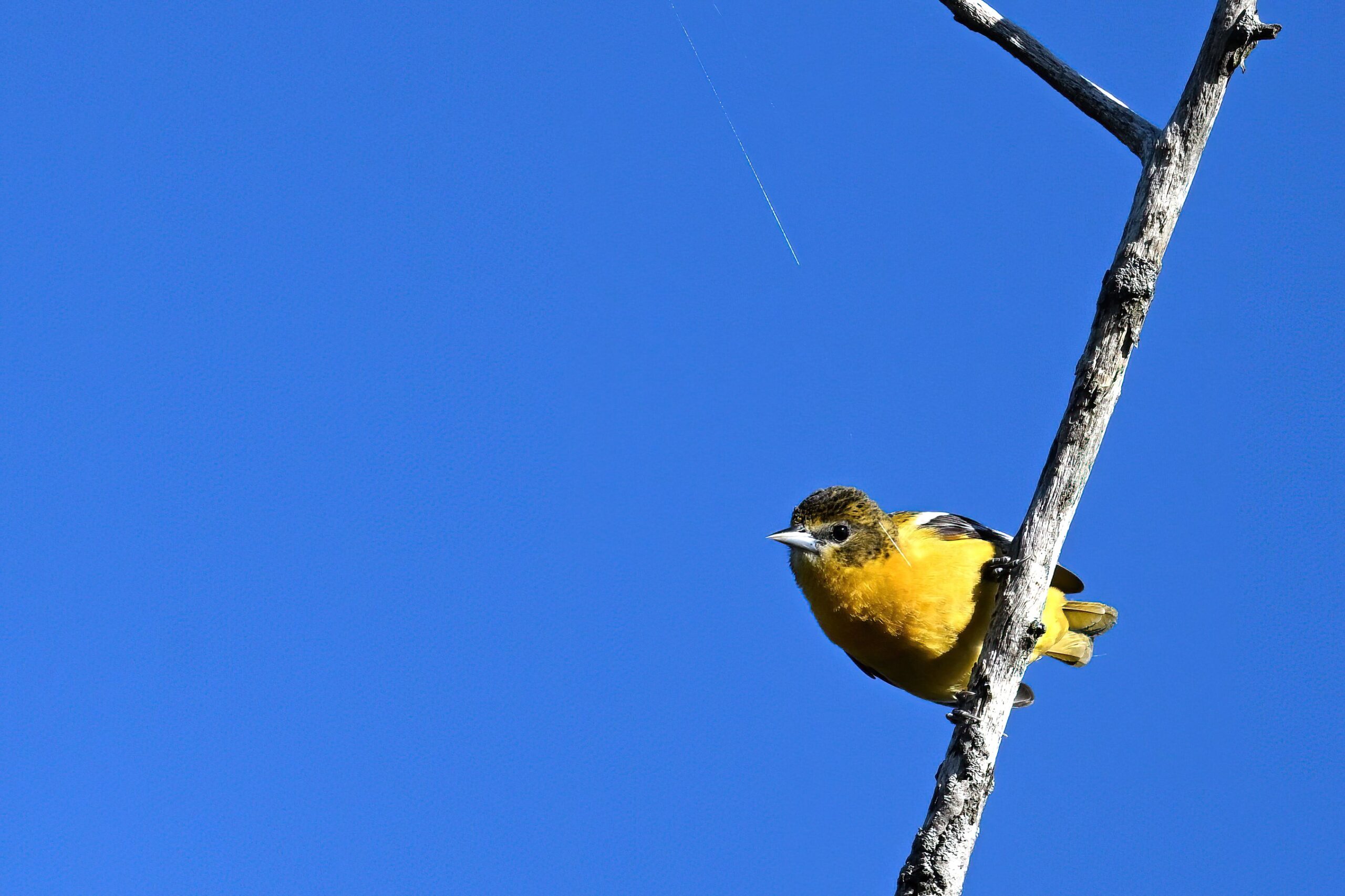
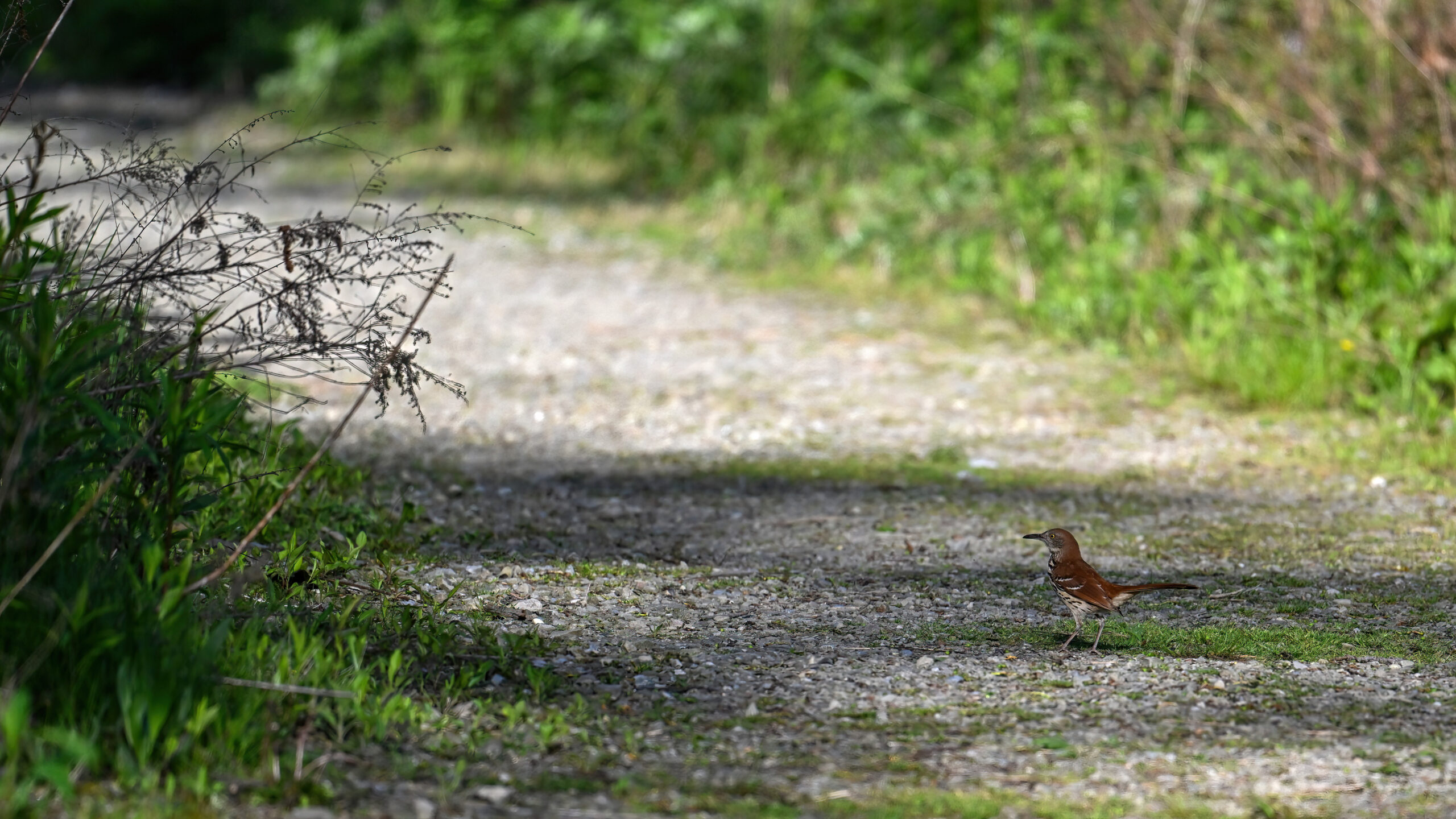
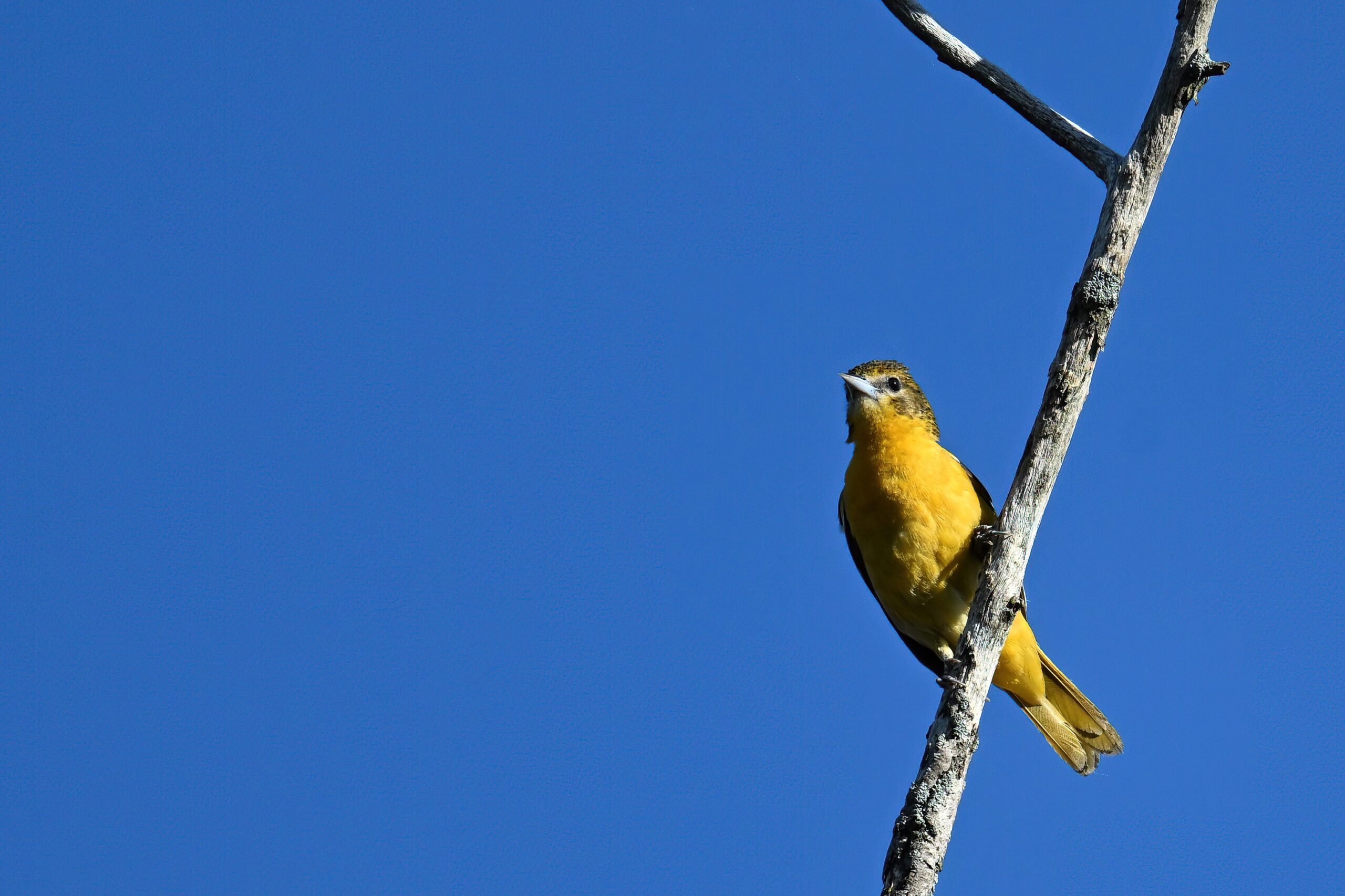
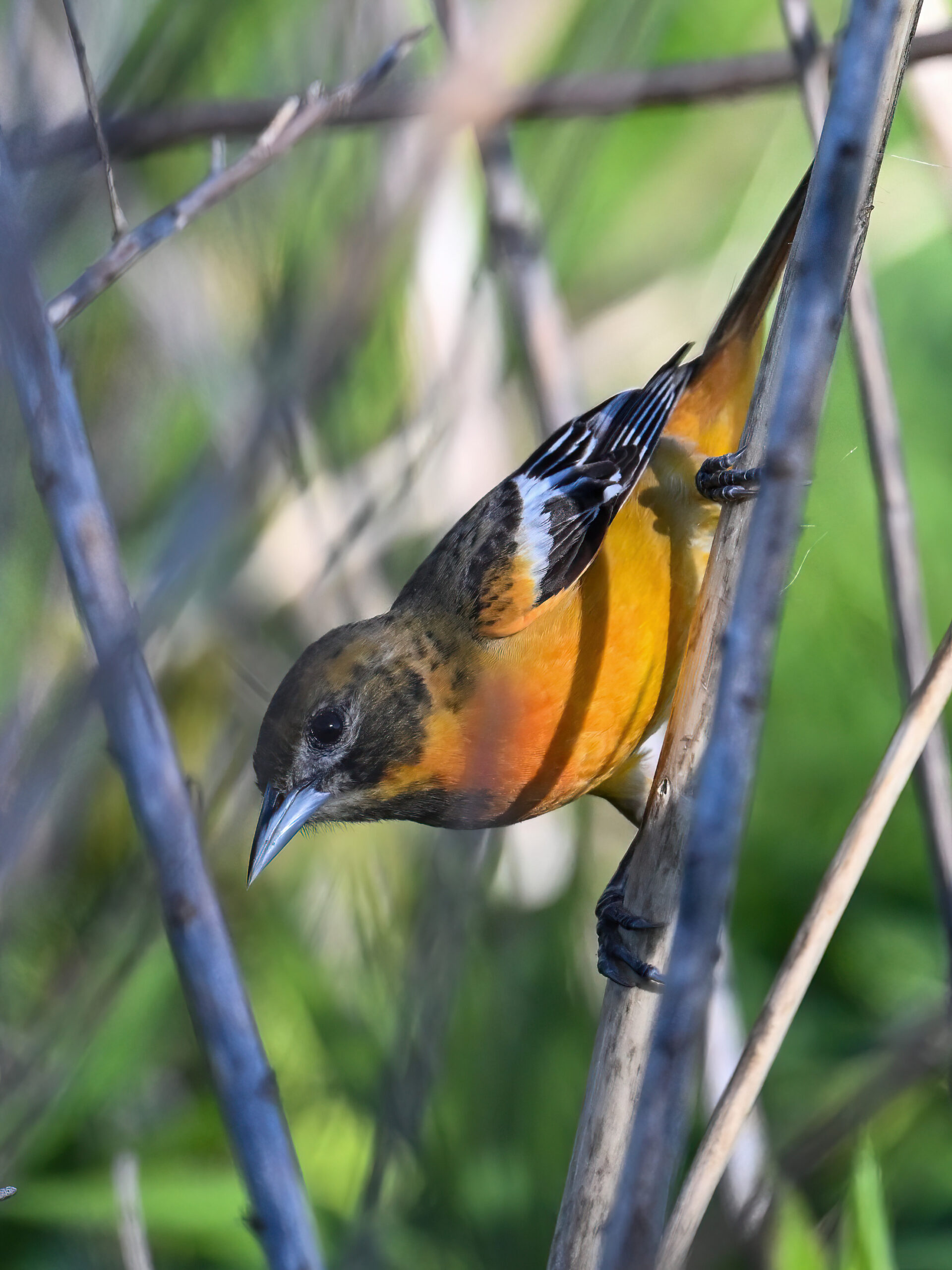
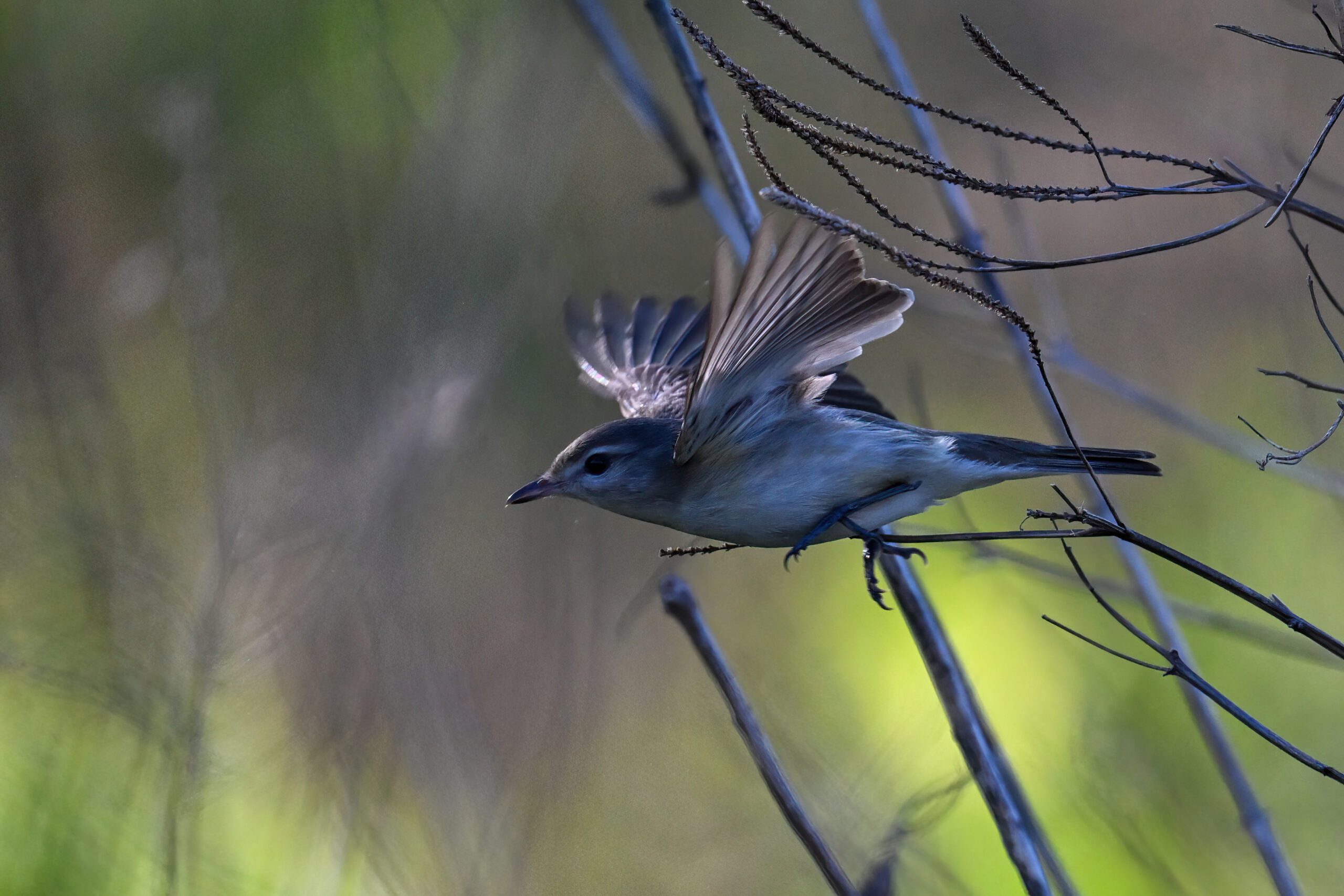
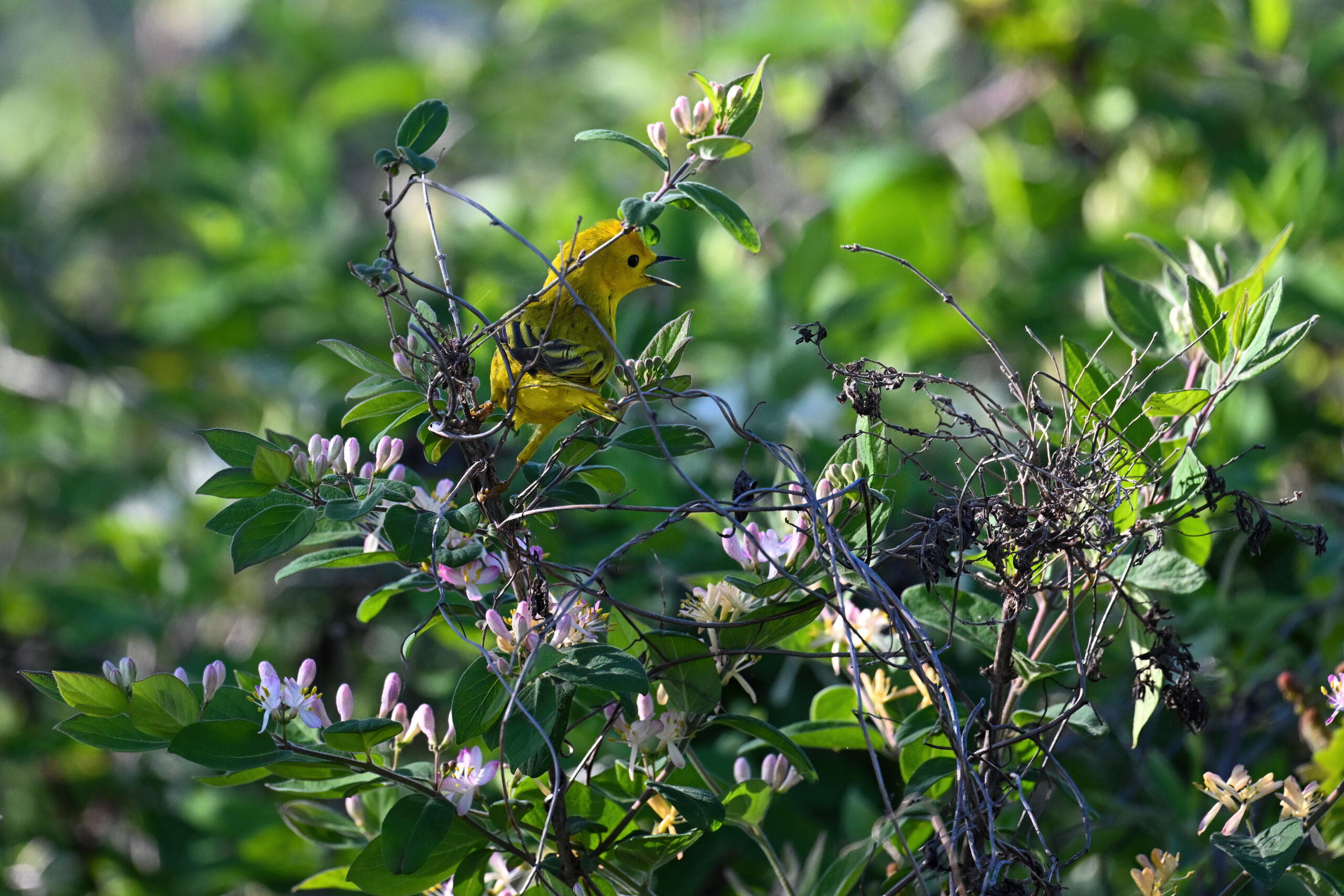
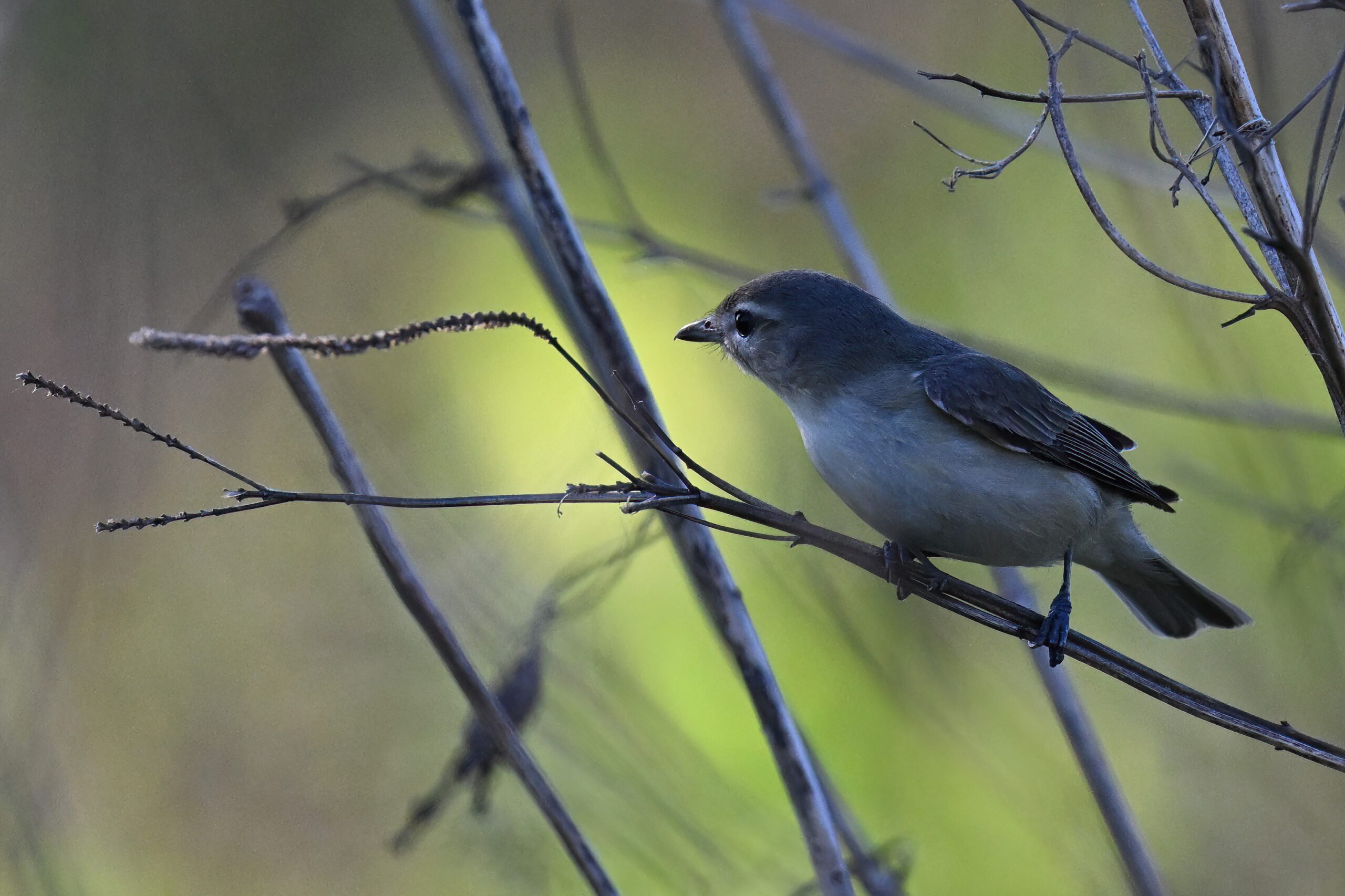
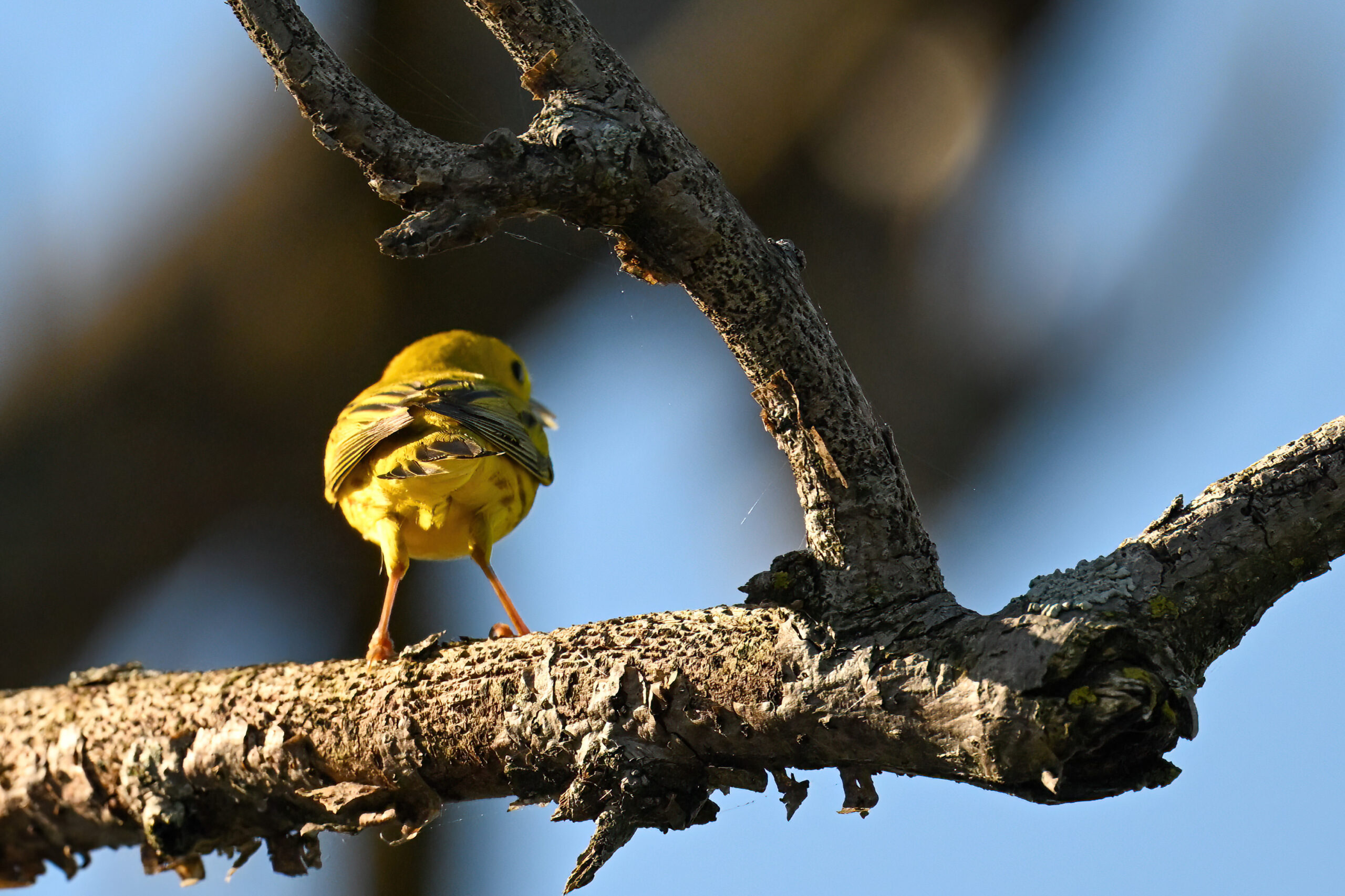
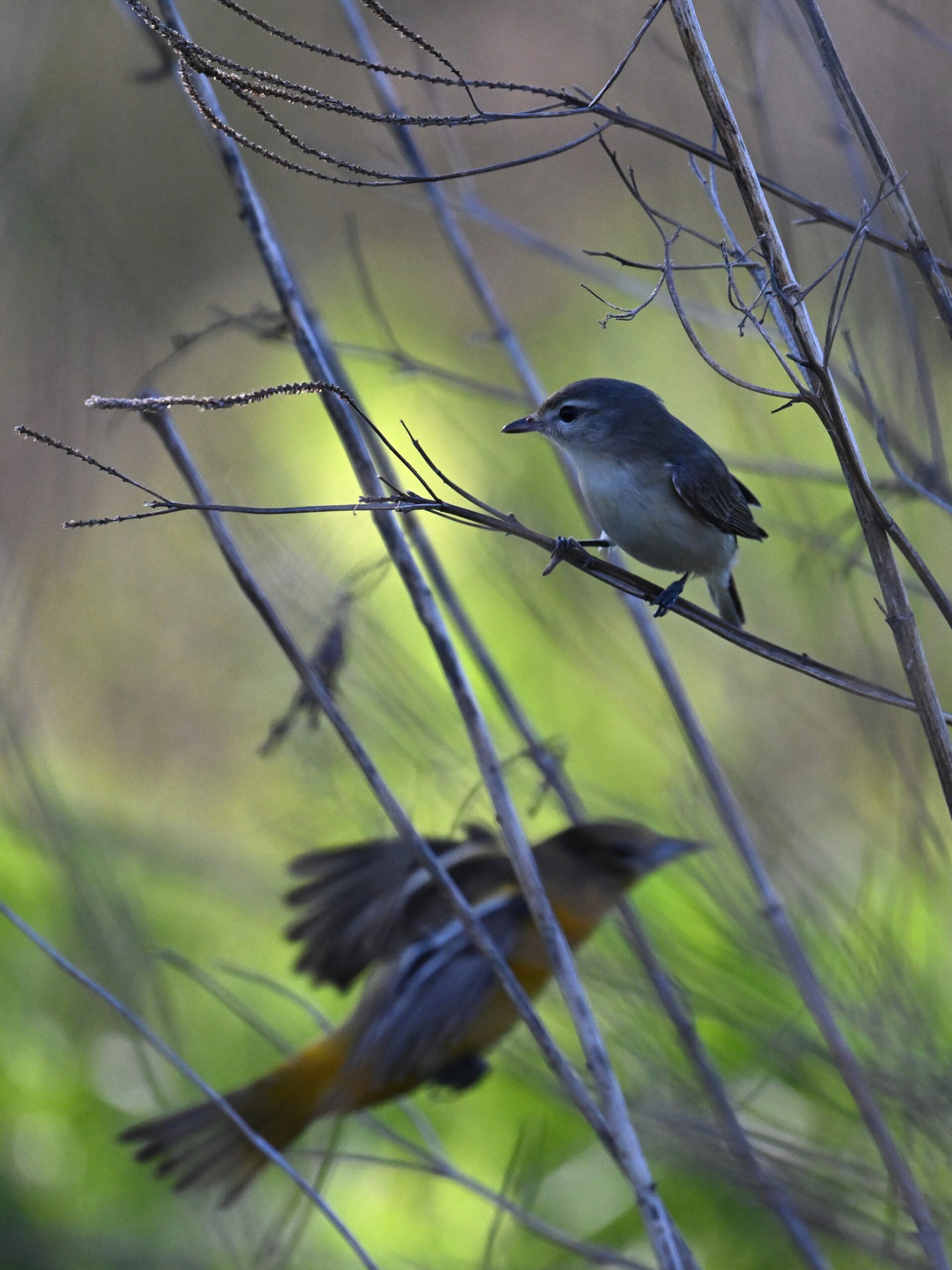
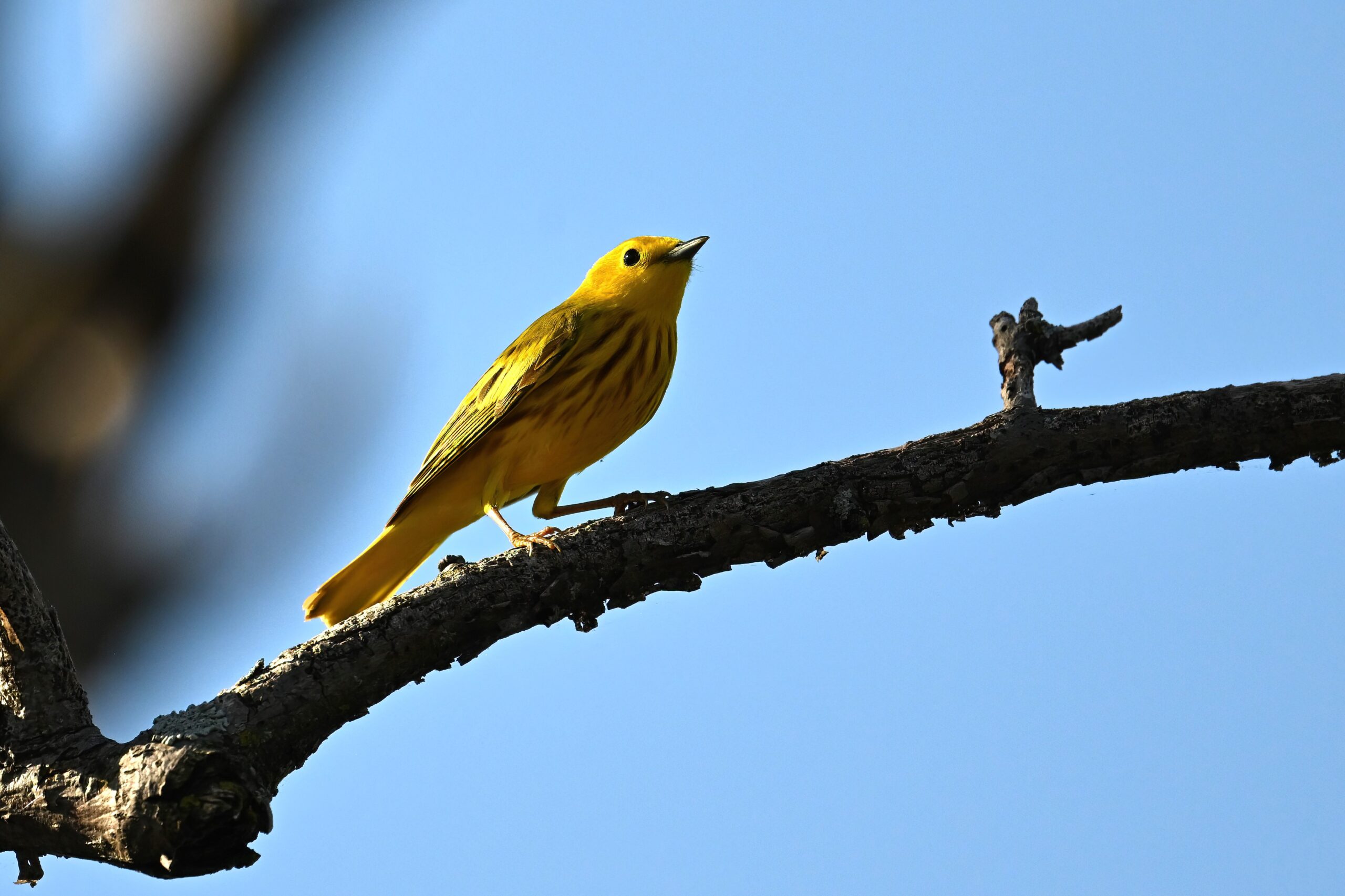
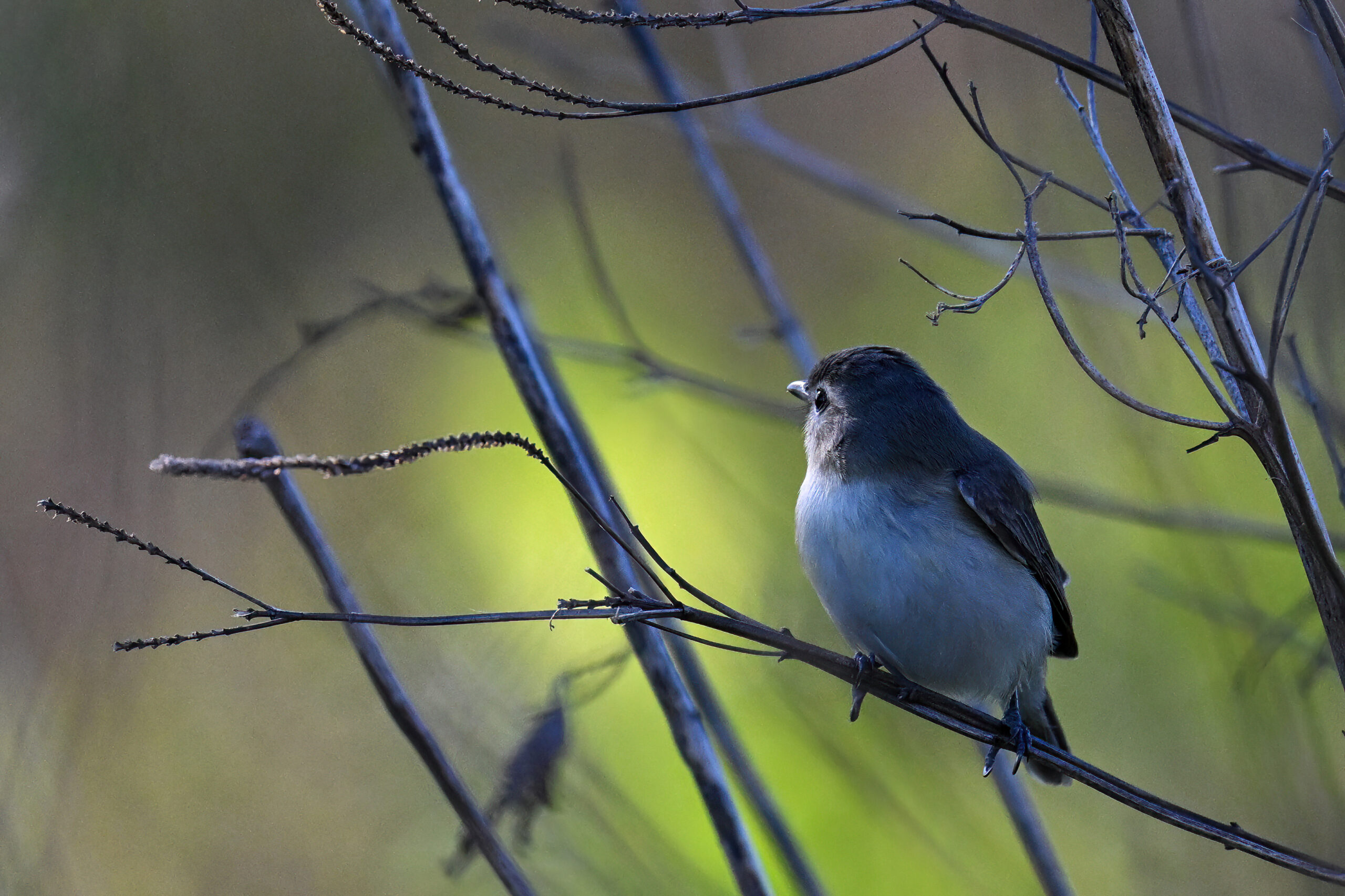
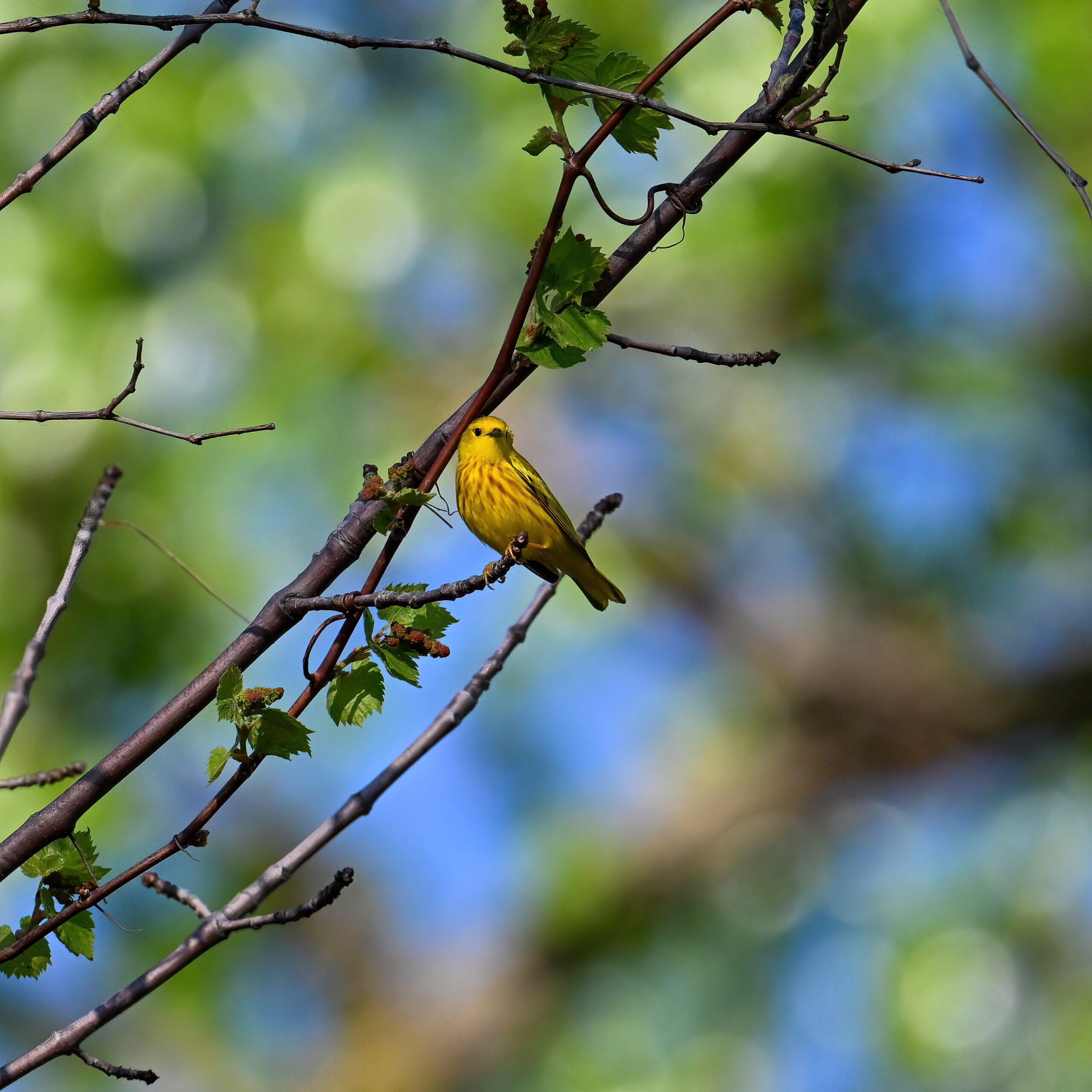
Thank goodness – no crazy annotated photographs in today’s post. (Yikes.) Just pleasant bird photographs from Presque Isle State Park, taken a couple weeks ago (more or less) in the morning at Leo’s Landing.
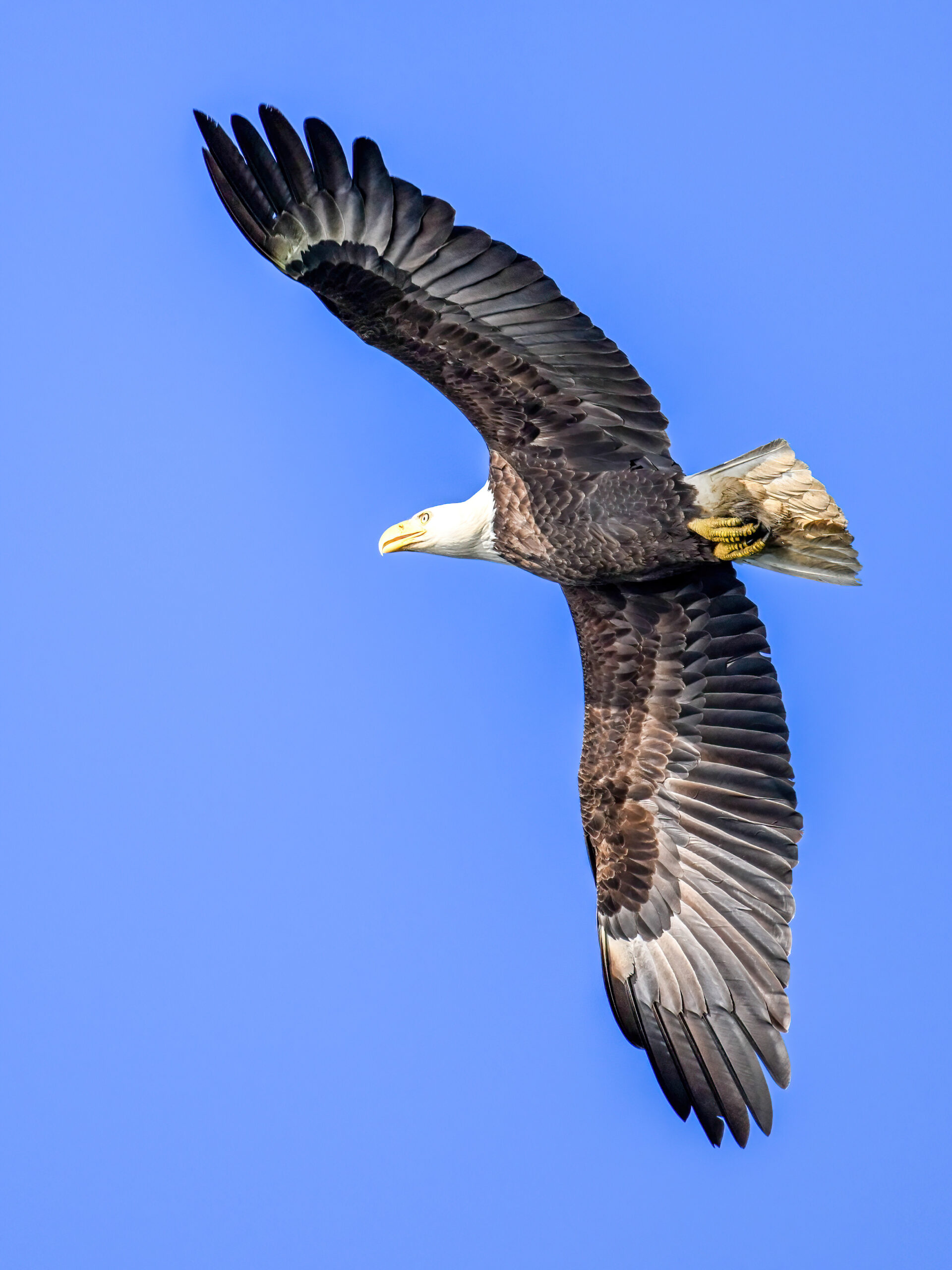
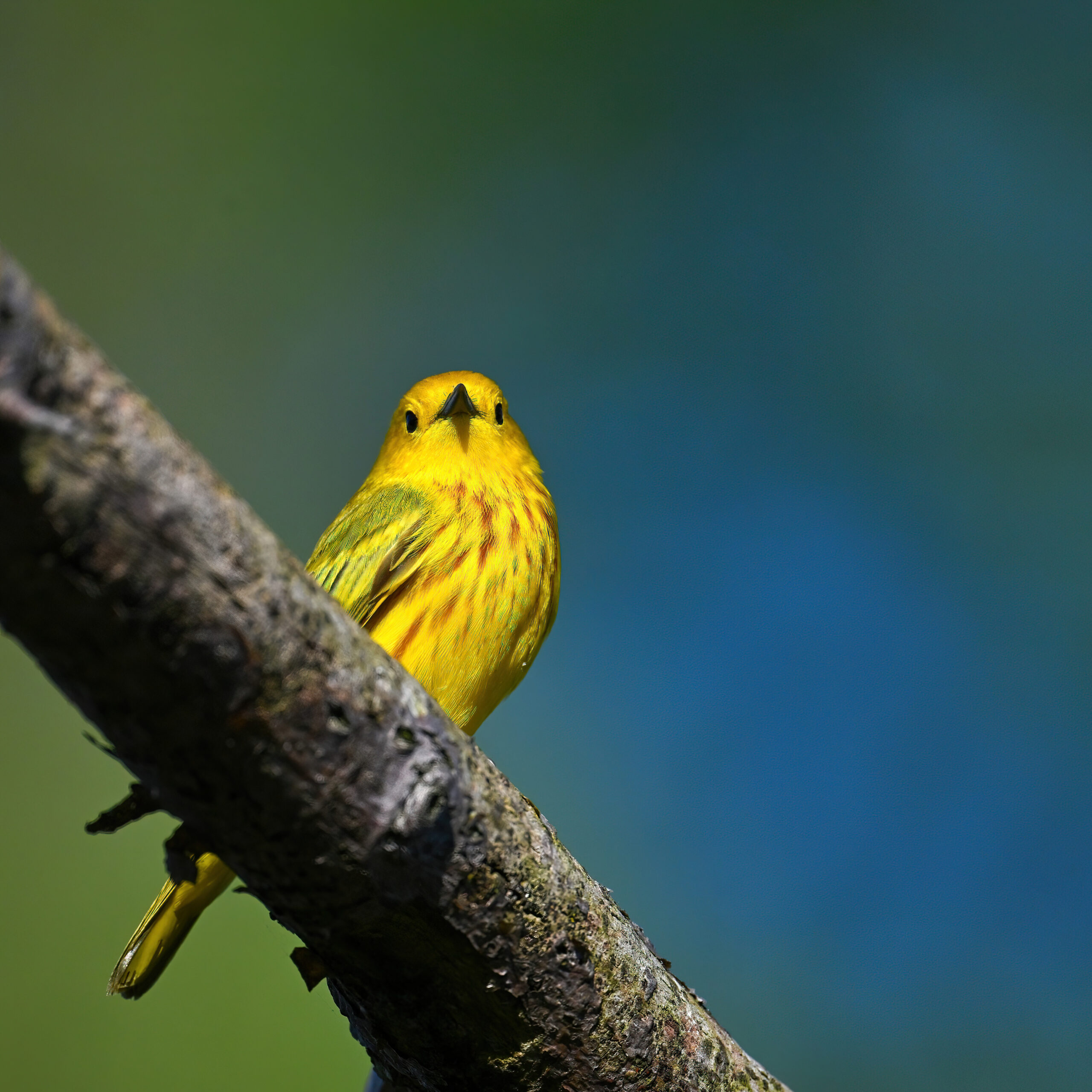
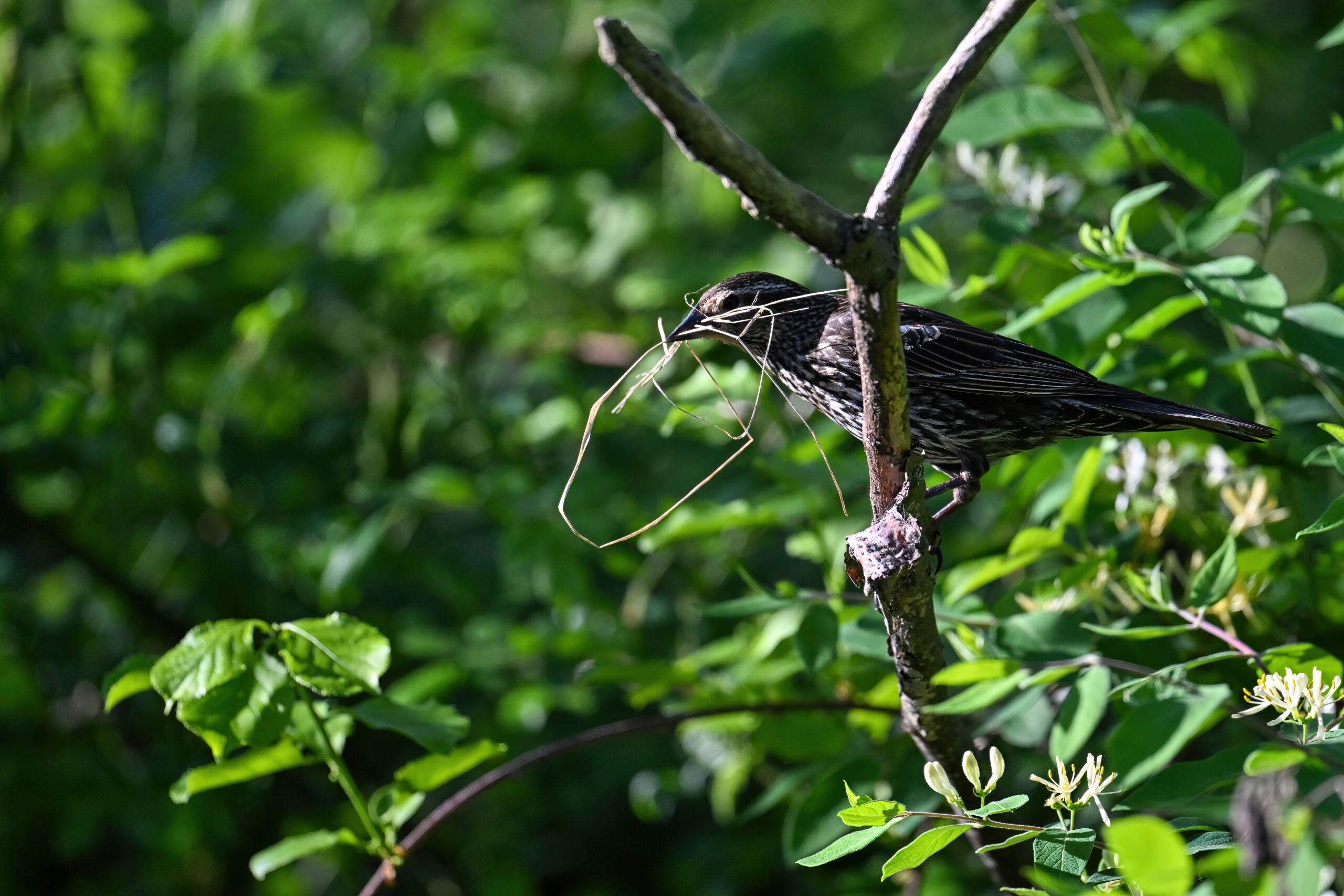
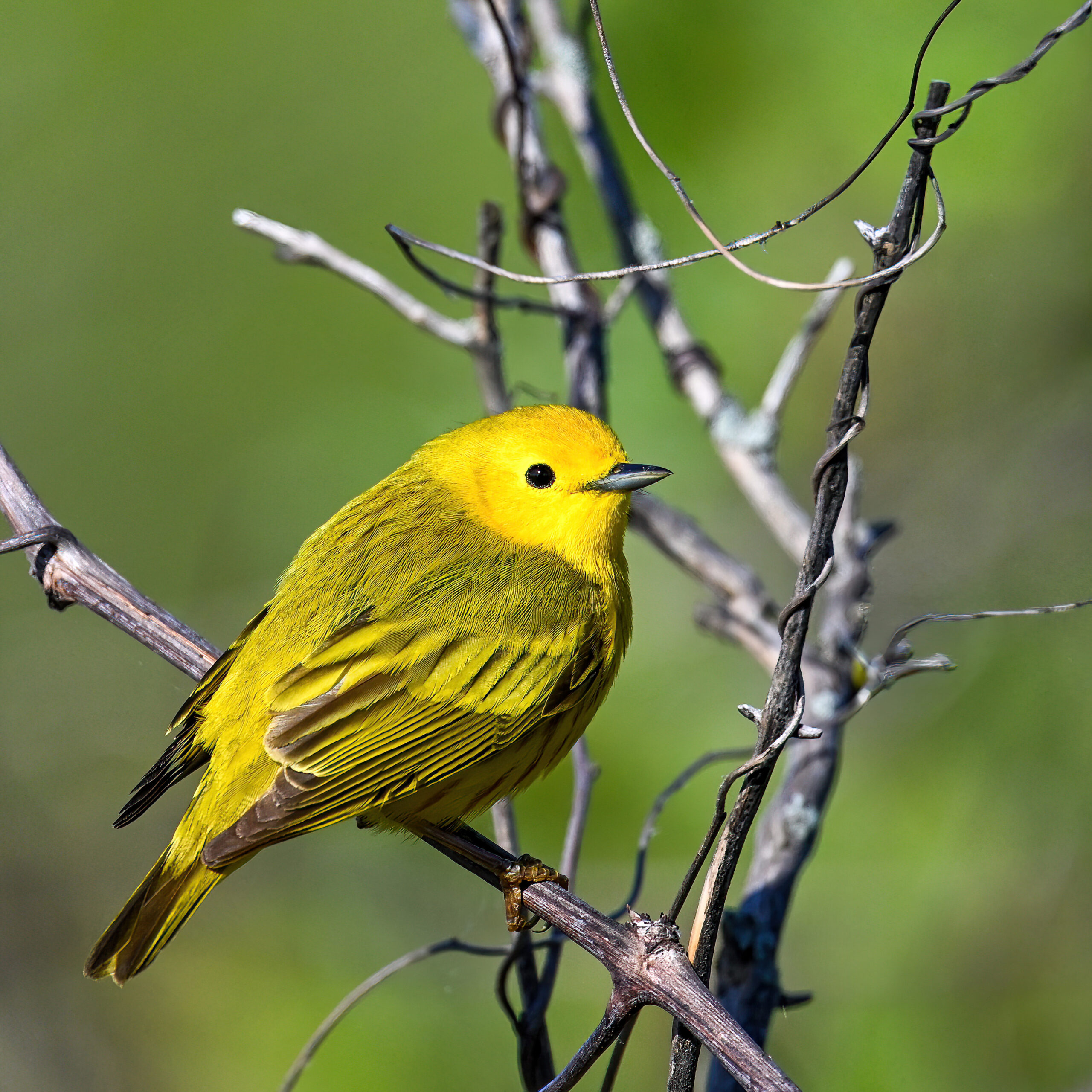
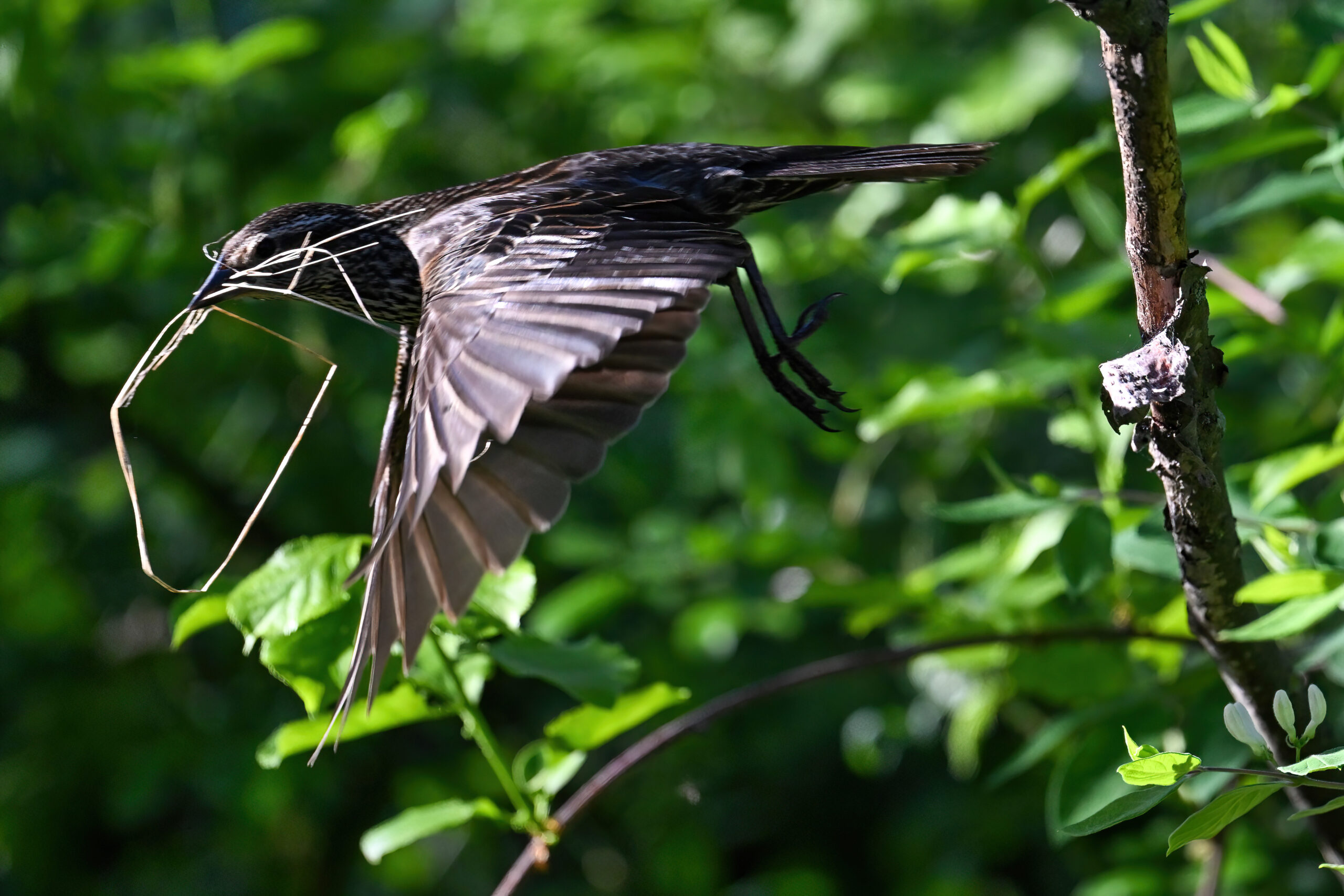
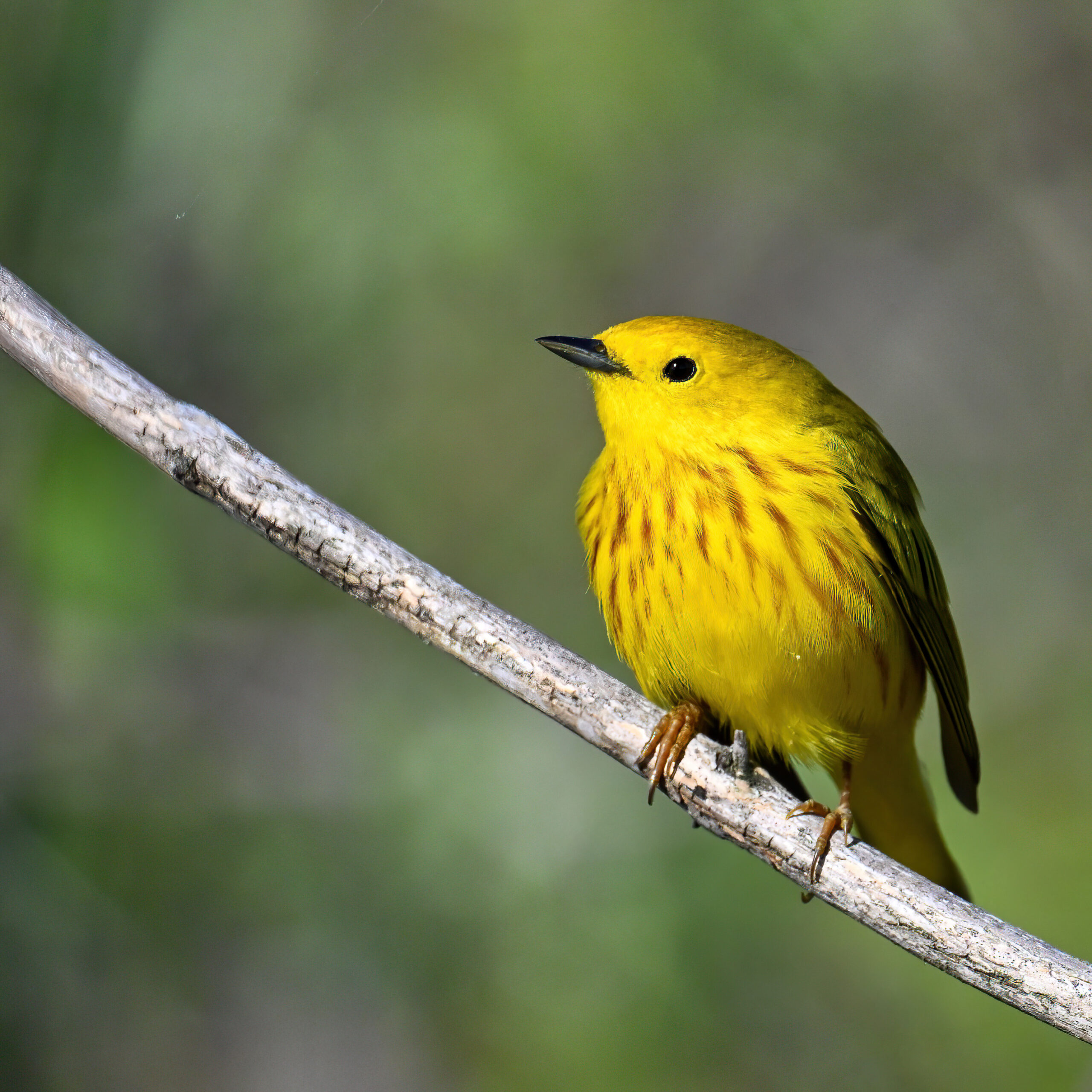
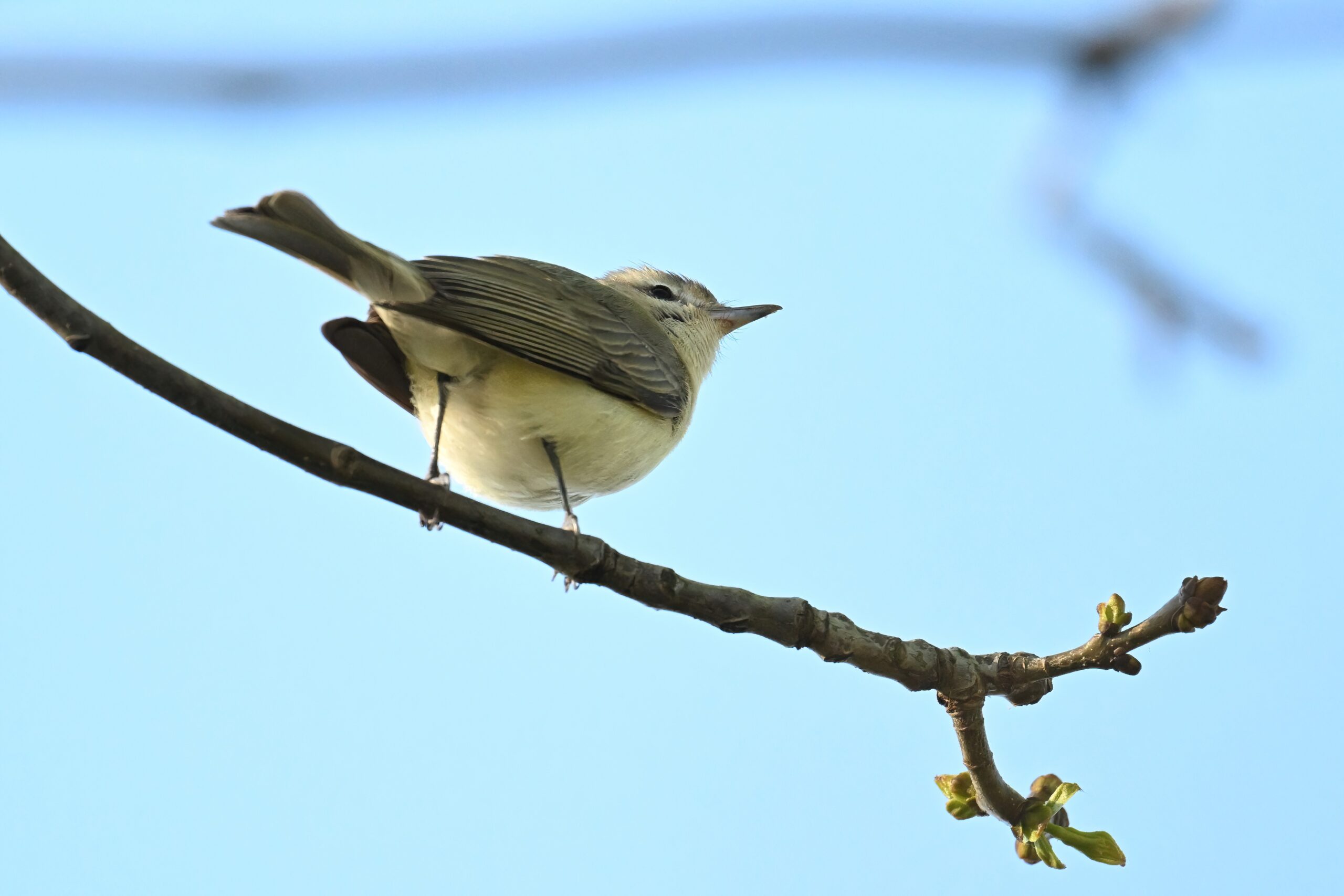
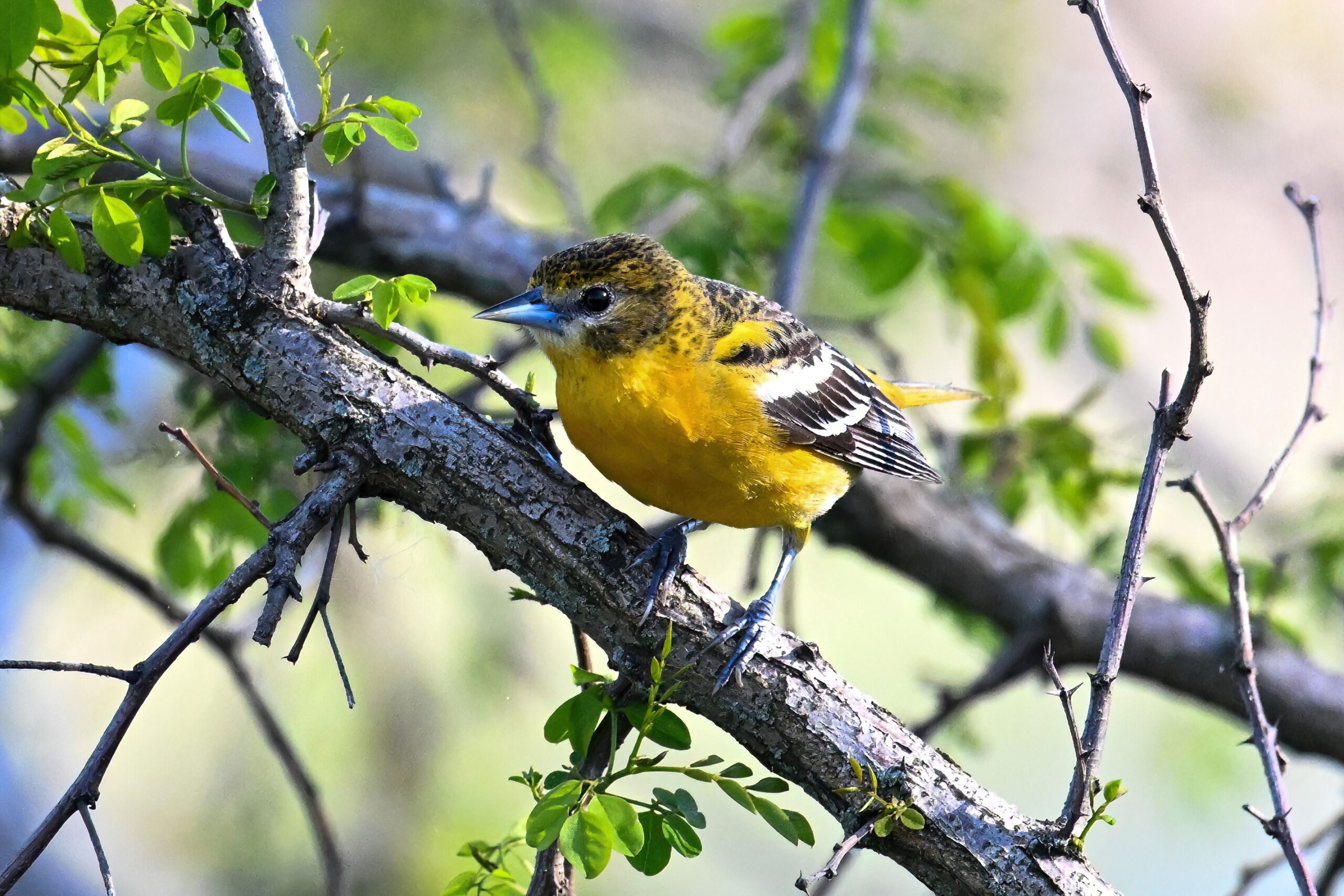
A Warbling Vireo good morning!Hard to tell what bird this is Warbling Vireo in ‘launch’ modeThat’s a Yellow Warbler (m)!Slightly overexposed Bald EagleMore Warbler!Female Red-winged Blackbird gathering nesting materialStill more Yellow WarblerTaking flight w/ nesting materialYellow Warbler IVMore Warbling VireoBaltimore Oriole (immature)Song Sparrow, perchedMore OrioleEastern Kingbirds in the reedsSuperbird!Oriole foragingOriole @ pre-launchBrown Thrasher on trailOriole VIOriole VIIWarbling Vireo takes flightWarbler @ shrubVireo w/ nice back lighting IMale Yellow Warbler on branch IVireo w/ nice back lighting II (+ Oriole)Male Yellow Warbler on branch II Vireo w/ nice back lighting IIIBeautiful bird & bokeh
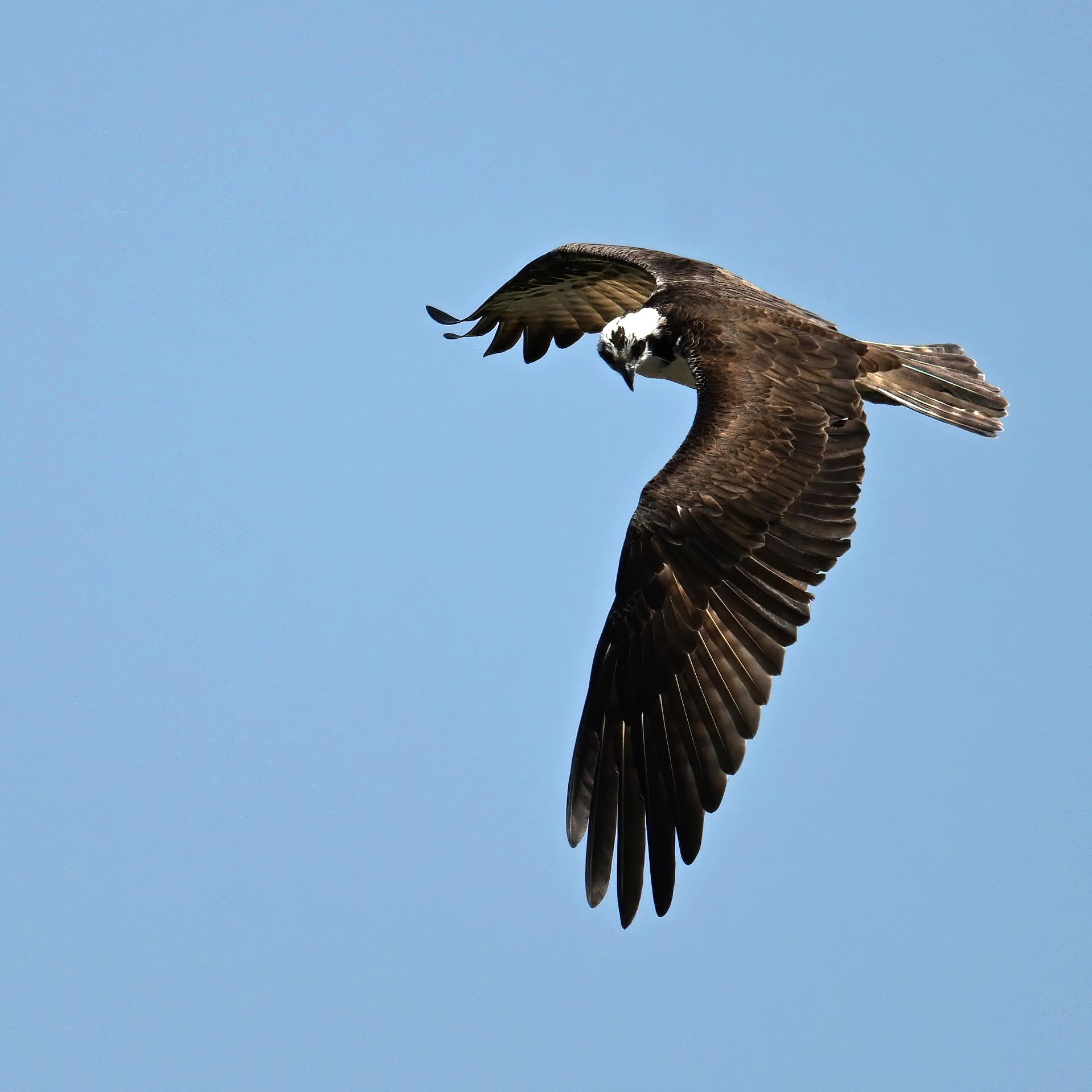
[Editor’s note: the bird in the second photograph above appears to be a Bald Eagle, maybe.]
Time for recent long-distance observations at Gull Point. With a camera + long lens (most shots below @ 1200mm), lots of heat shimmer on a warm day = blurry birds. Nevertheless, a useful tool for interesting bird ID’s/sightings.
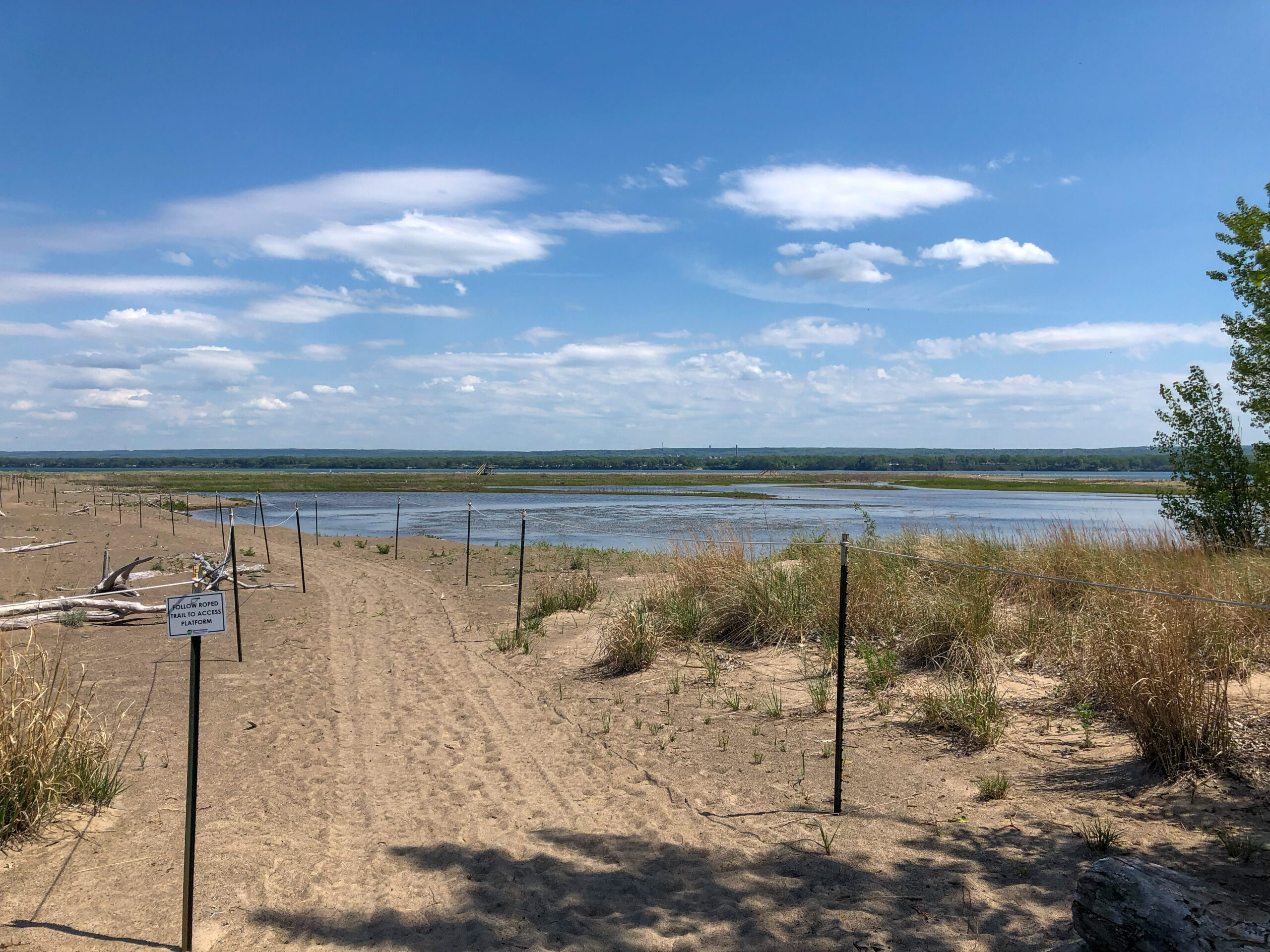
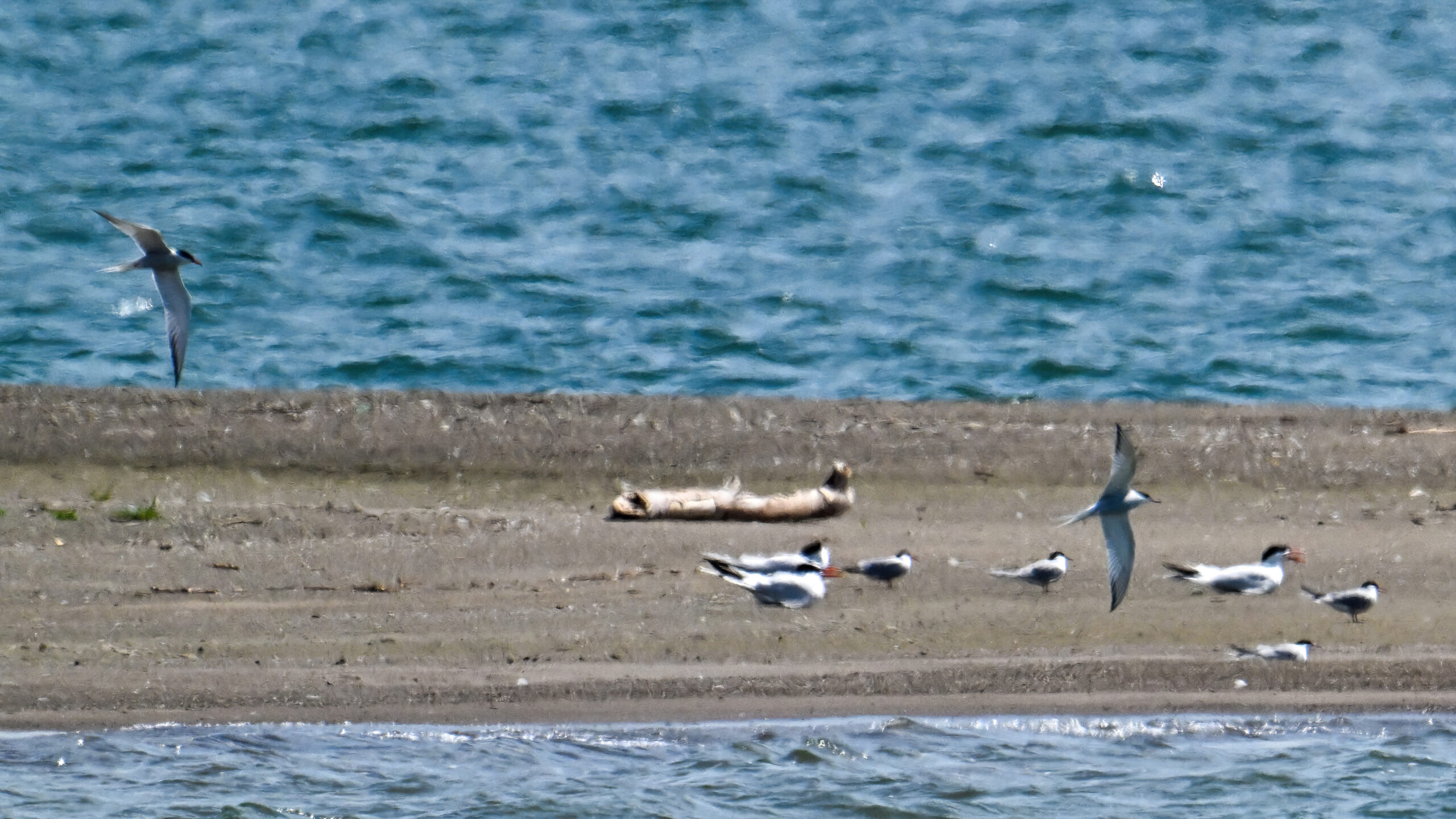
‘Entrance’ to outer Gull Point
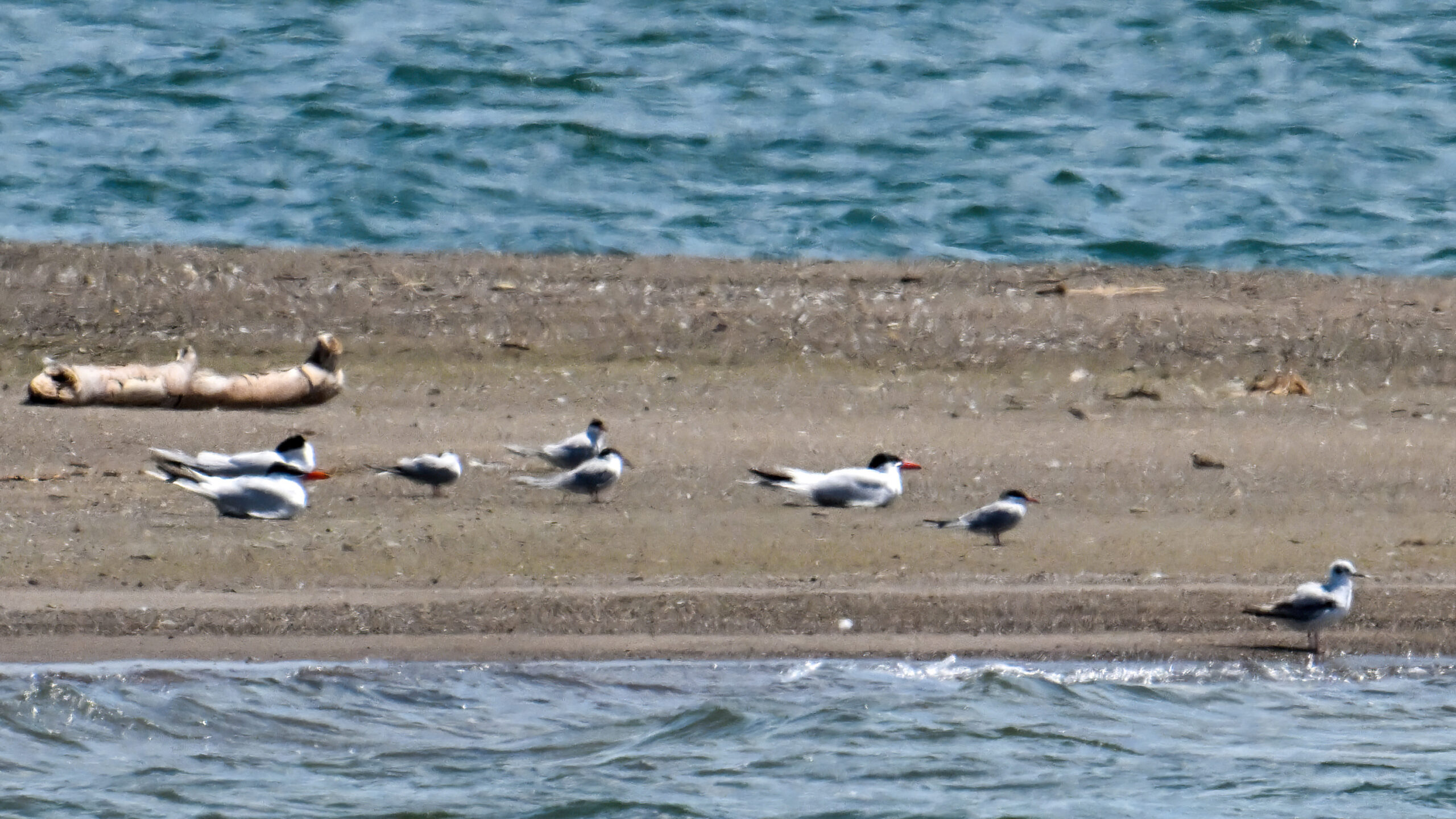
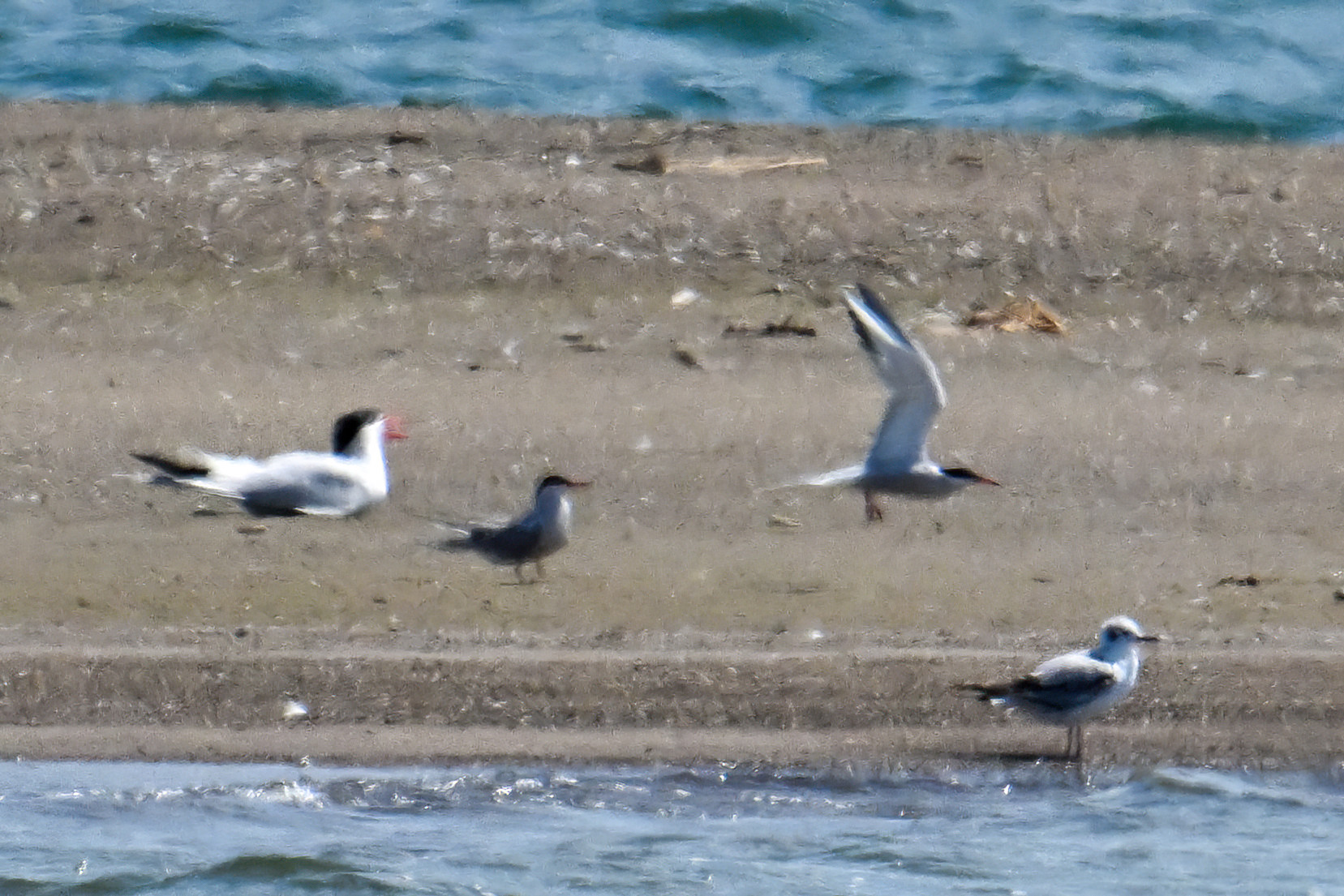
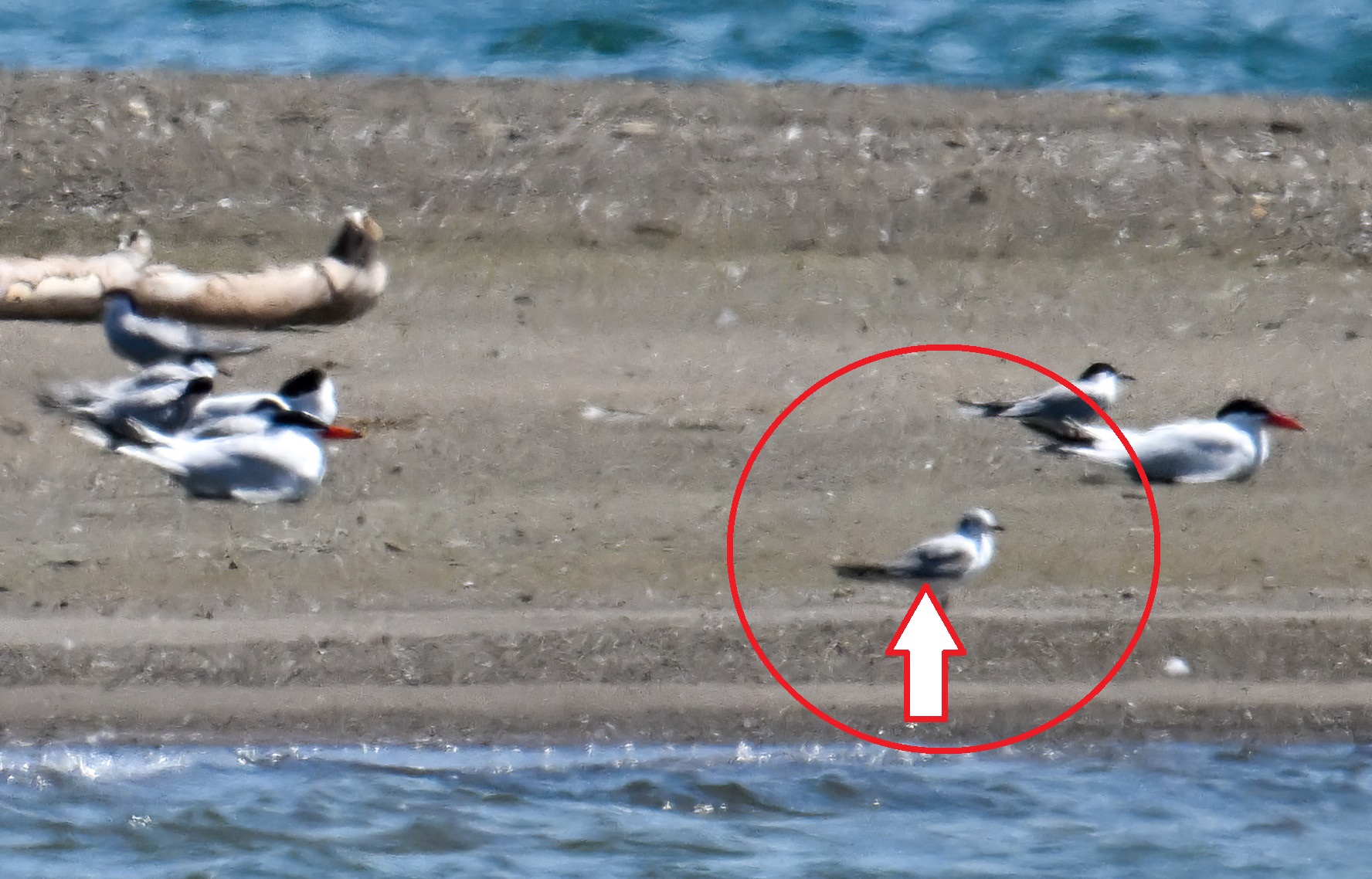
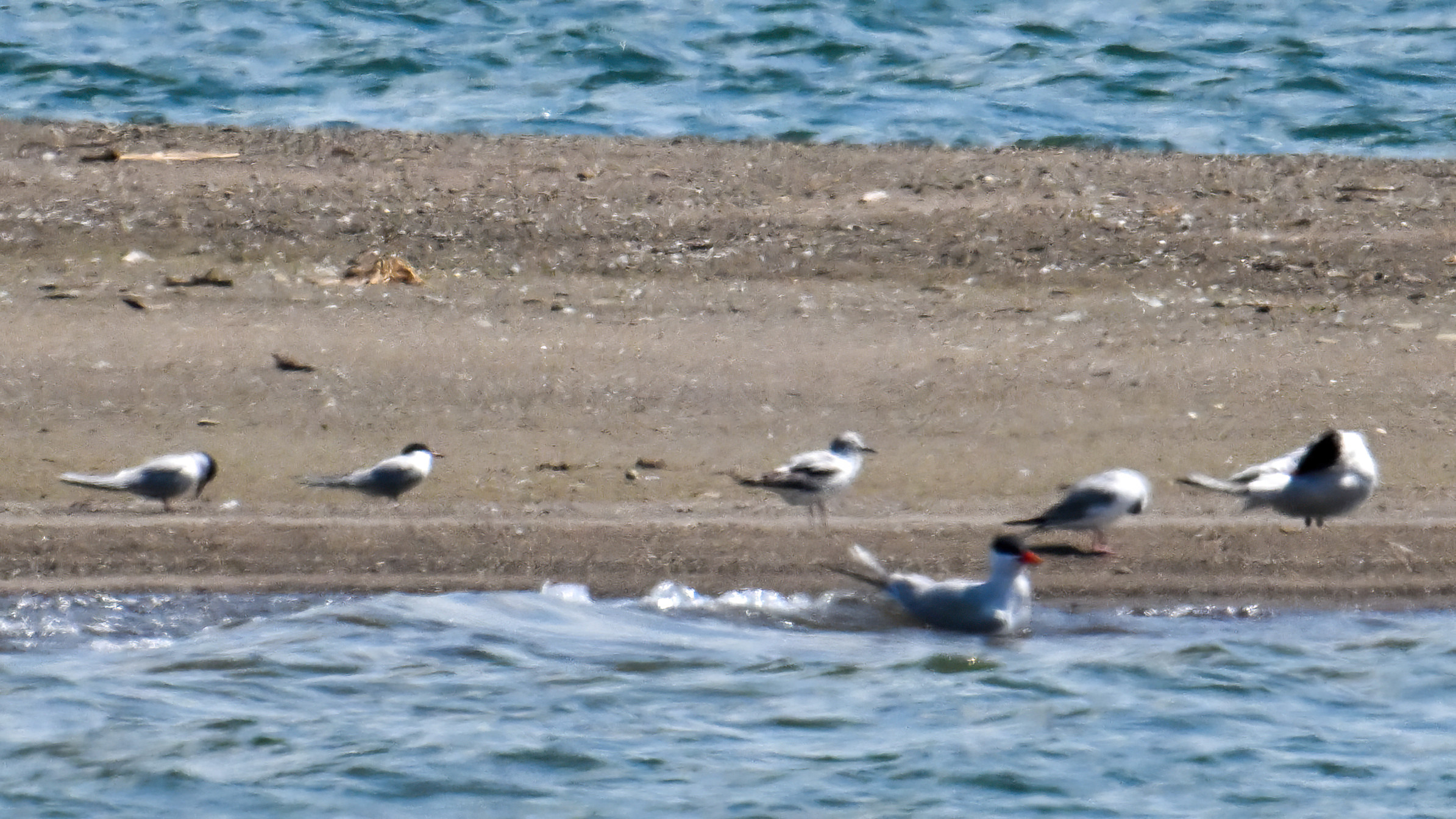
First up, terns! The most common tern @ Presque Isle State Park is Caspian Tern, the world’s largest tern species. Which is confusing, esp. for this post, because there’s a species actually called Common Tern. (Another awful/generic bird name.) And speaking of both, here’s a shot of mixed Caspian Tern, Common Tern, and what might be a juvenile Bonaparte’s Gull (?) on the lower right:
Mixed terns
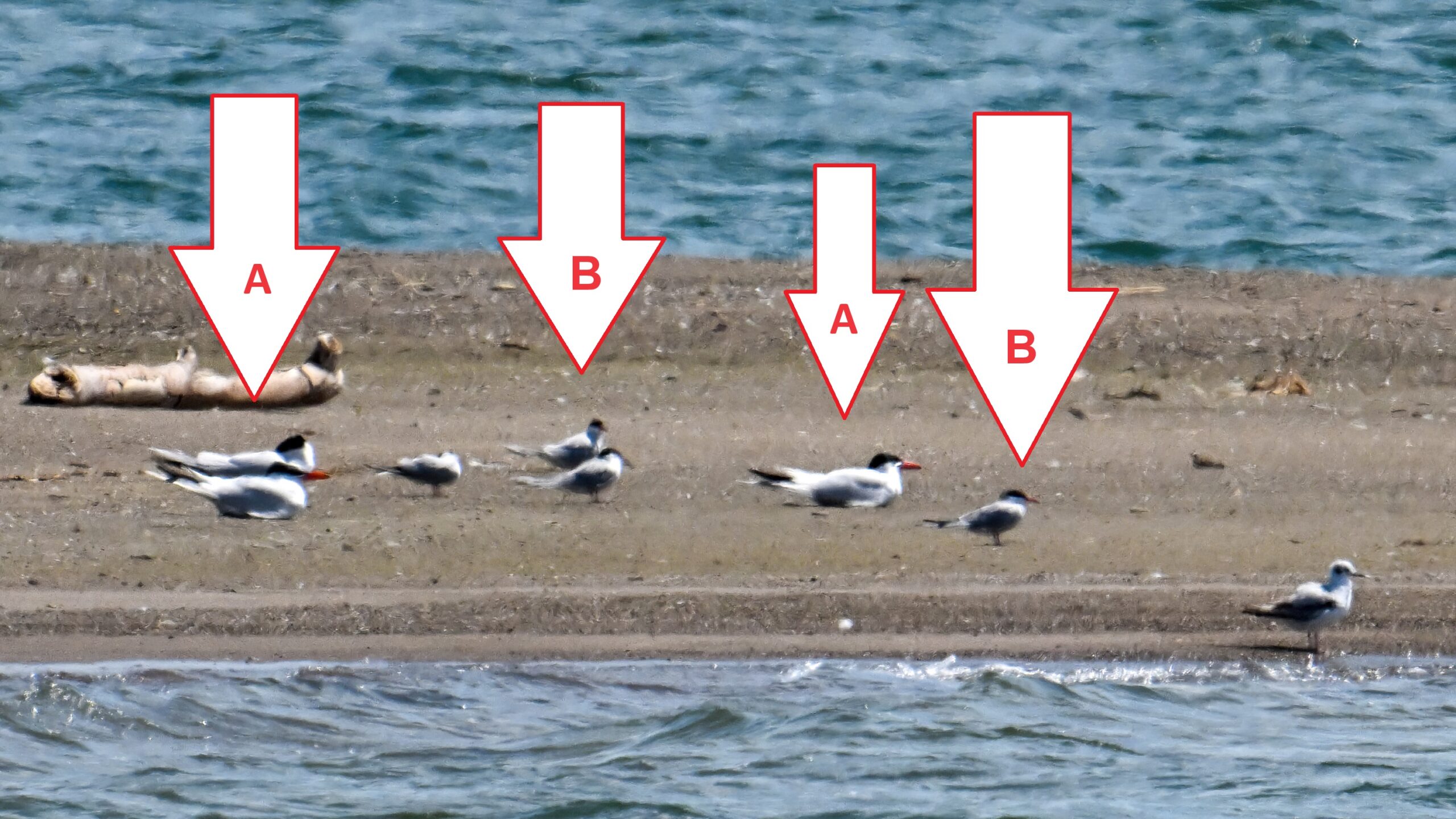
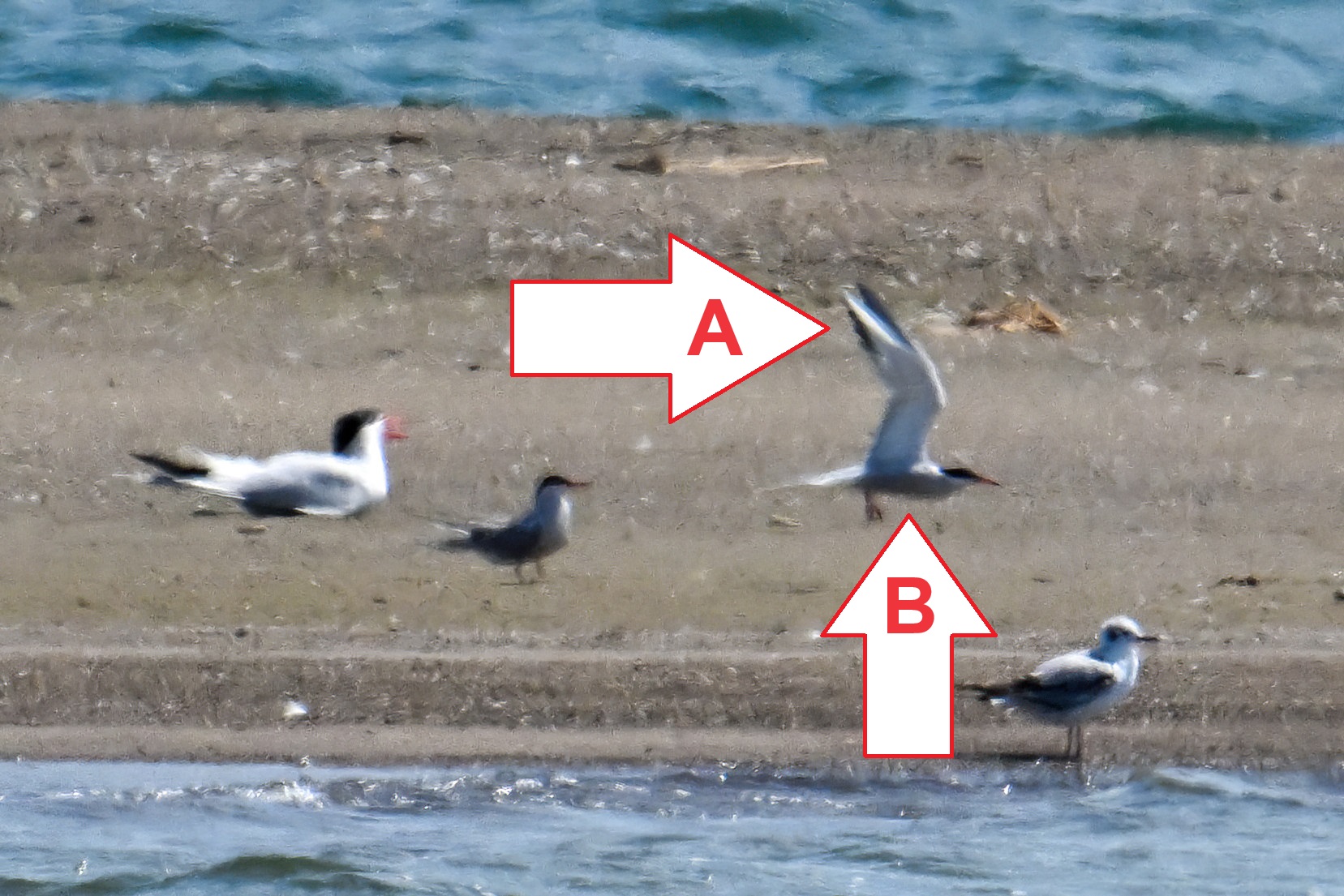
Let’s discuss this ID. Caspian Terns: relatively large, distinctive tern black cap, chunky/dagger-like red-orange bill. In the annotated shot below, Caspian Terns @ “A.” Best way to ID other tern species generally, if possible, is based on size. Note the terns at “B” – similar looking overall (black cap, pointy red or orange bill) but much smaller. Could be any of several smaller tern species, but at Presque Isle the non-rare options* would be Common Tern or Forster’s Tern. Meaning, start there for an ID analysis.
Annotated terns
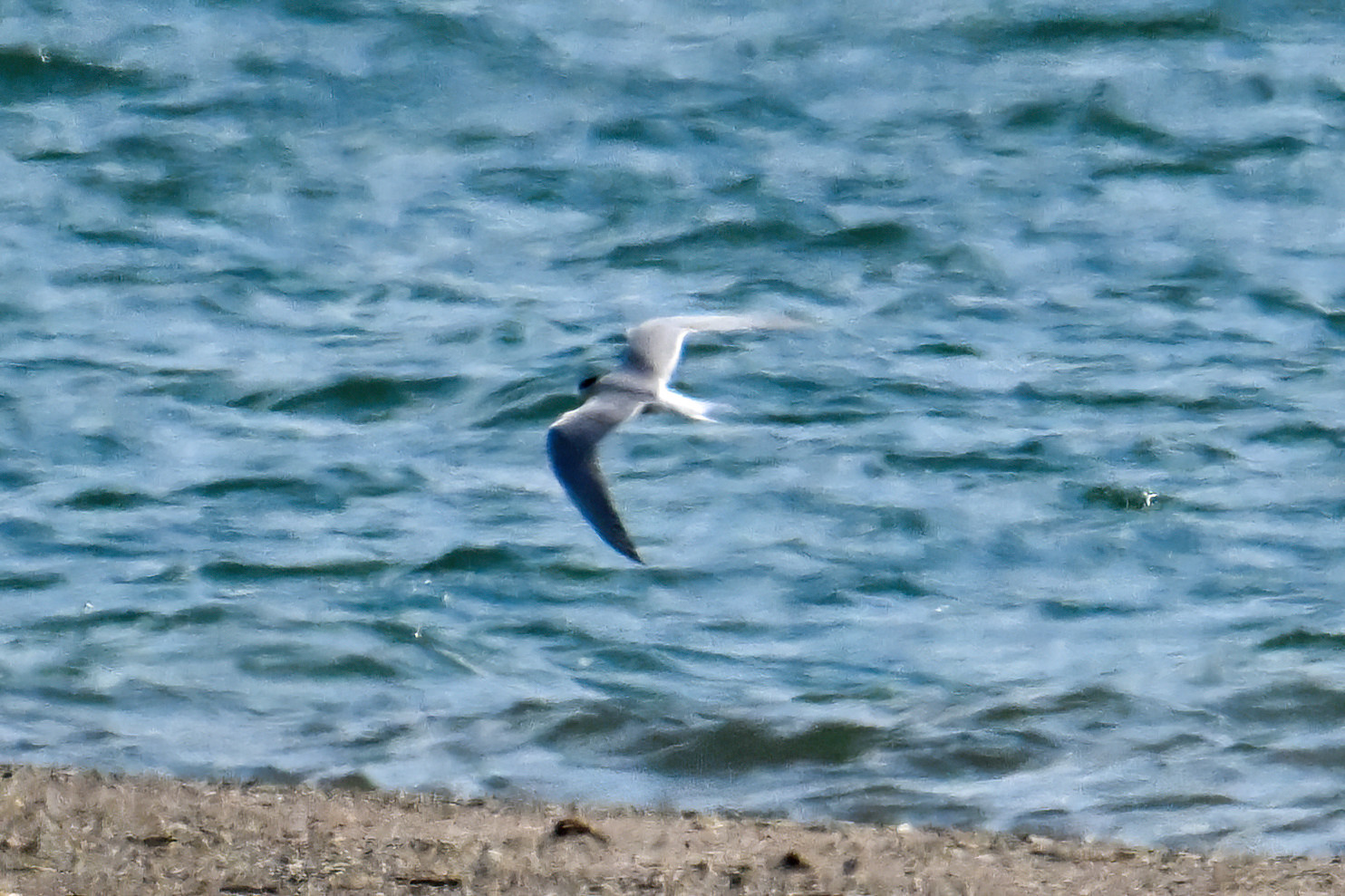
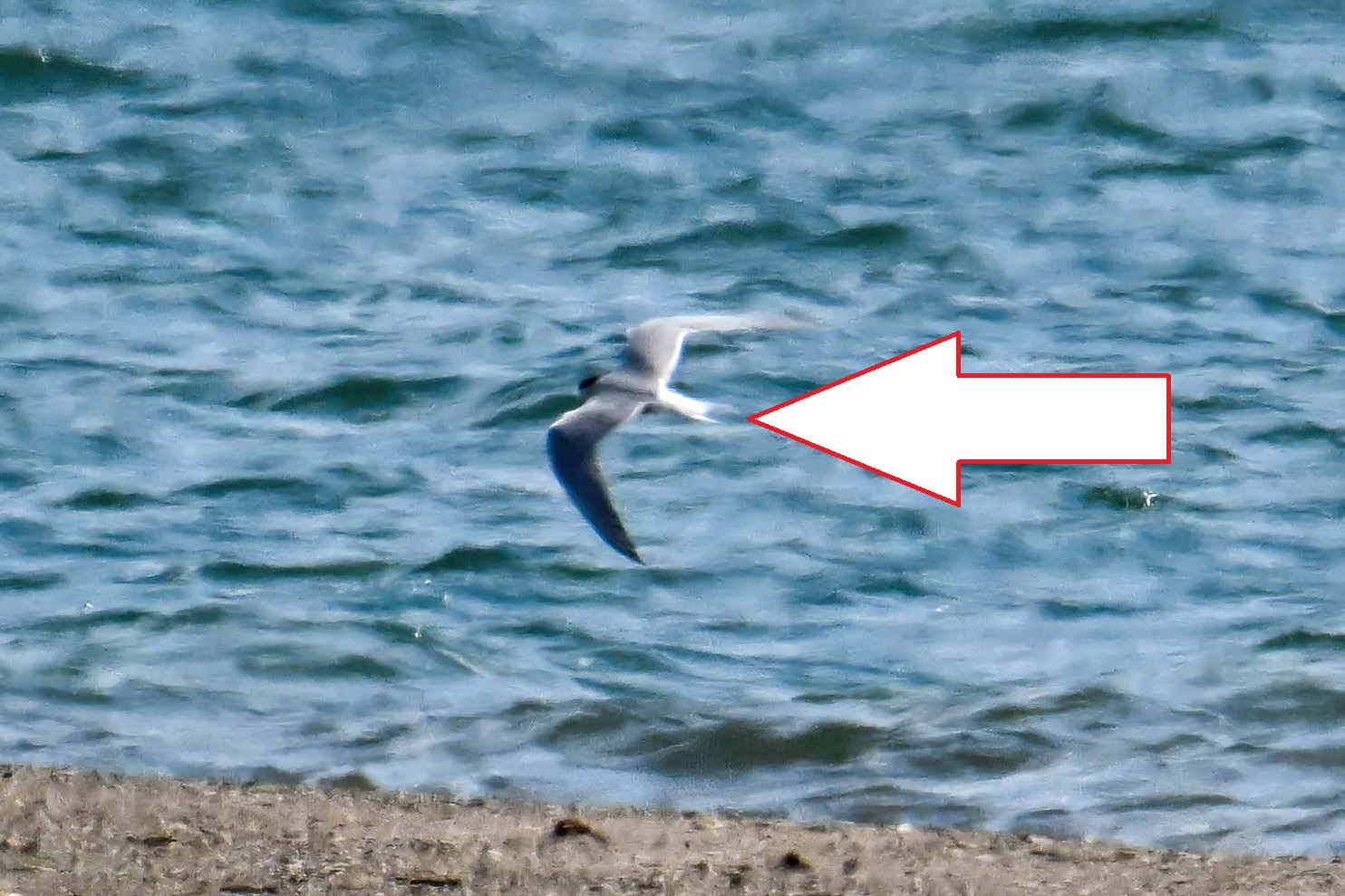
Both Common Tern and Forster’s Tern have a forked tail, so this shot is not terribly helpful:
Is an annotated shot to point out the forked tail really necessary?
OTOH, Common Tern typically has a gray belly and a thinner, reddish, black-tipped bill, whereas Forster’s = white belly and heavier, orange-ish, black-tipped bill.
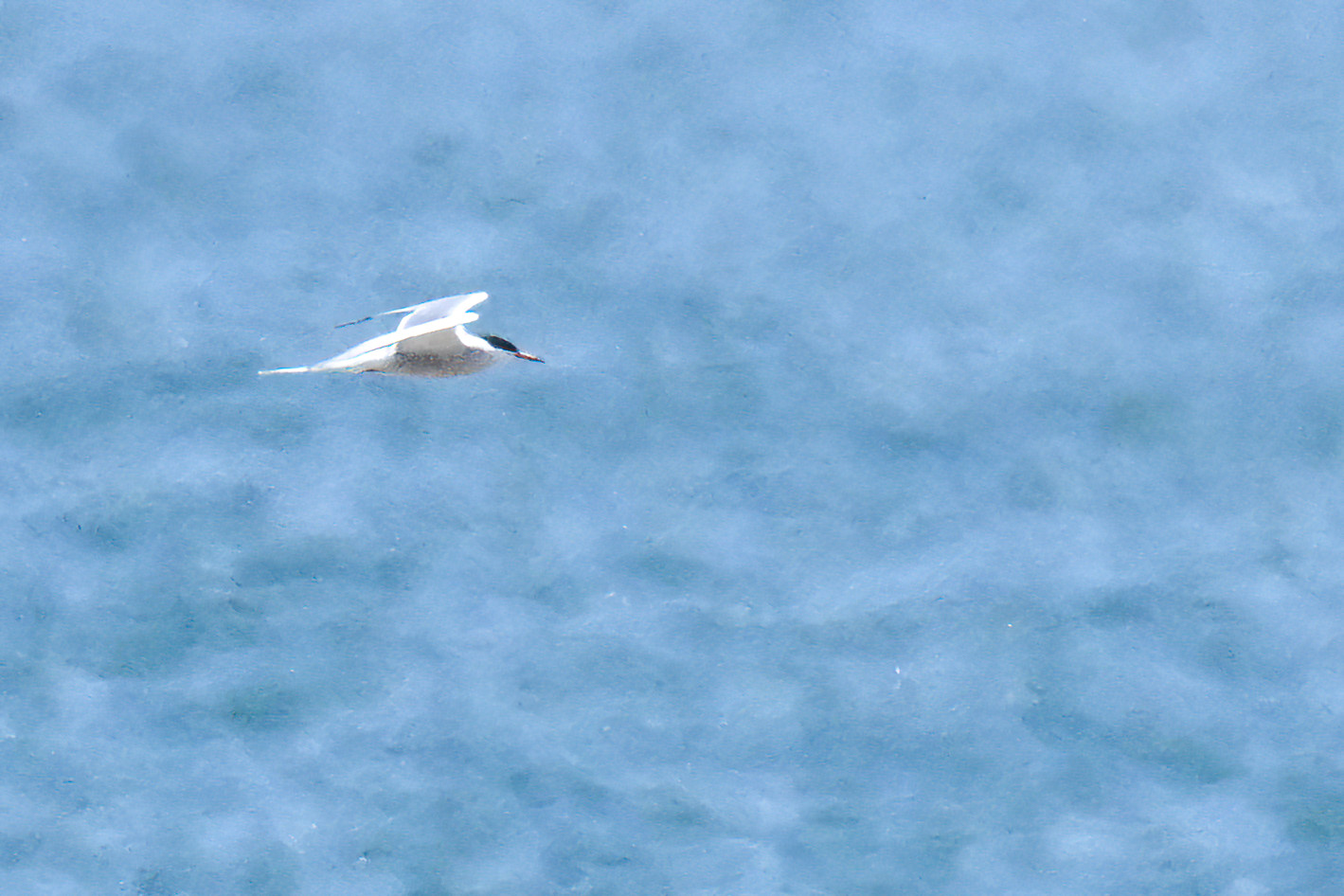
Common Tern in flight?
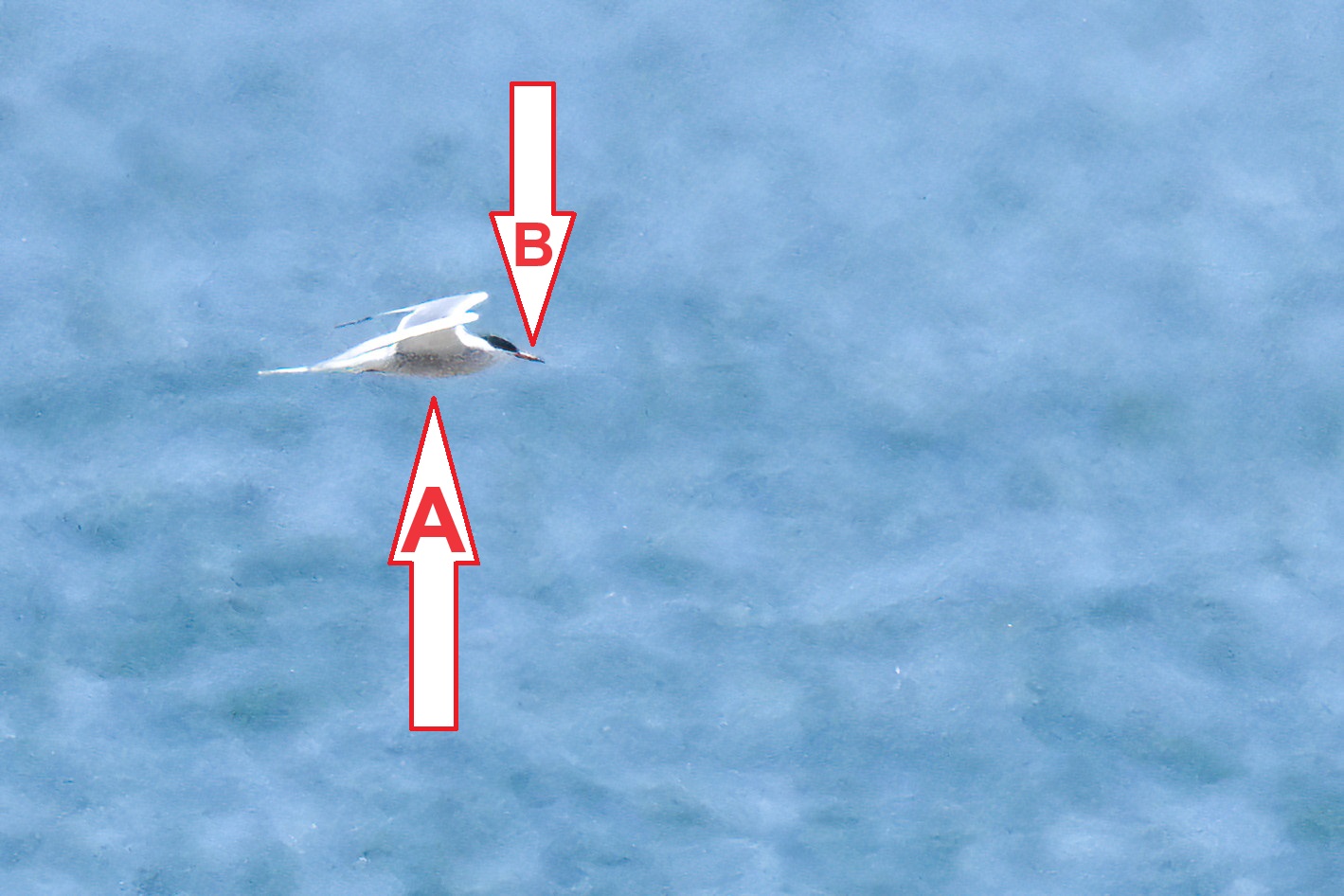
In the annotated shot below, note what appears to be a gray belly at “A.” The bill at “B” appears orange-ish, but is very thin and straight:
Annotated tern features
Another factor: wing colouration. Common Tern has darker gray wings outlined by black at the tips, mostly visible in flight:
In this annotation, note the black-looking wing tip region at “A,” and again, the gray belly at “B:”
Another view of dark wing tips:
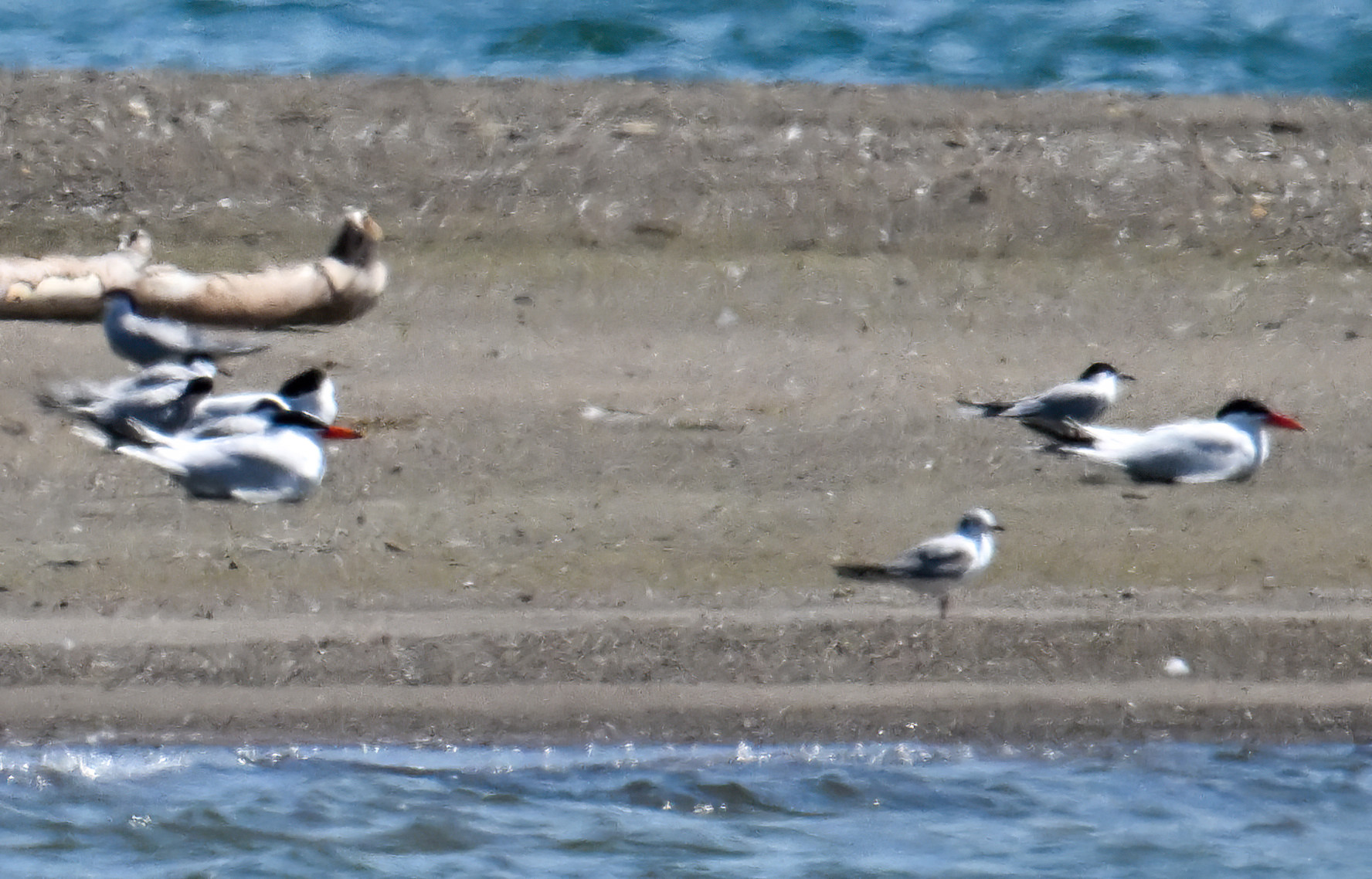
And another interesting clue, this time the bird @ lower right:
In the following annotation, note the colouration pointed to by the arrow. As per the experts, “Immatures and nonbreeding adults have a distinctive black bar on the leading edge of the wing, known as a carpal bar.”
So, very possibly an immature Common Tern. Another view:
In conclusion, small size, consistent bill, gray belly, dark wing tip regions, + possible juvenile = positive ID for Common Tern!
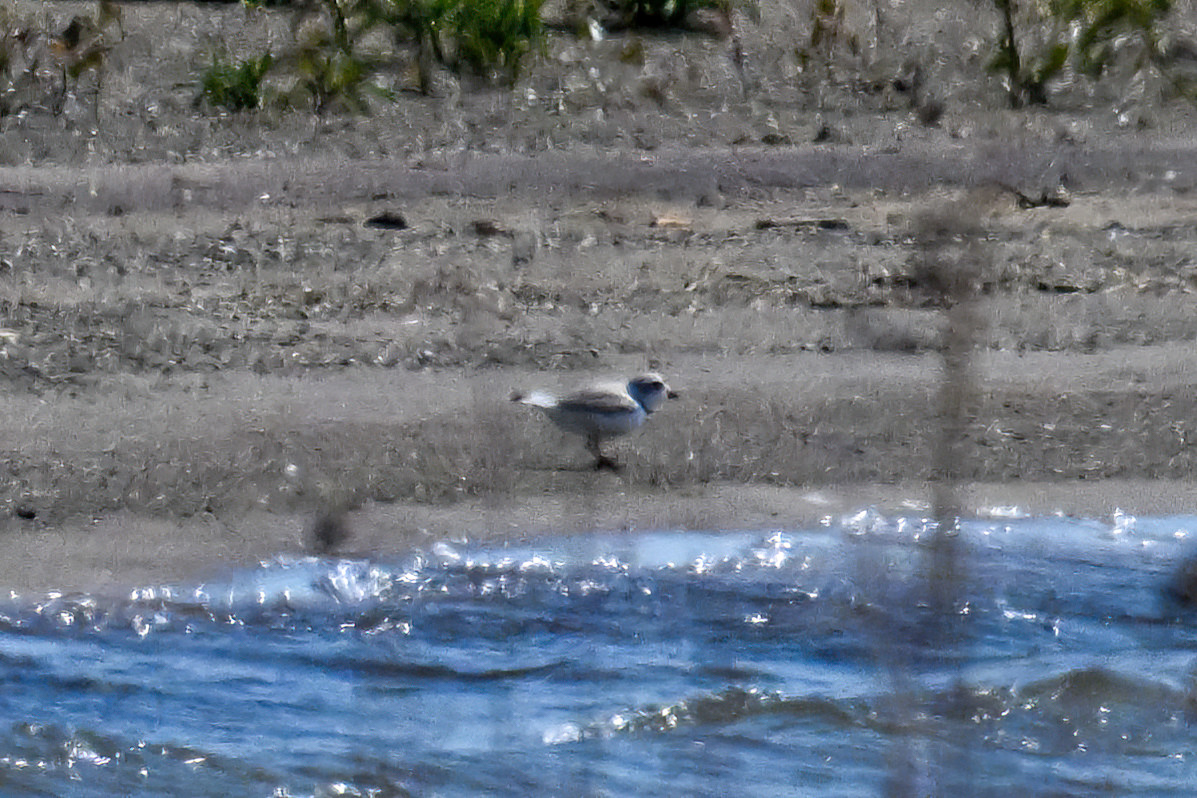
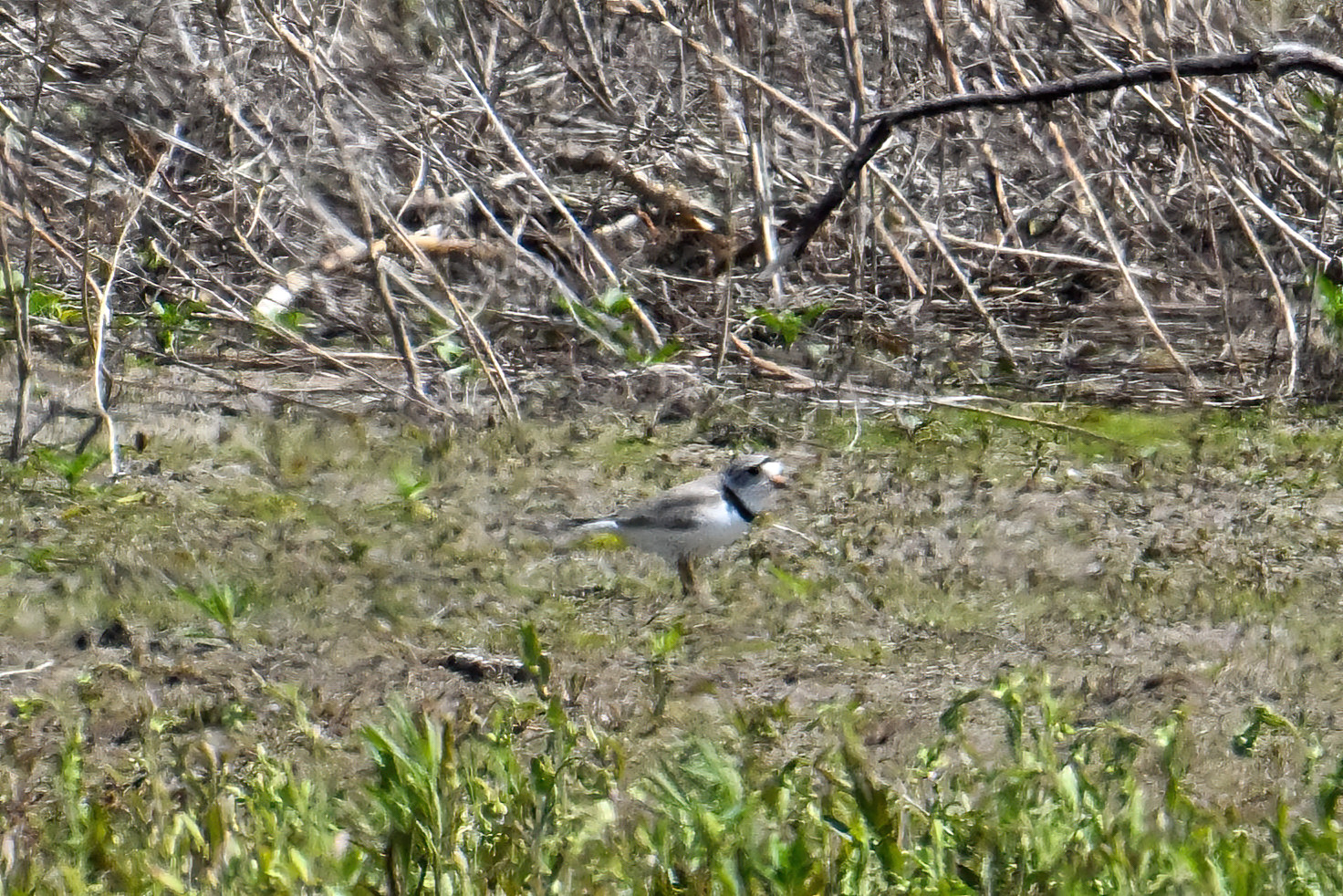
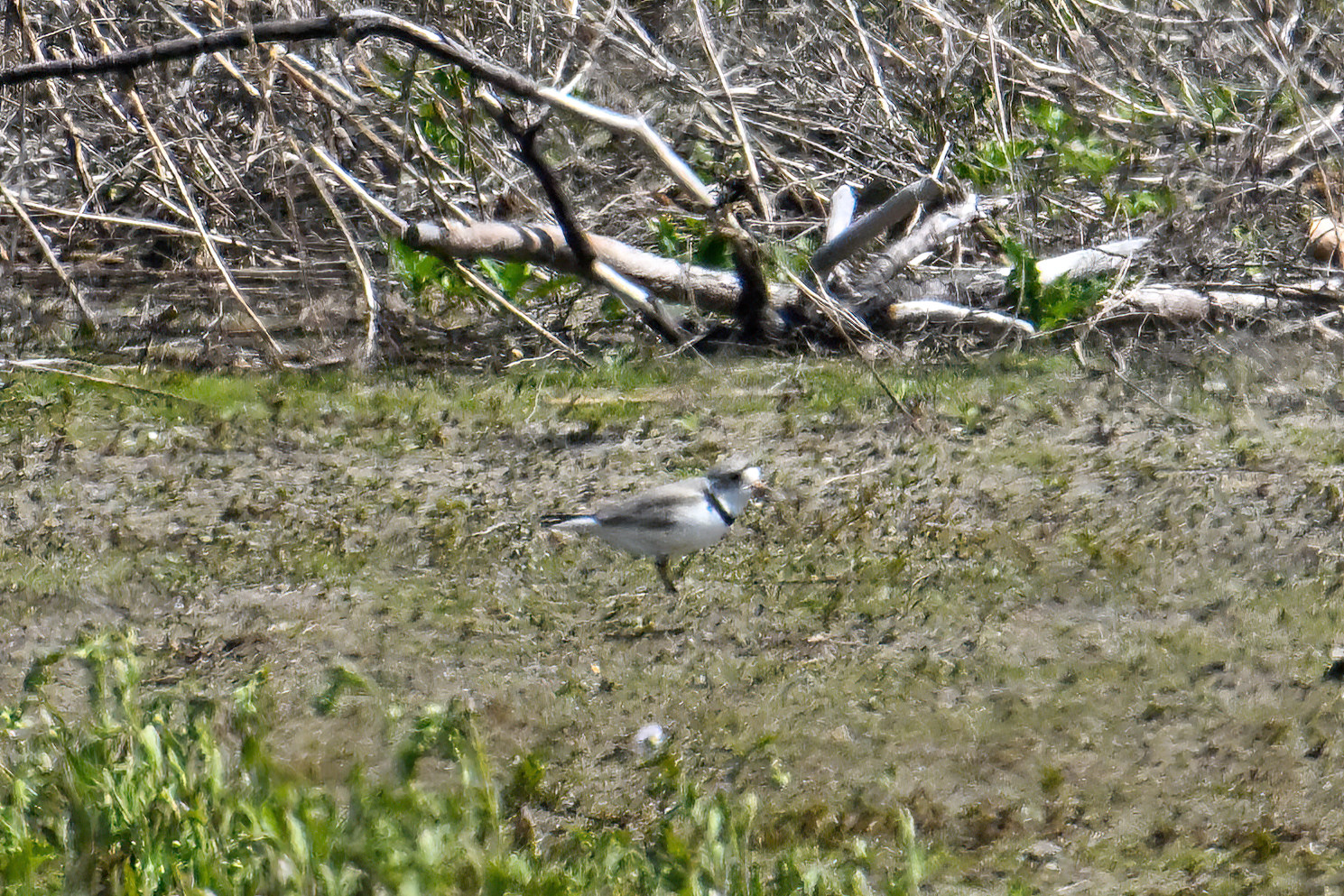
Moving on, a much easier ID of a blurry but still cute adult Piping Plover:
Note the single narrow breast band, thin black head band, and overall relatively light face/head colouration:
Semipalmated Plover (the next likeliest species at this location) would be overall larger, overall darker, & with a much darker overall face/head.
Blurry Spotted Sandpiper
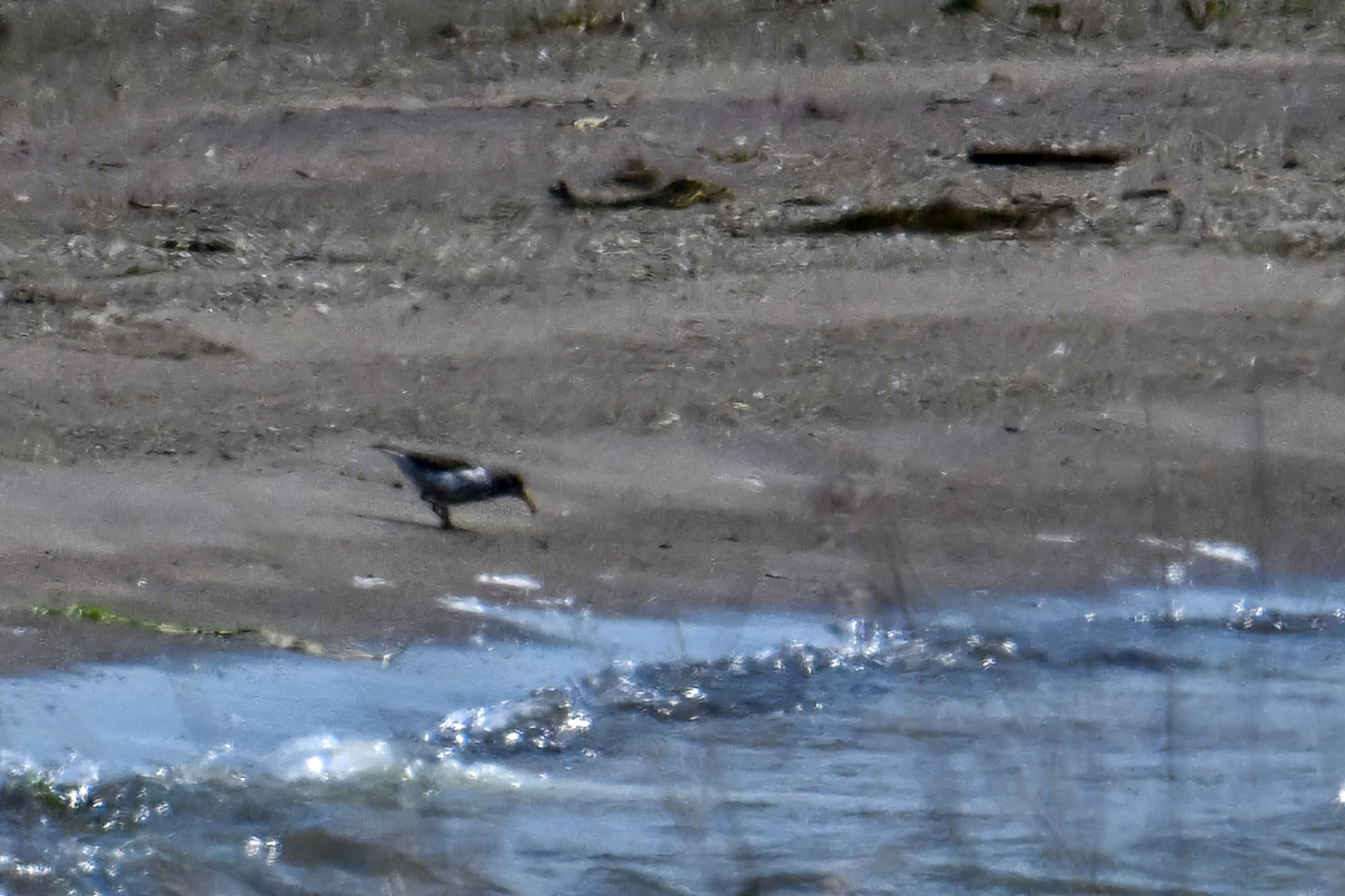
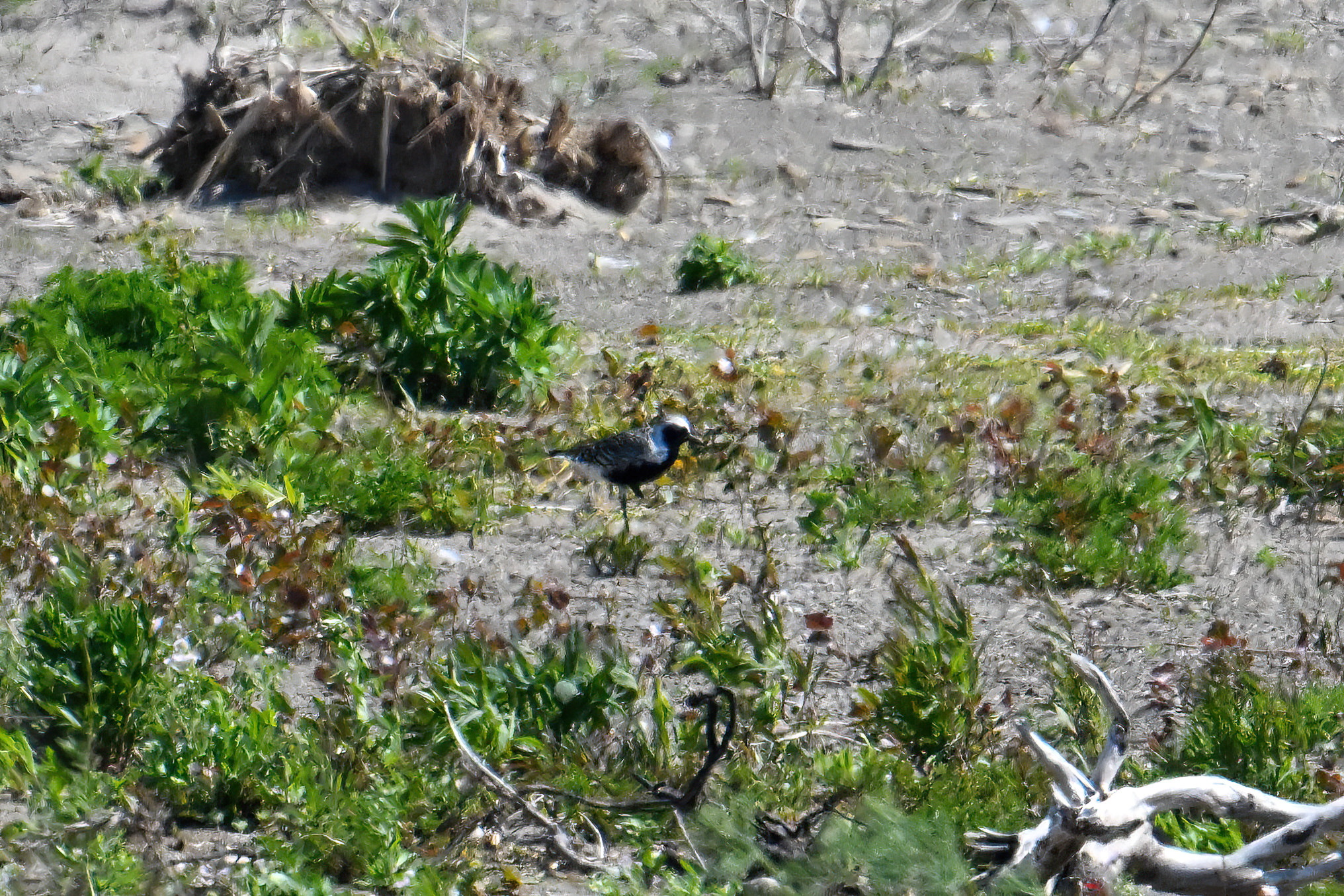
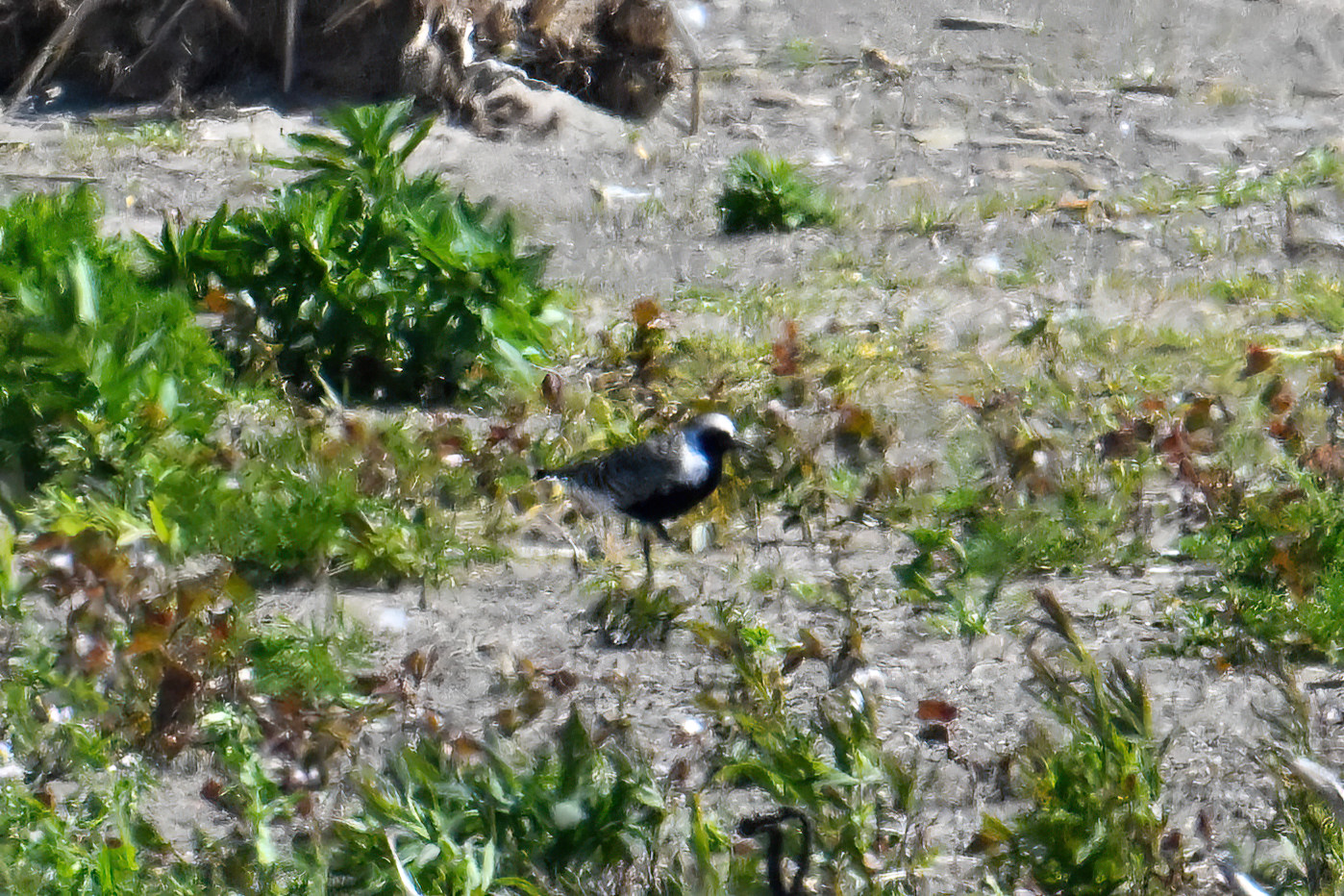
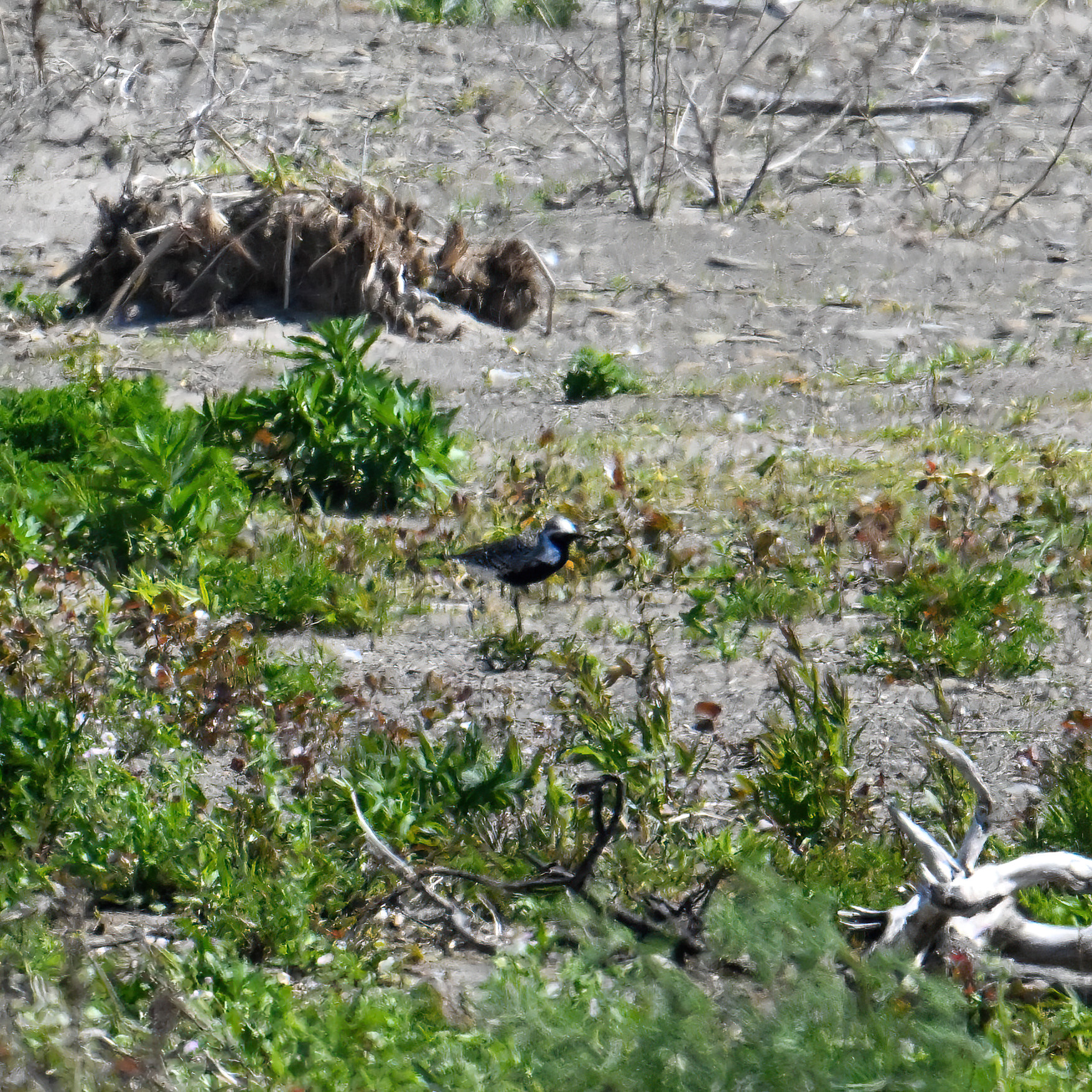
Another easier ID, it’s a blurry but great Black-bellied Plover:
Factors for this ID: relatively large, + black belly, + lacks the black top-of-head patch of an American Golden-Plover (which would be rare for this location/time anyway).
Enough long-distance, time for some ‘bonus’ not-as-blurry birds:
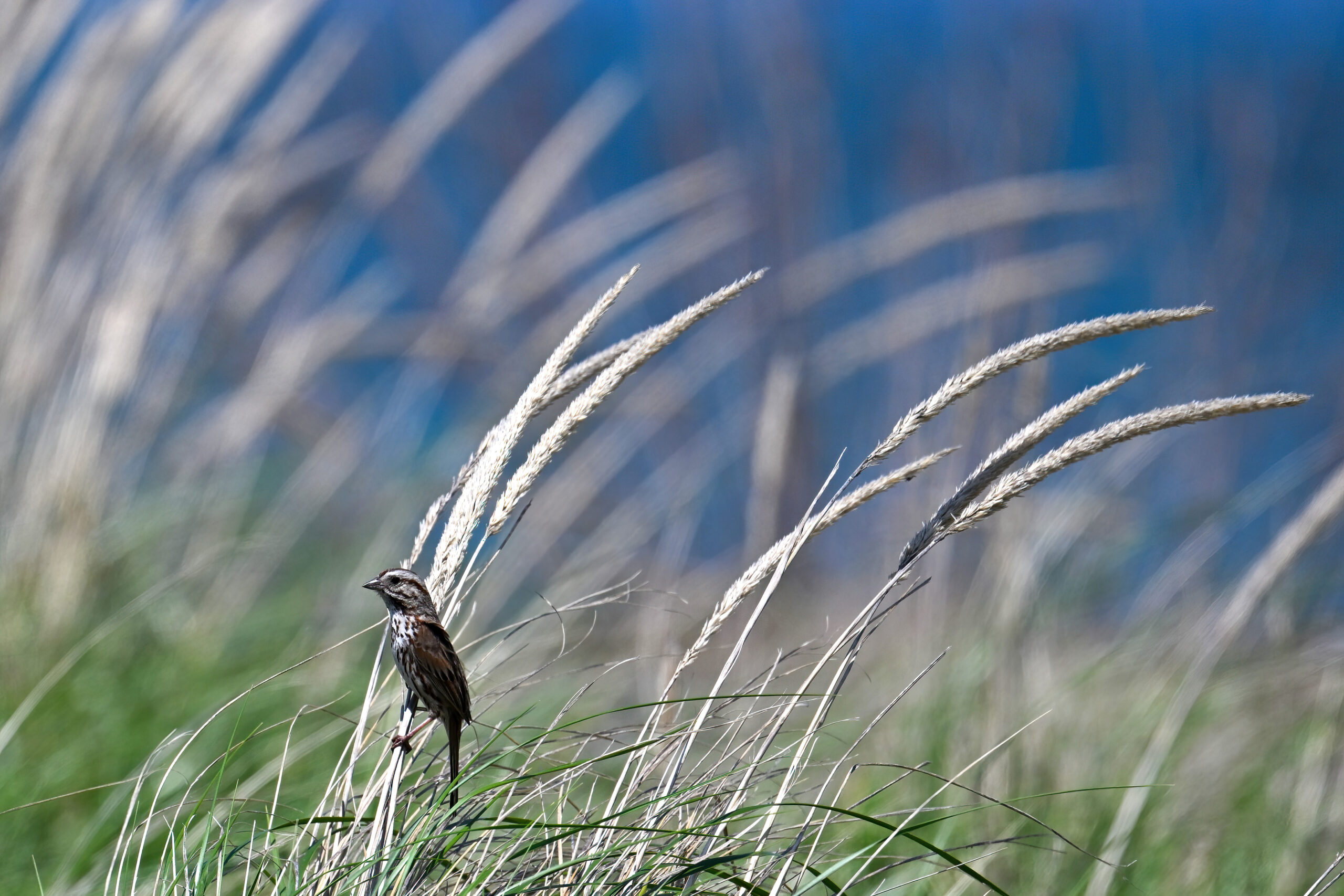
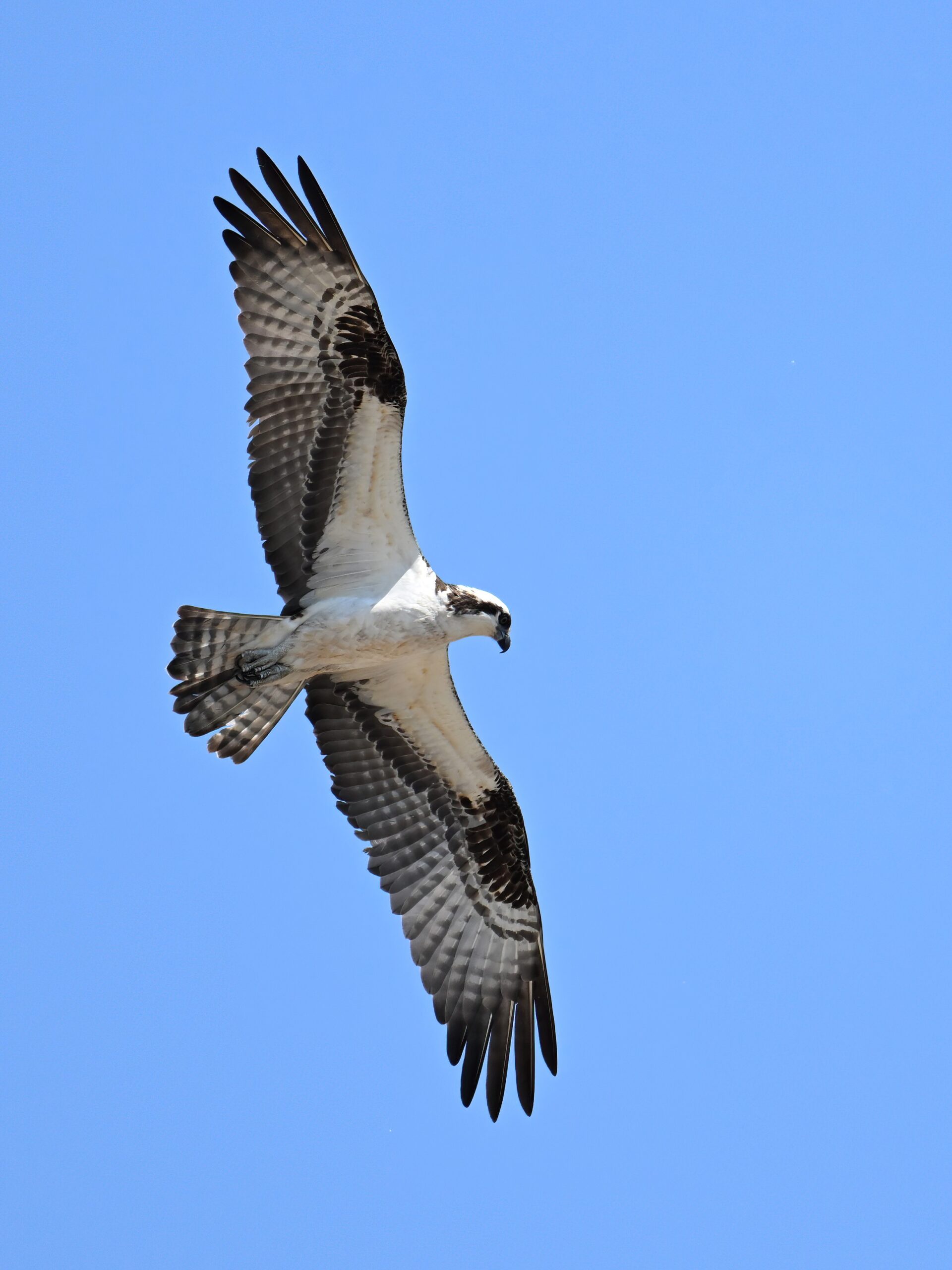
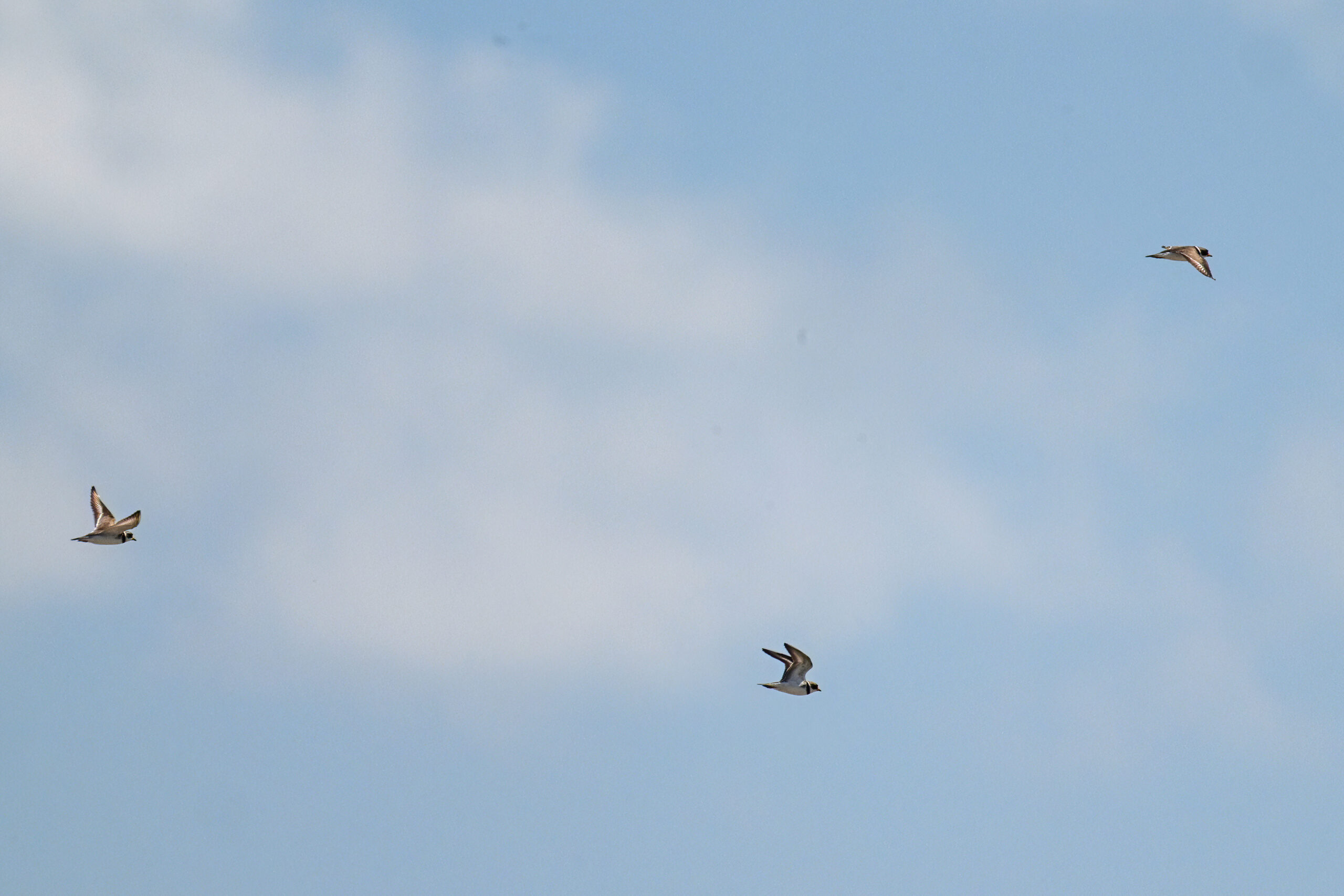
Osprey IProbably Song SparrowOsprey IIDeparting Semipalmated Plover x3
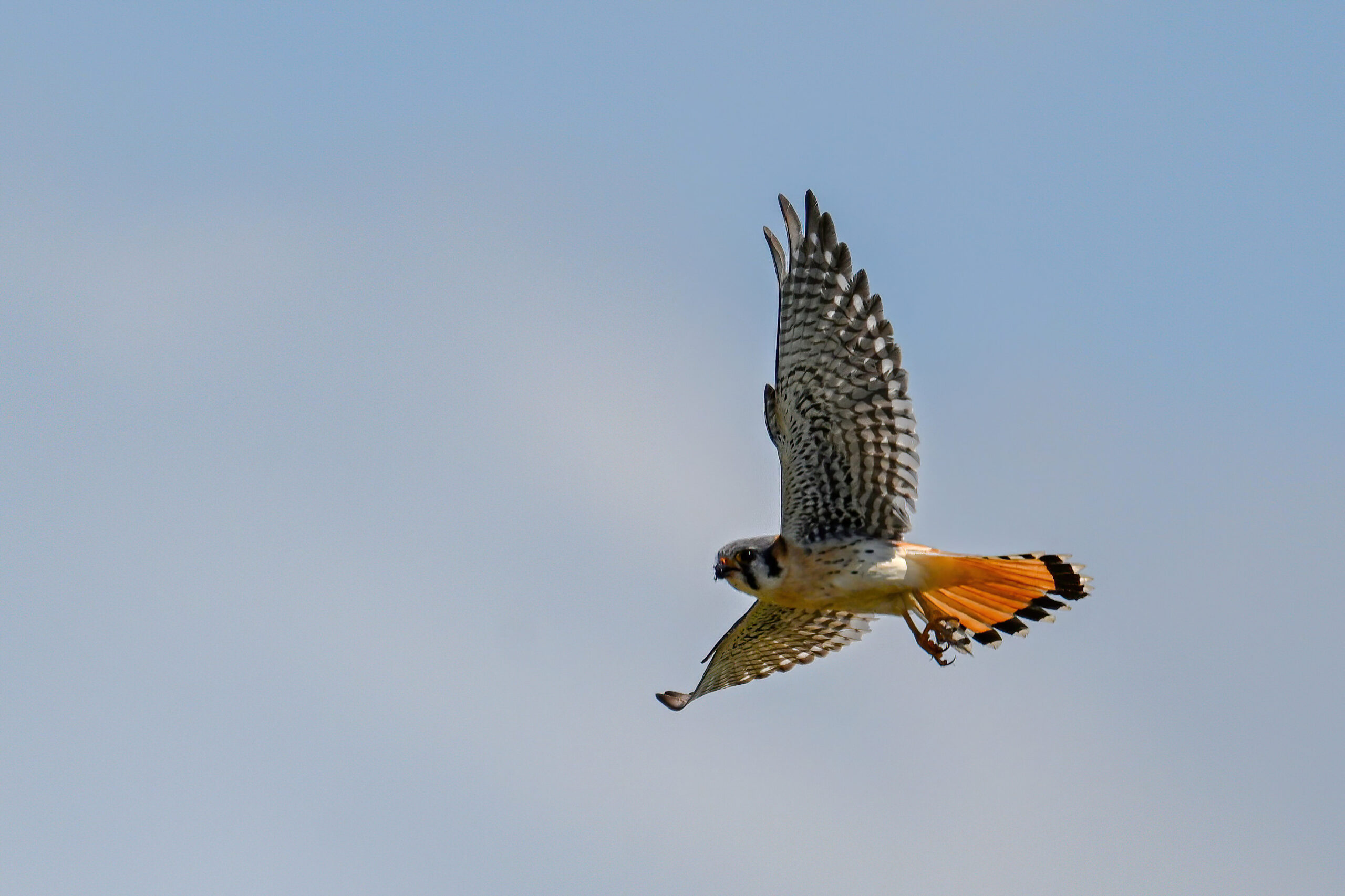
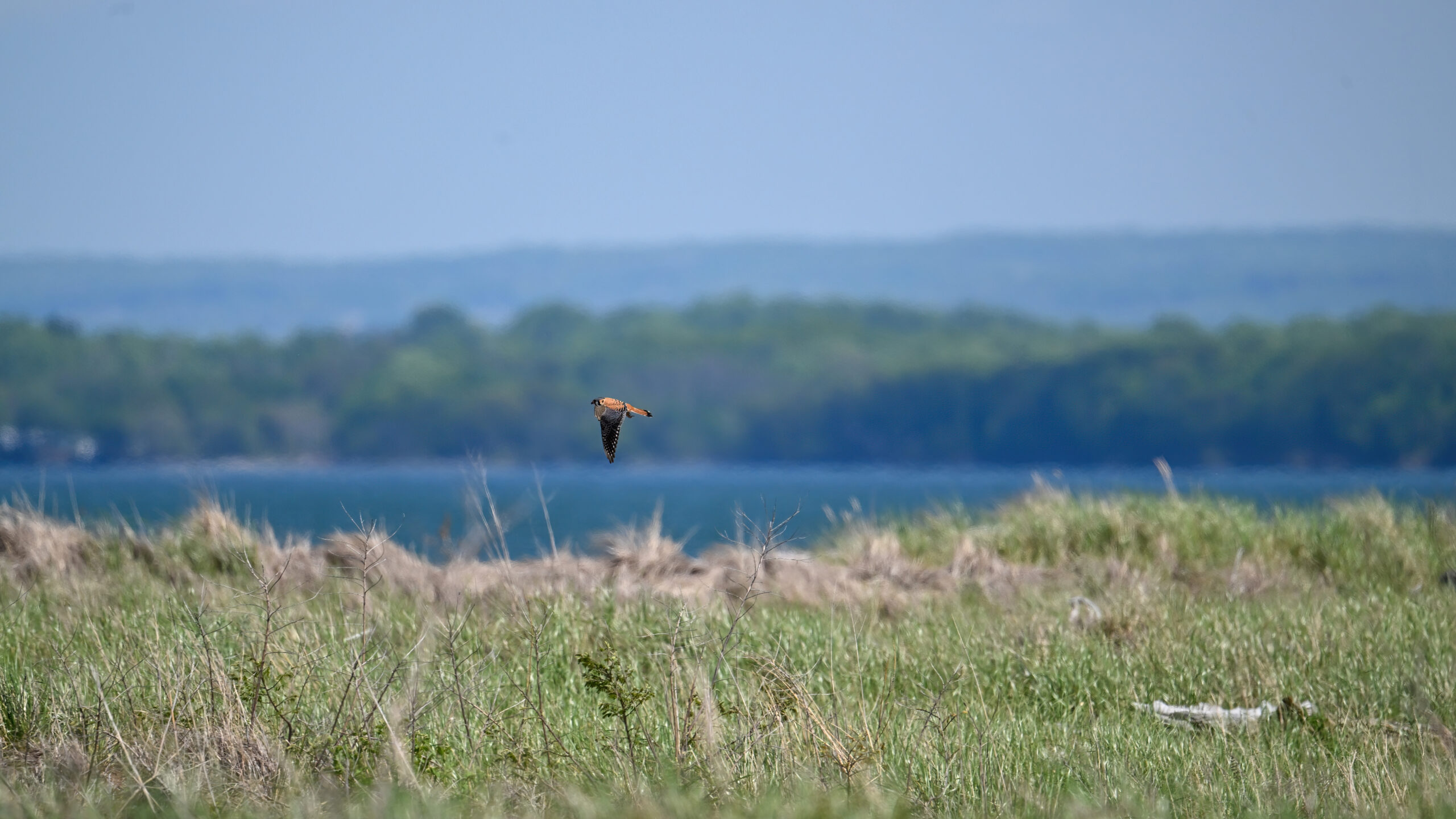
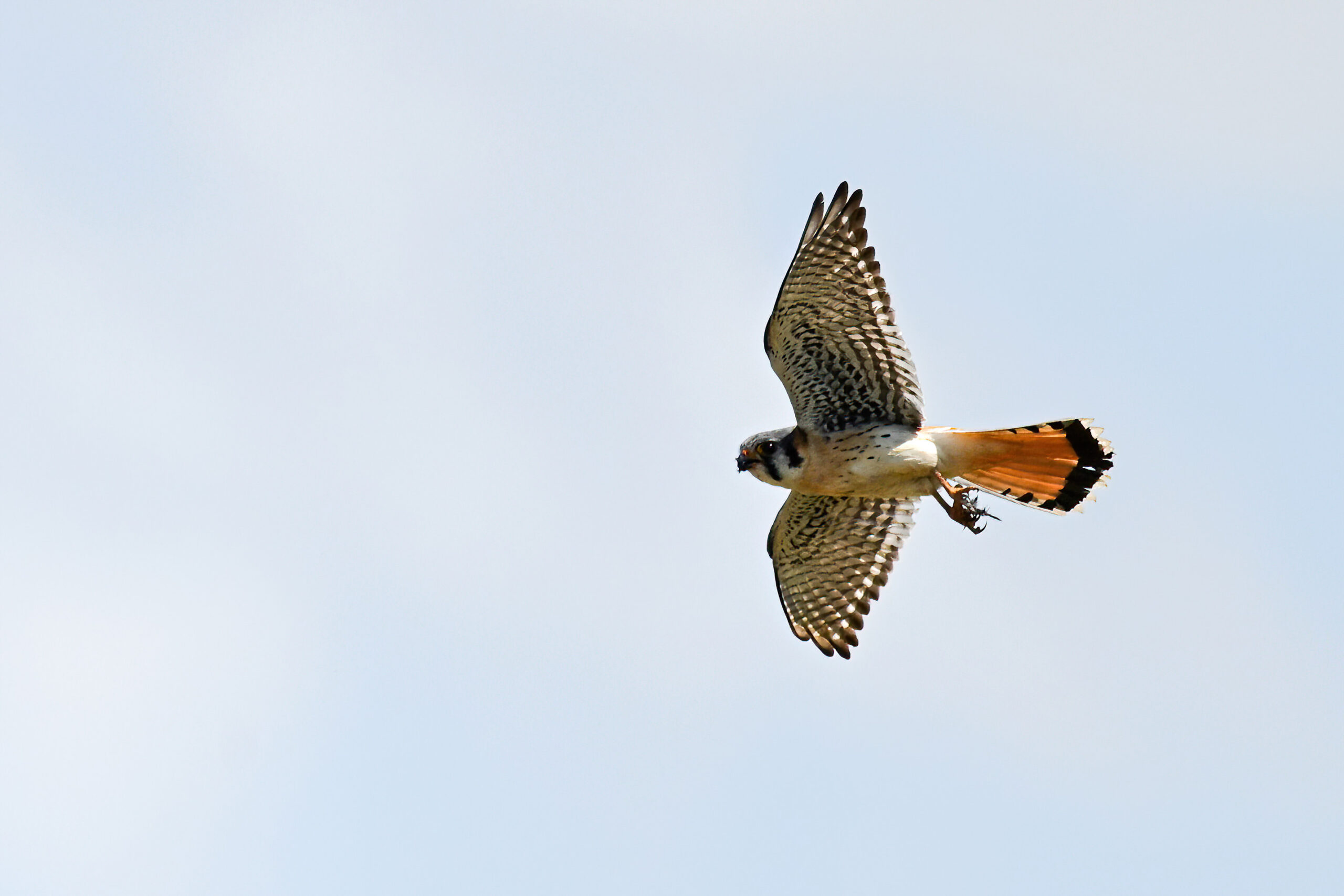
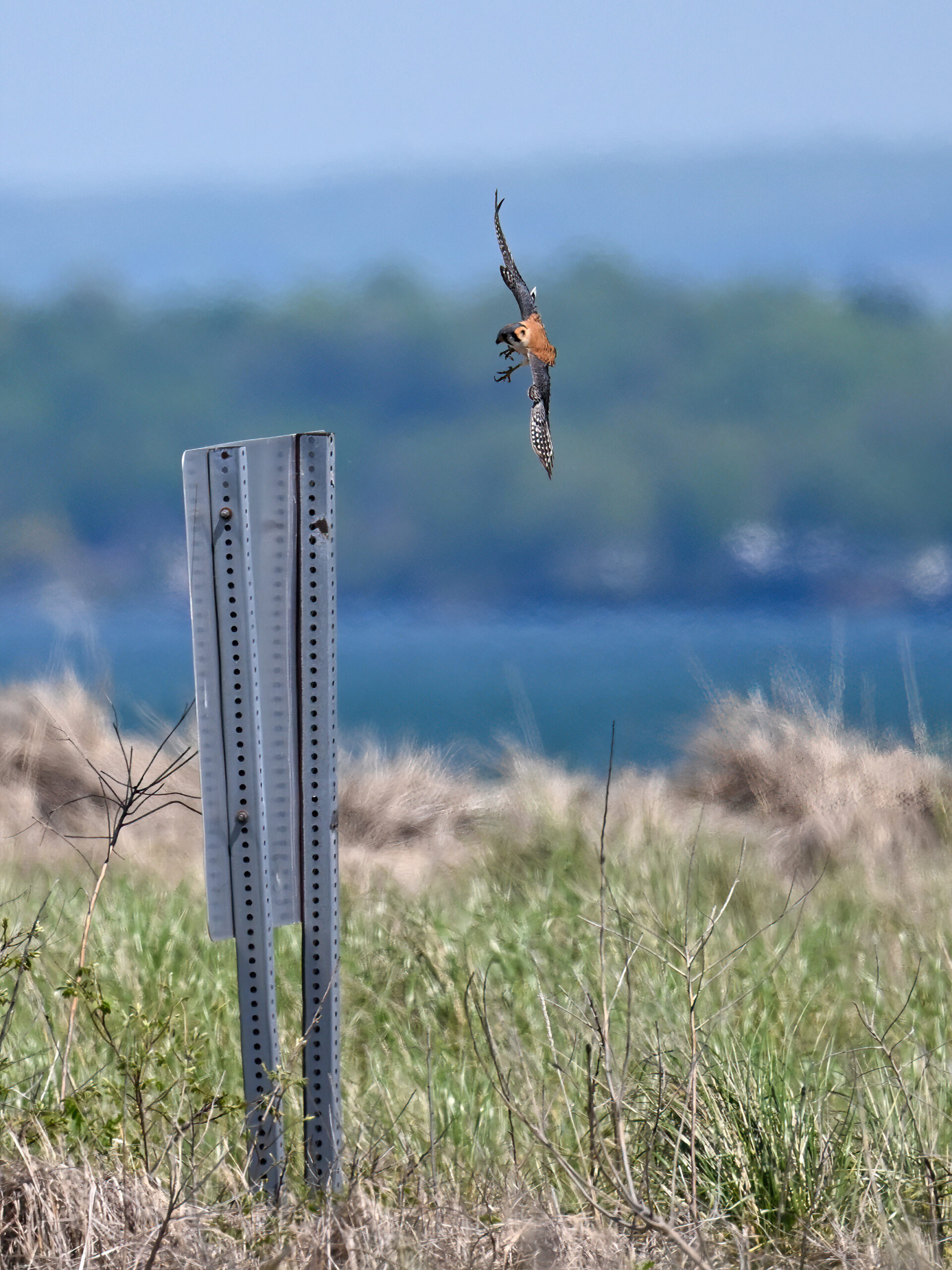
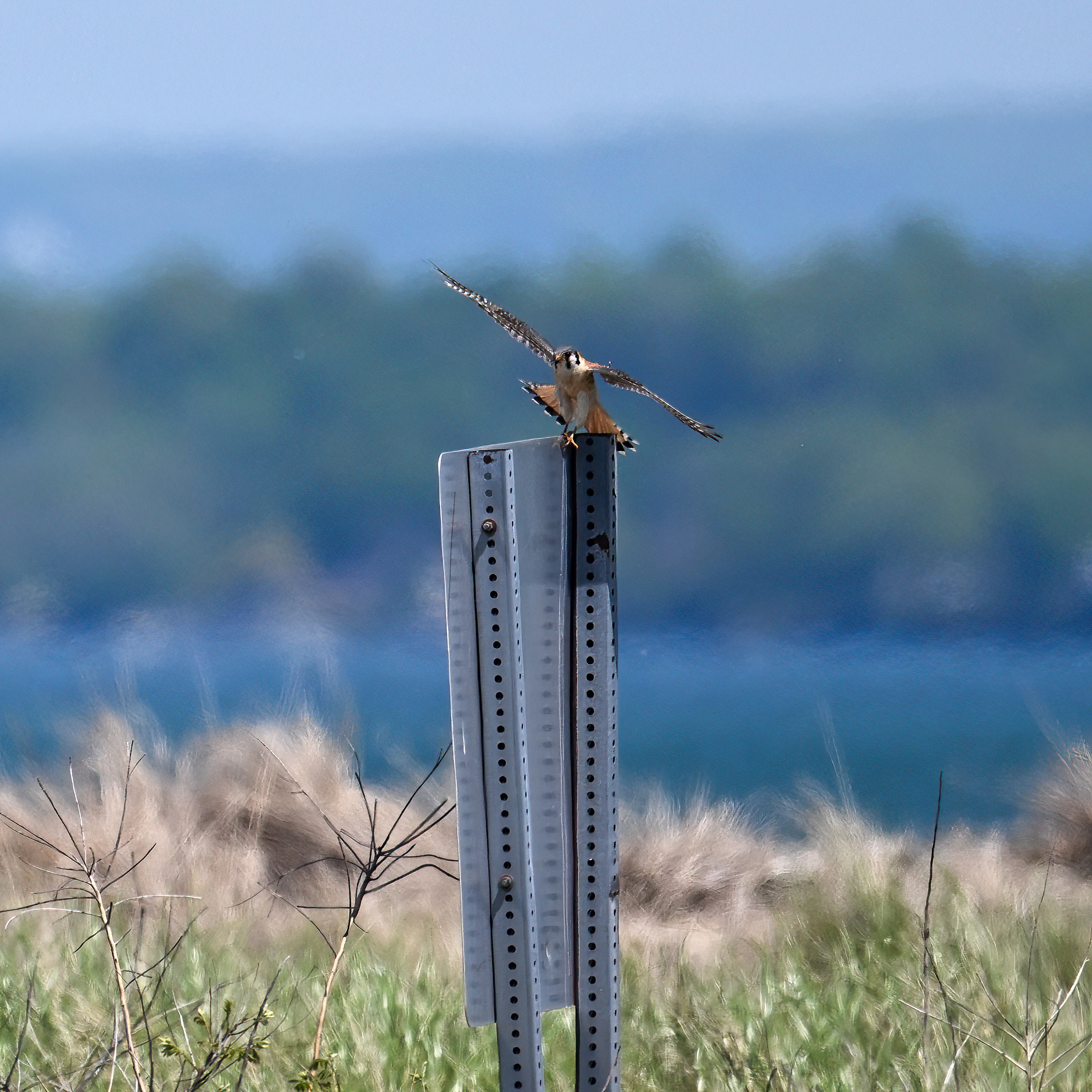
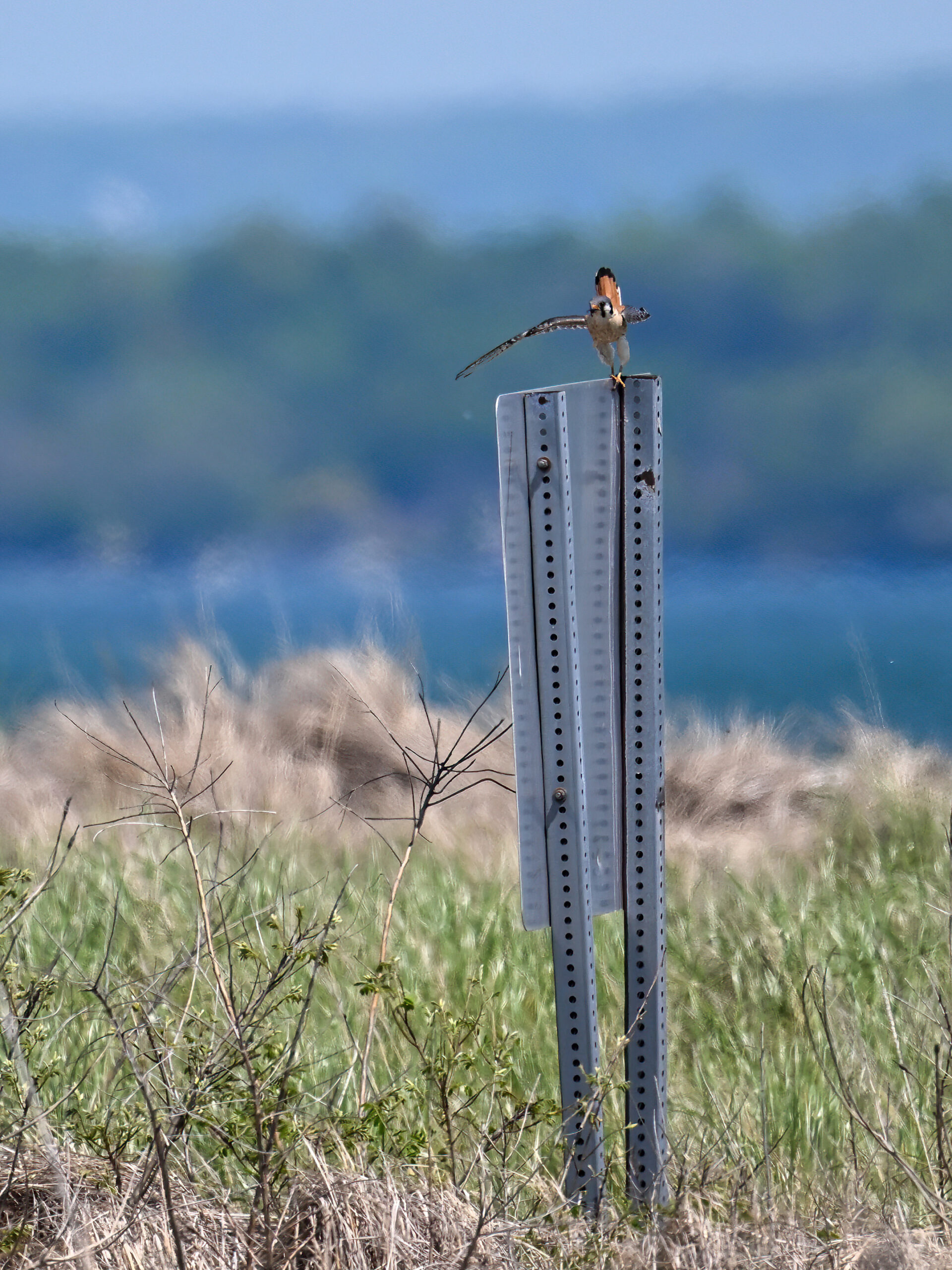
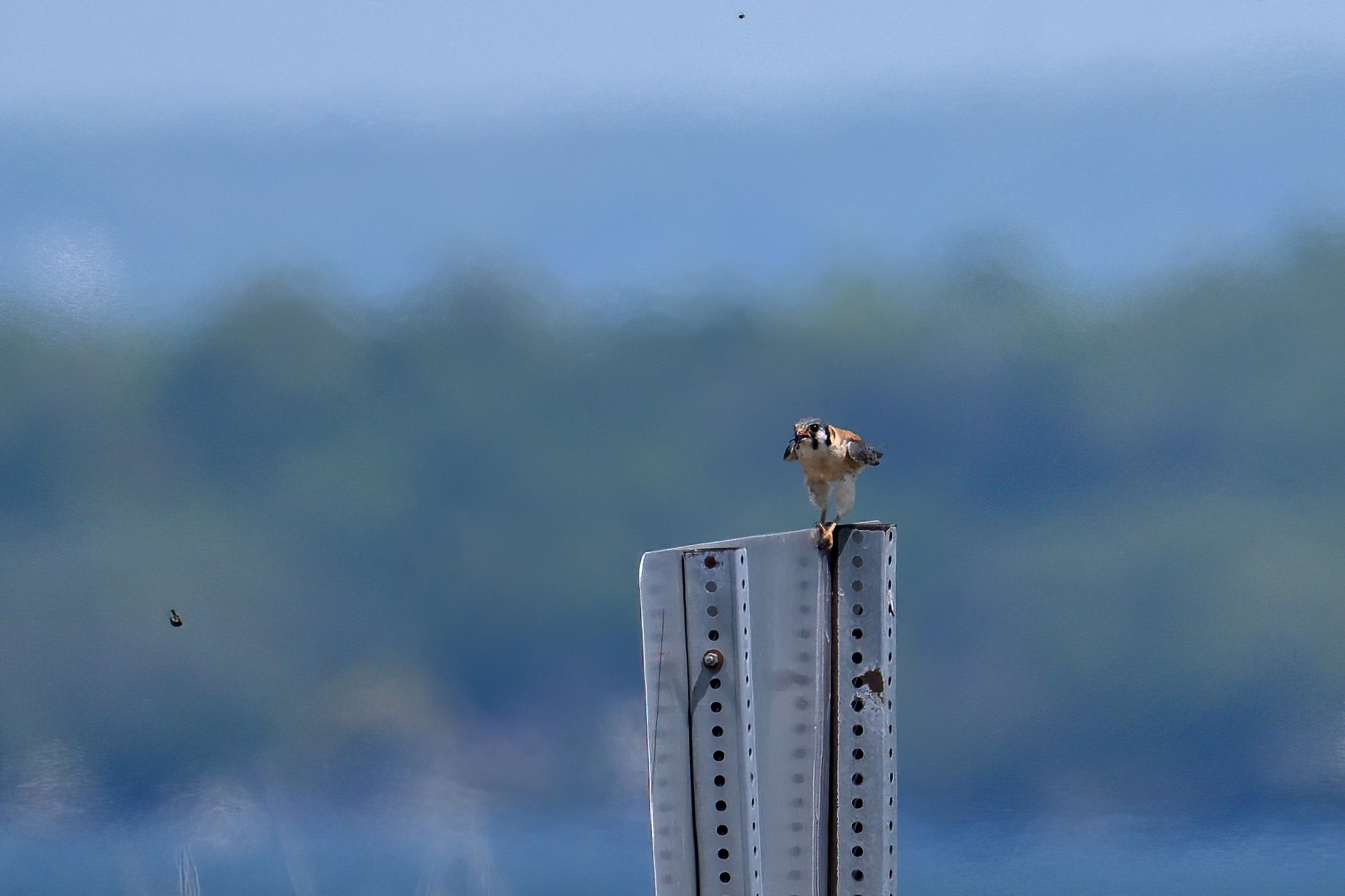
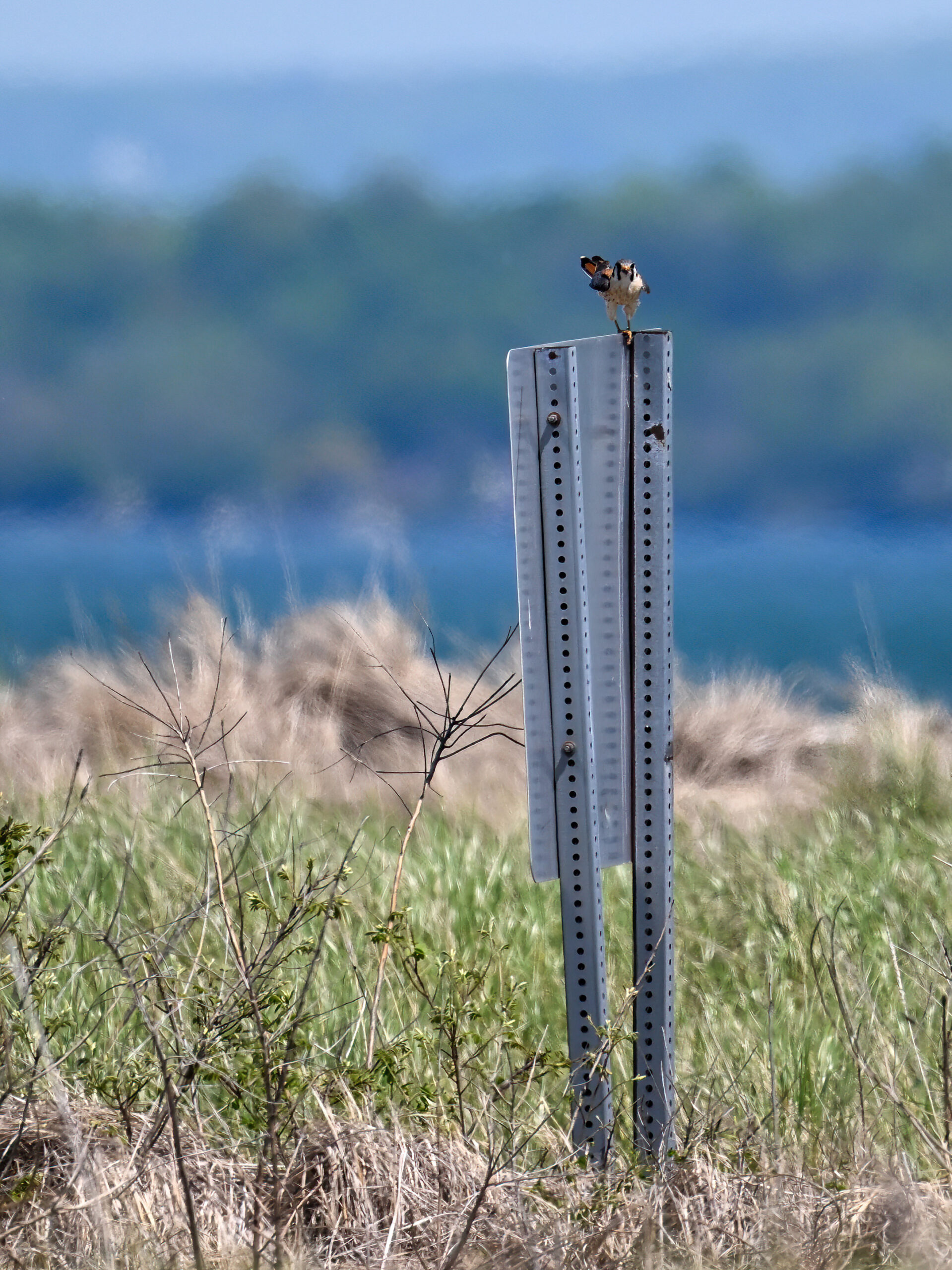
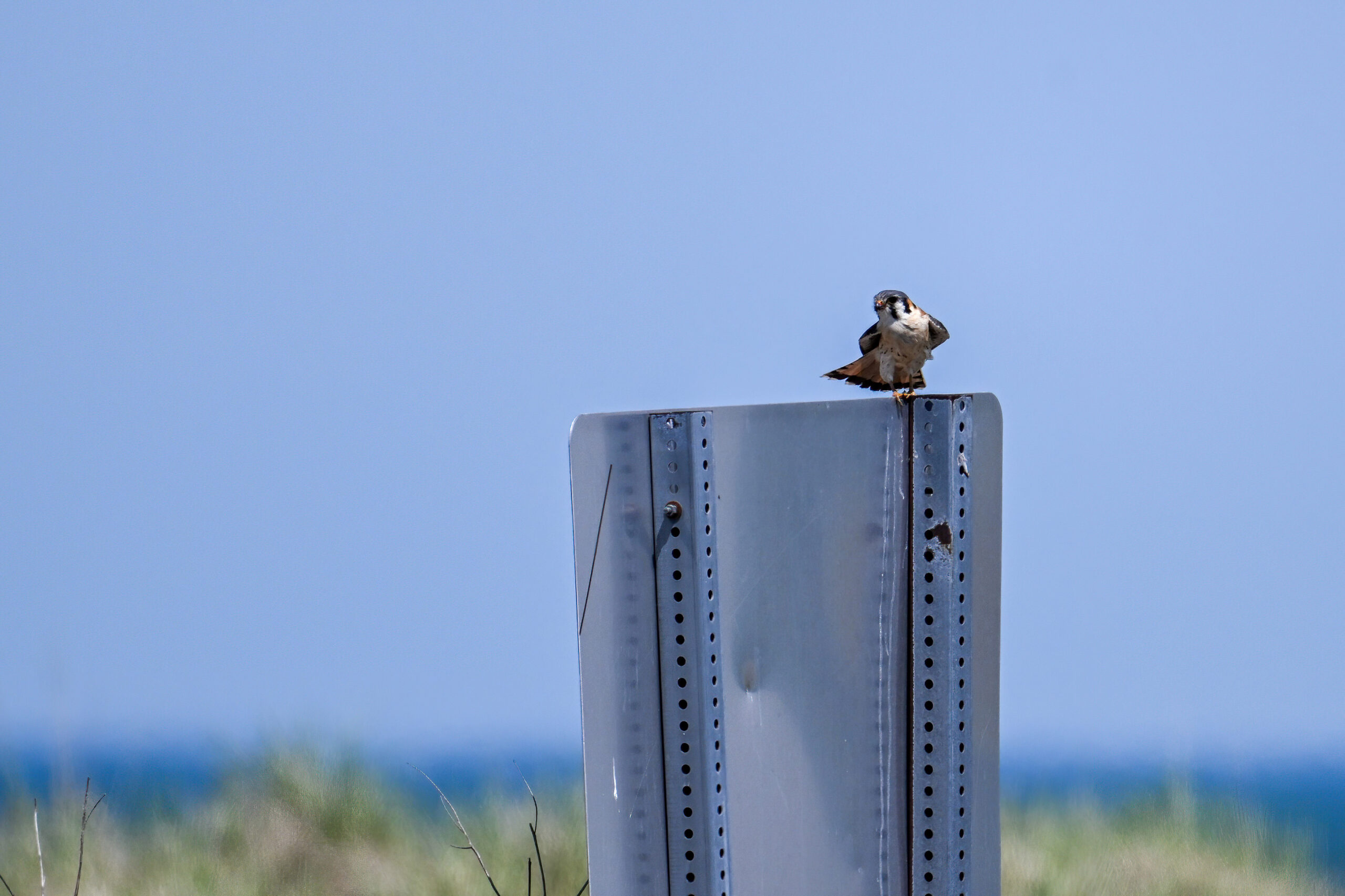
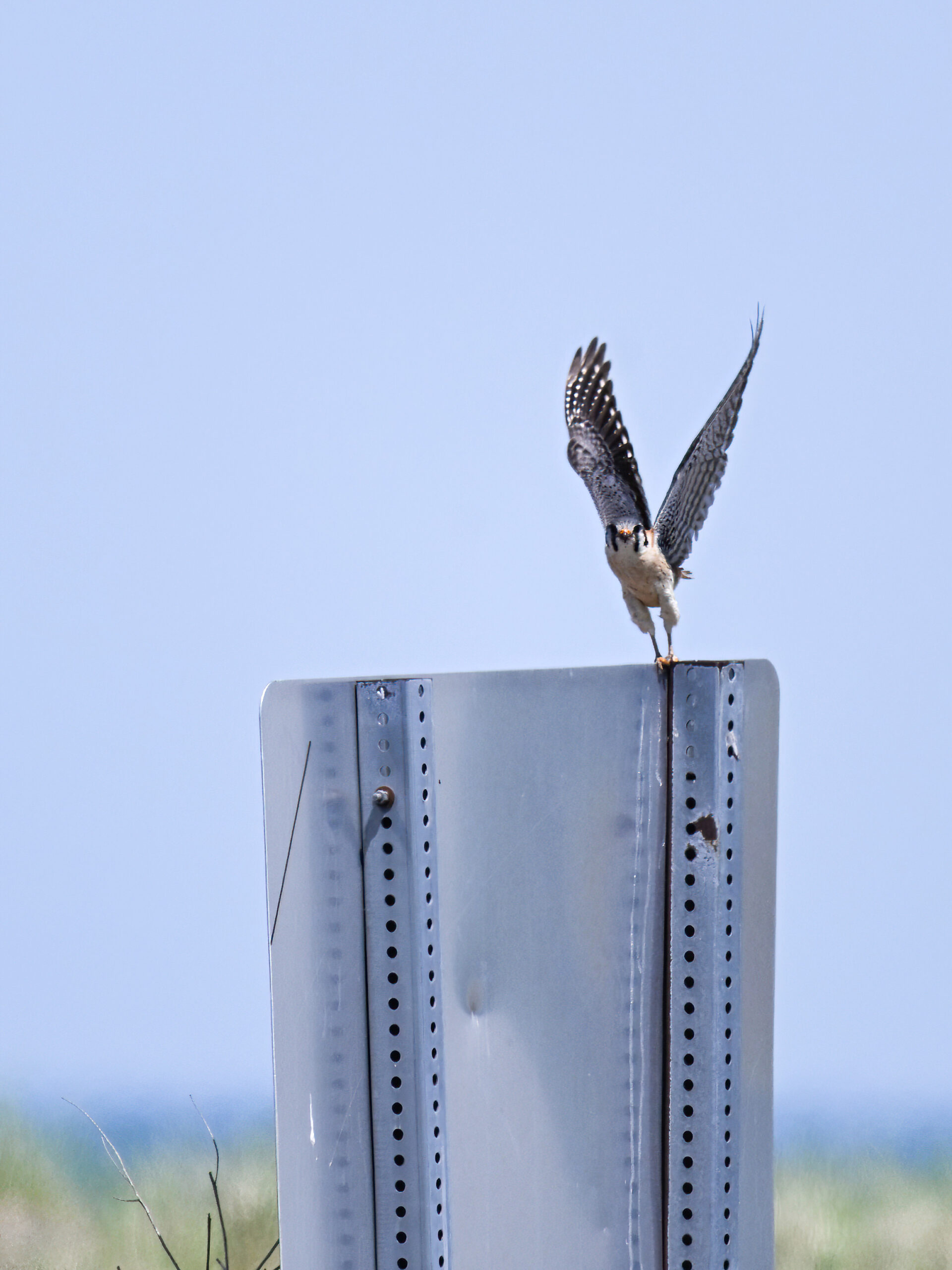
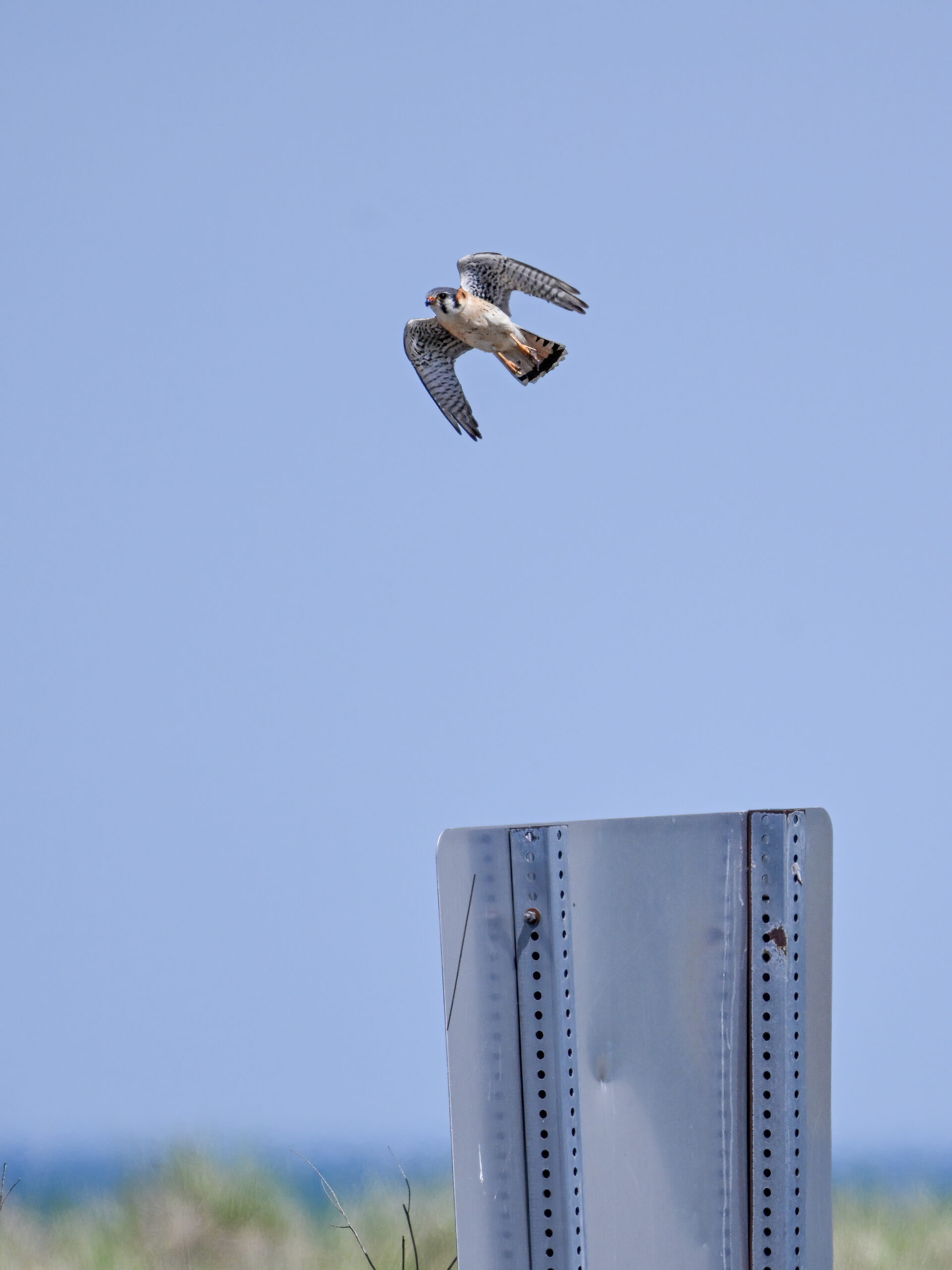
And as if this post isn’t long enough already, a great sequence of American Kestrel @ flying & landing:
This is one of the several Gull Point outwards-facing “Don’t moor within 100 yards of shore” (or something like that) warning signs for boaters, reflecting the protected nesting season status:
* Tip: to see the mostly likely candidates for the date/location in question, pull up the eBird checklist, which defaults to “non-rare.” For Gull Point in May, the most common tern options are Common, Forster’s, & Caspian. (Plenty of other ways to utilize eBird in this regard, such as looking at species reporting bar charts for recent years; here, 2023 reporting shows more reportings of Caspian and Common Terns in May, but fewer Forster’s.)
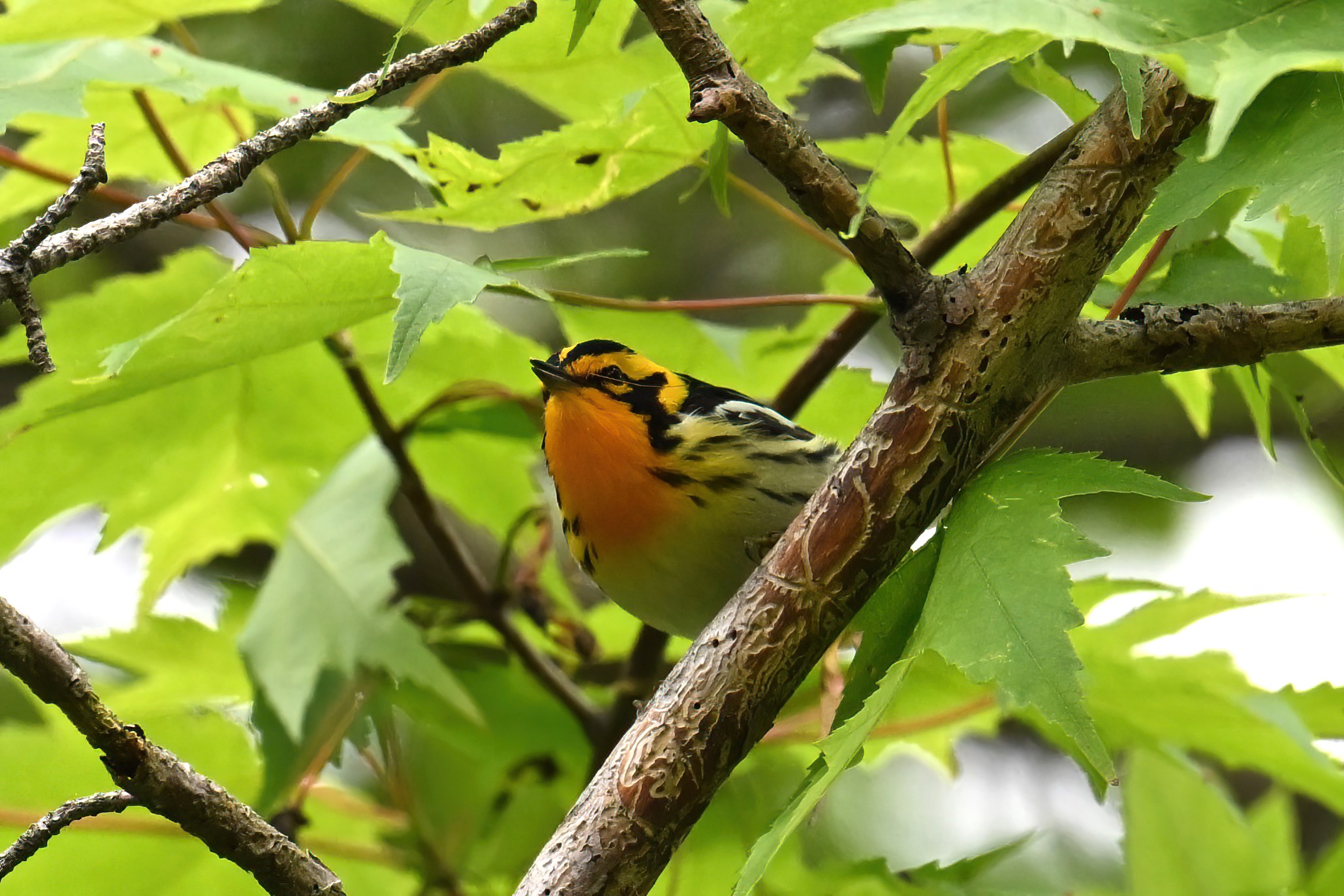
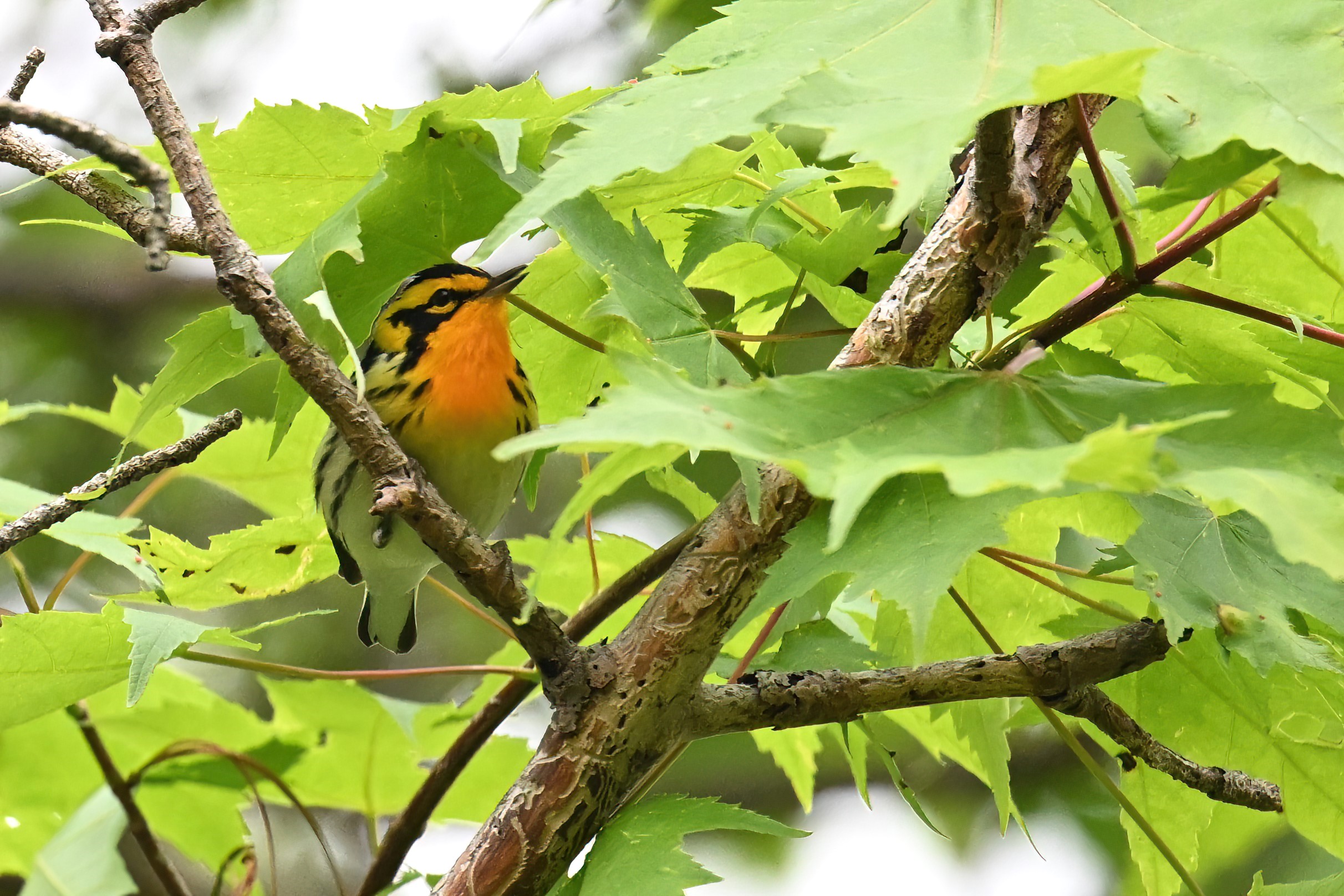
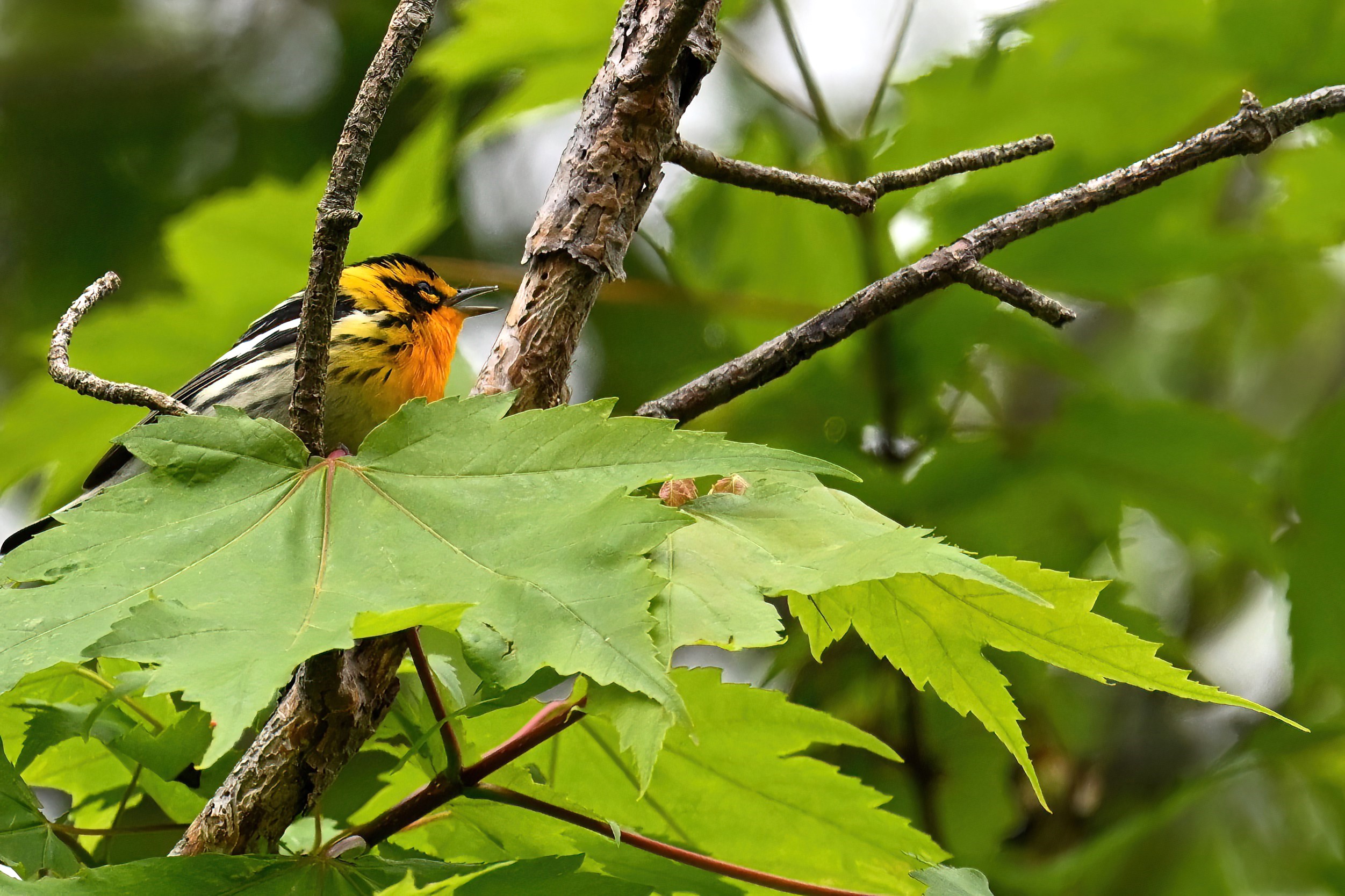
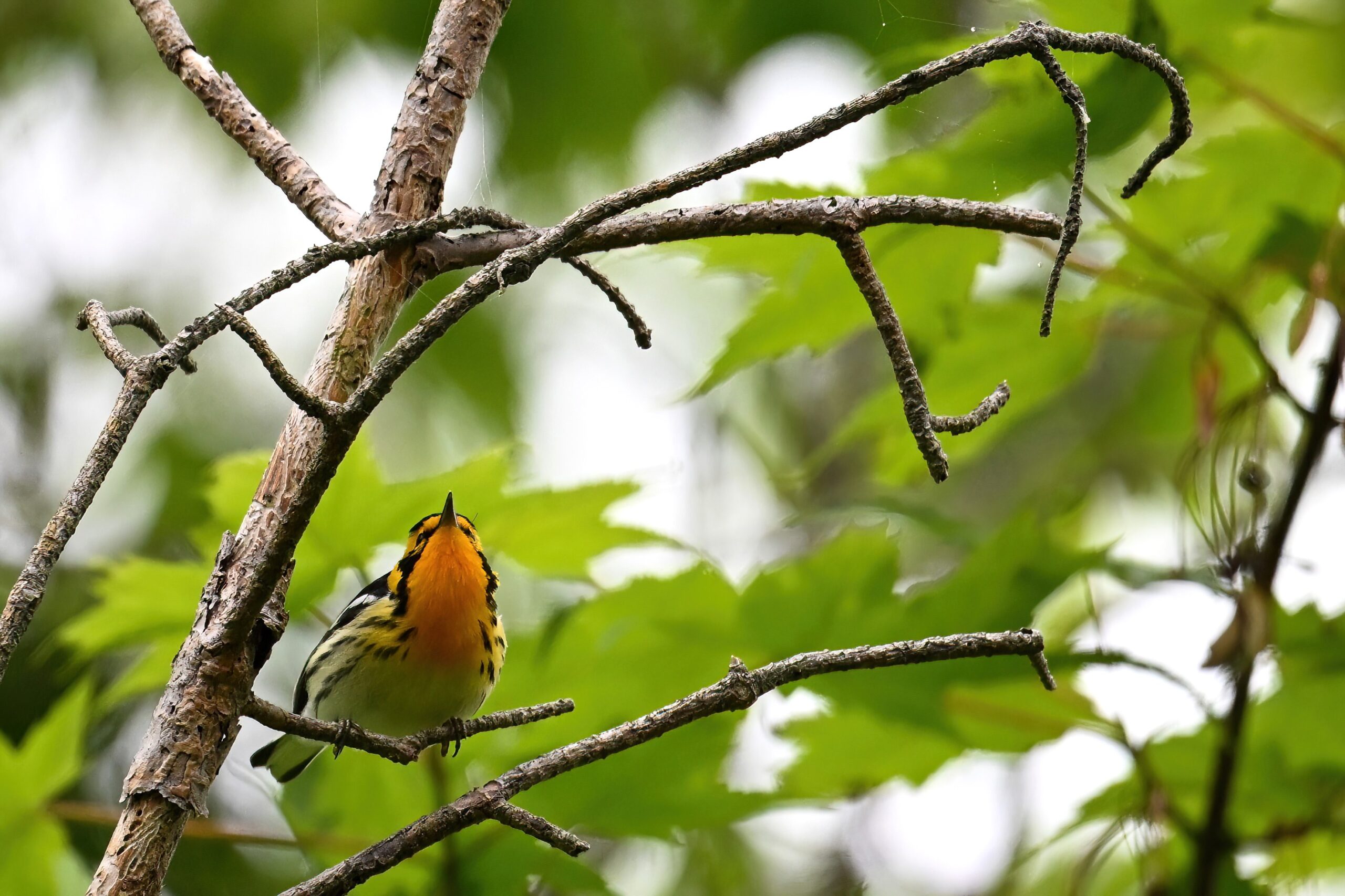
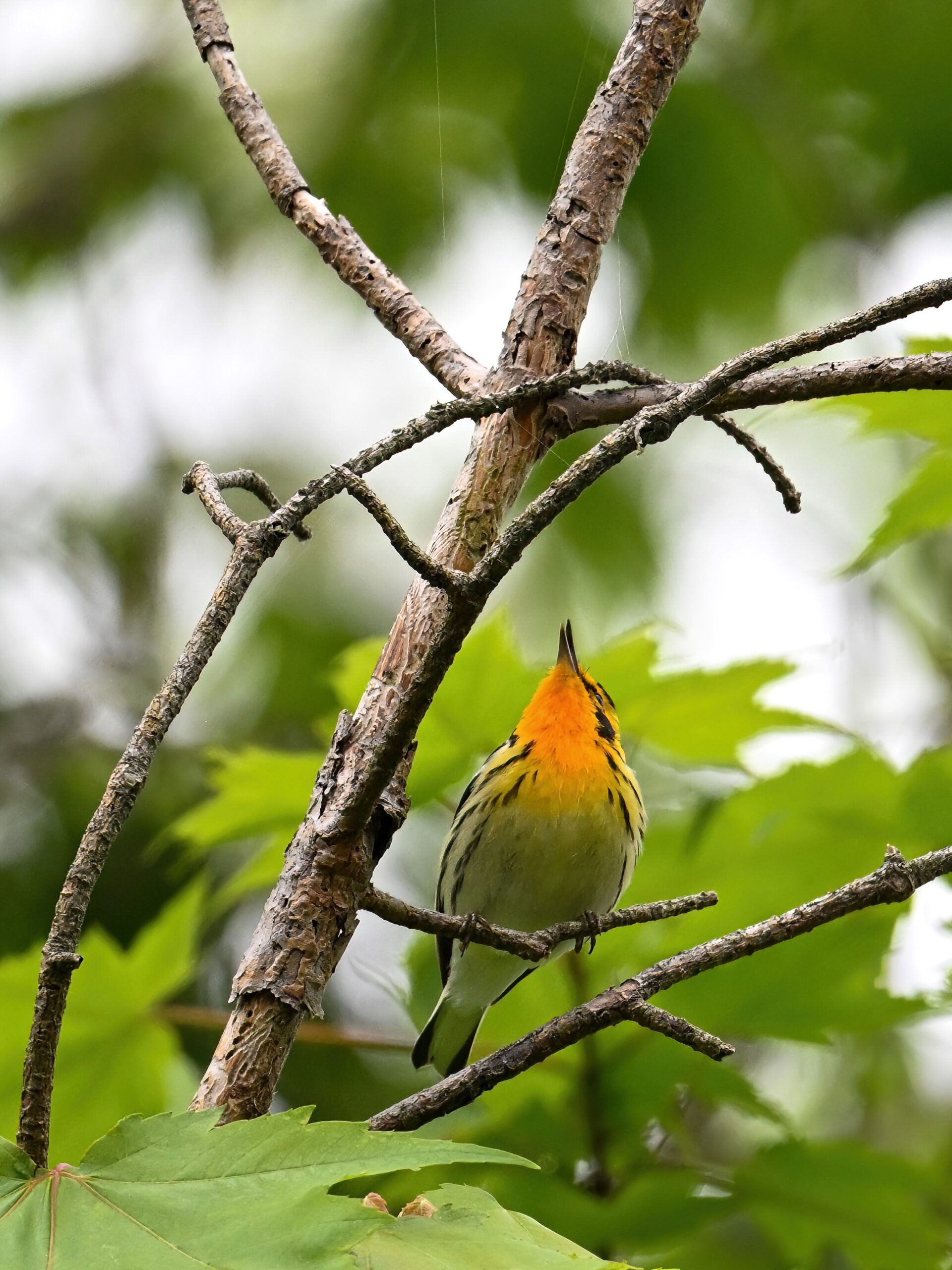
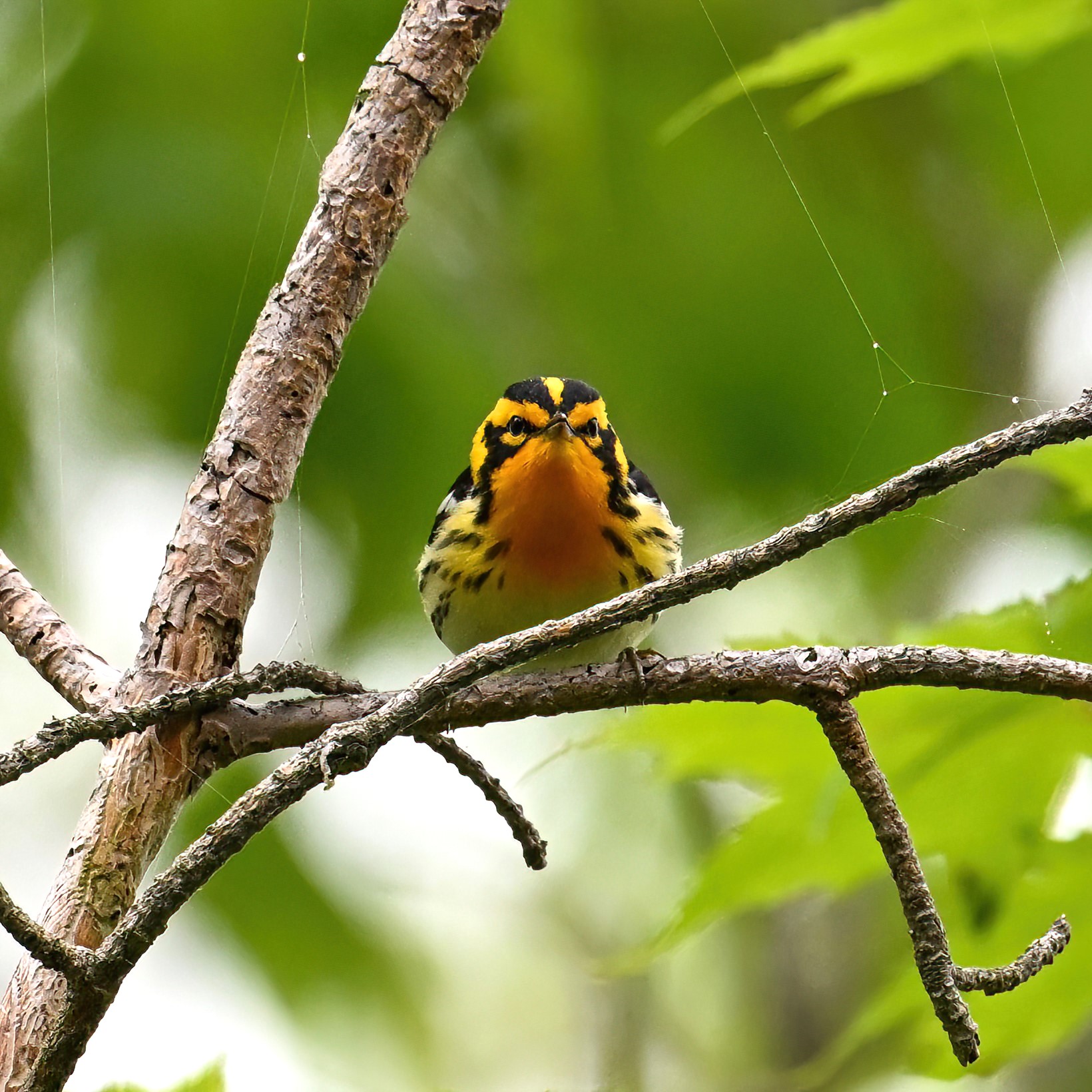
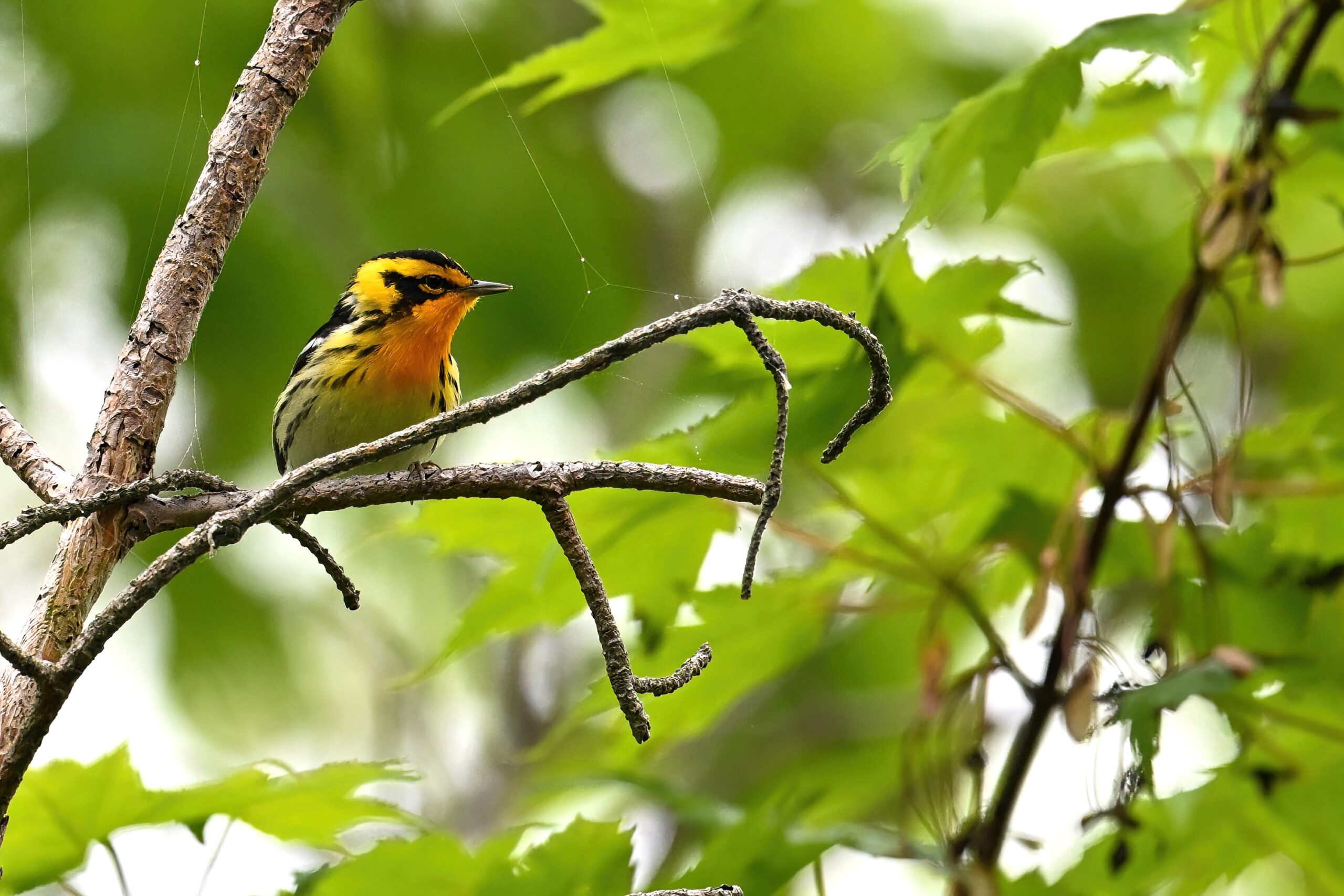
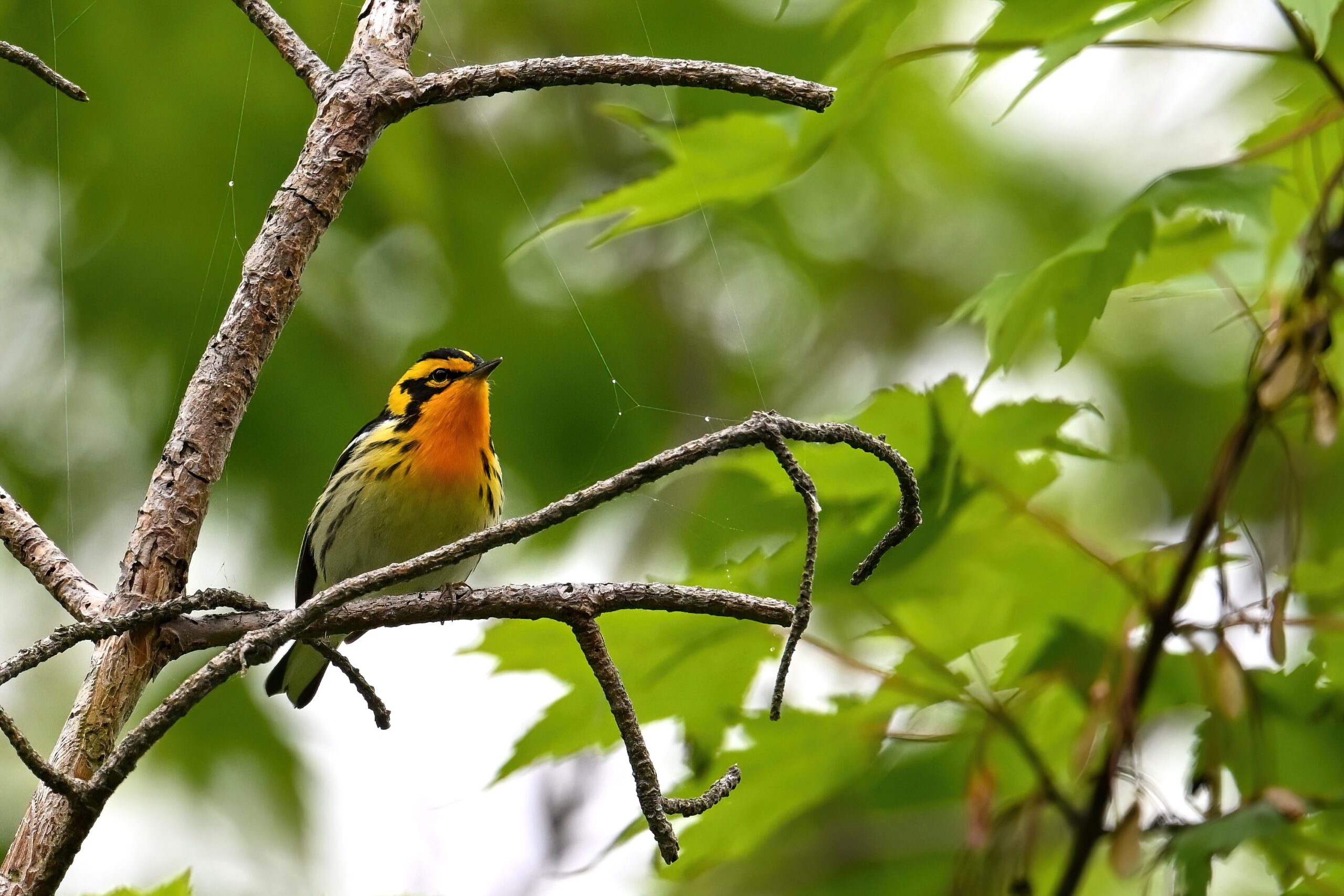
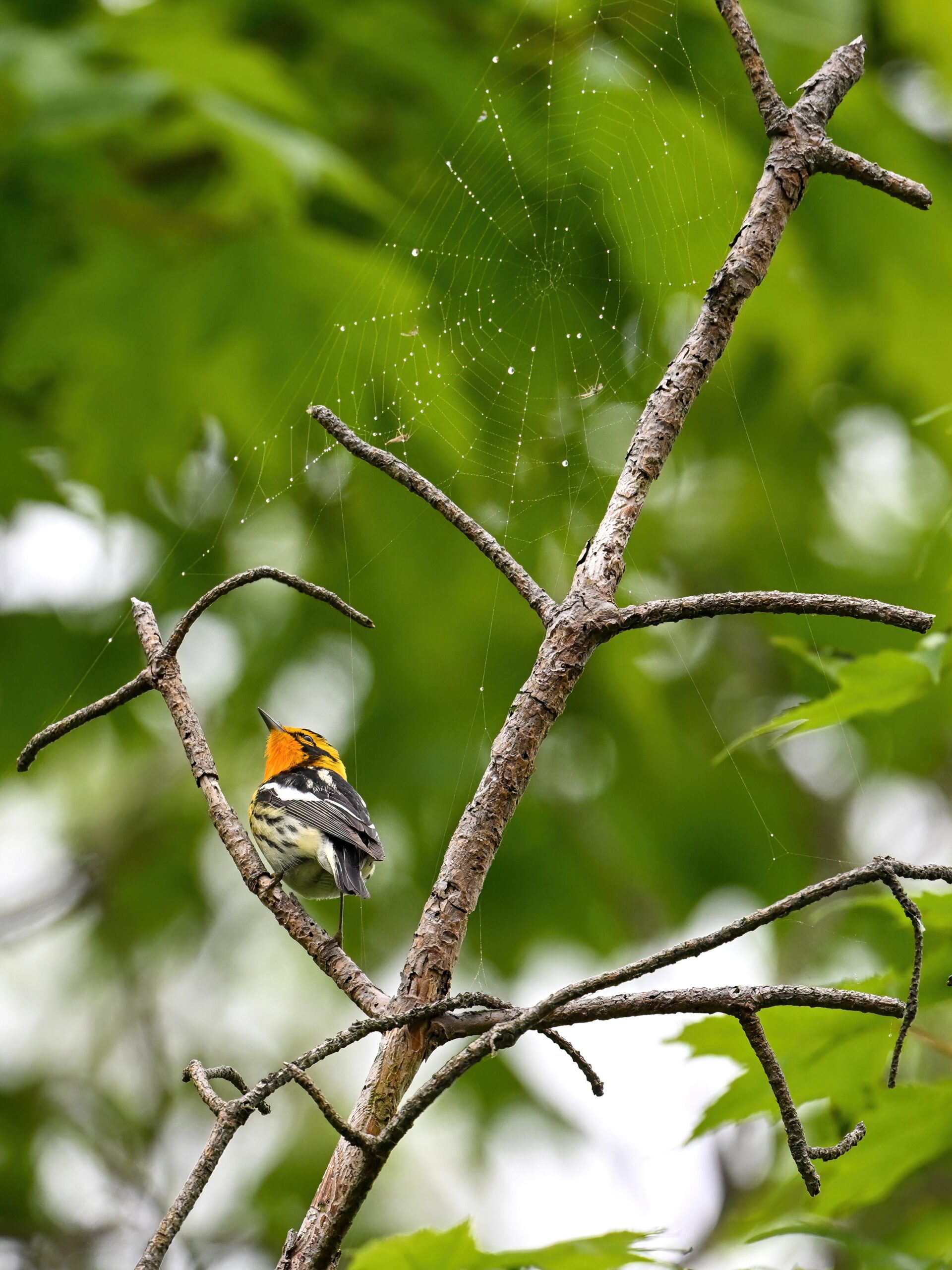
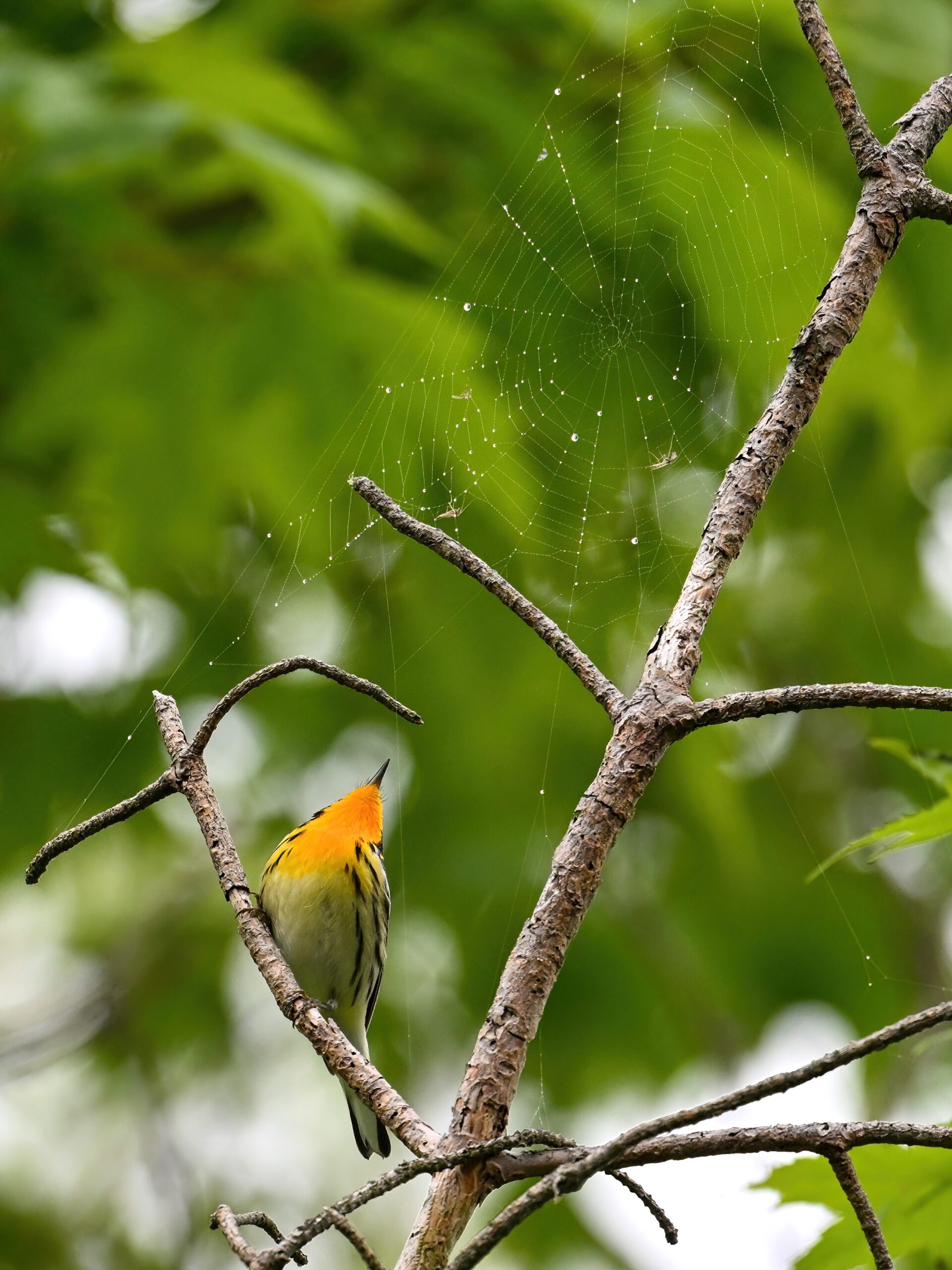
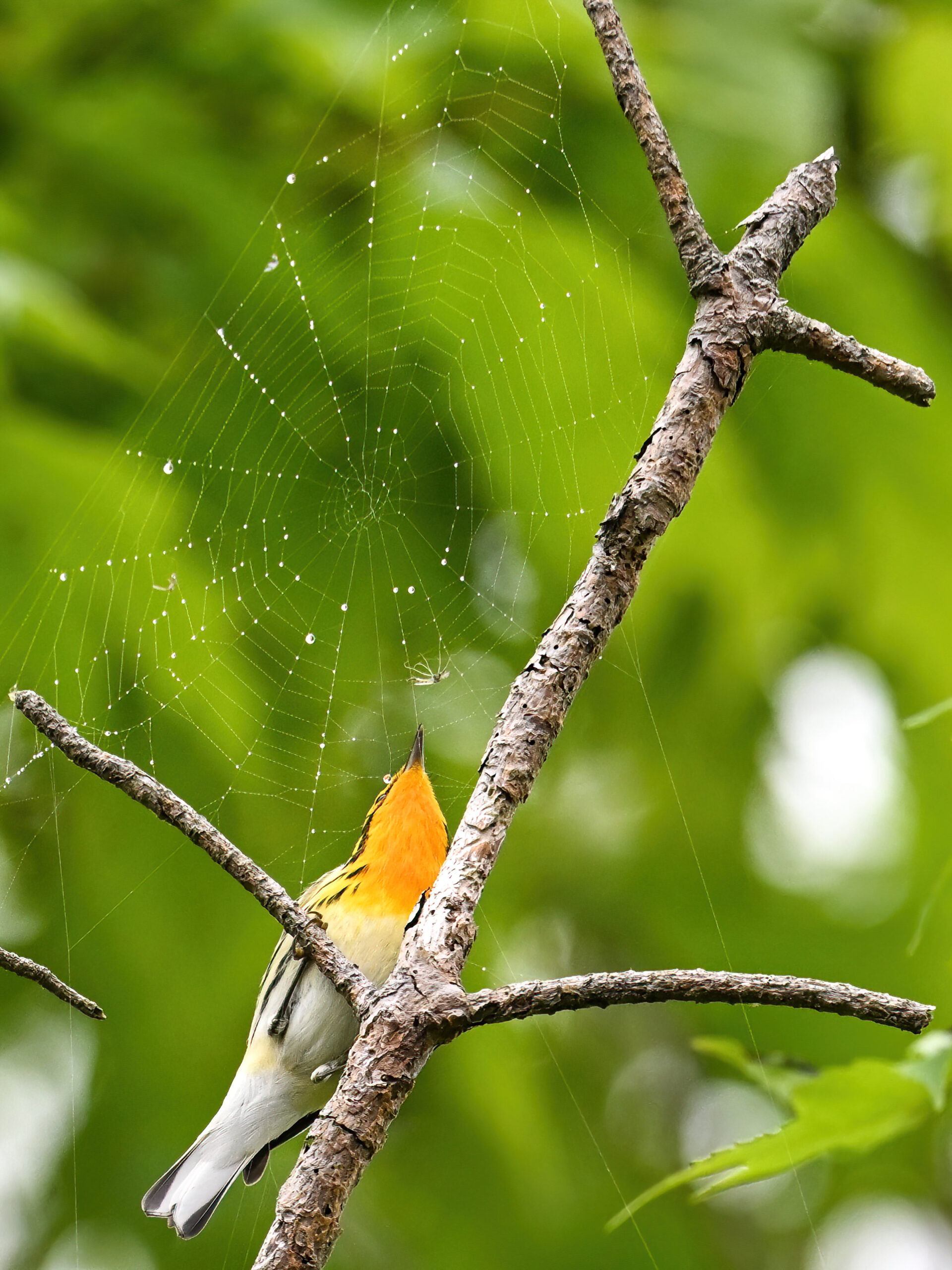
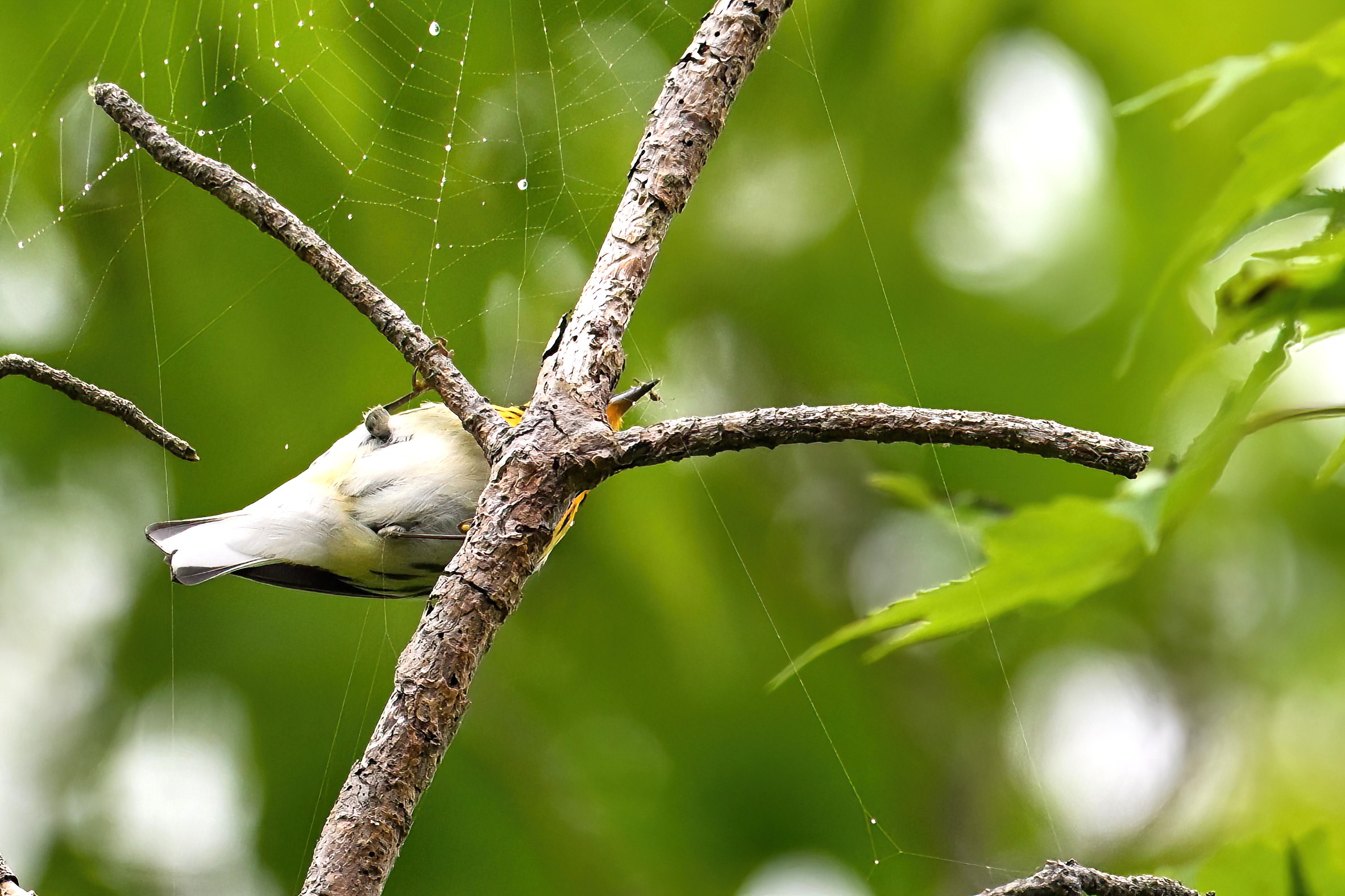
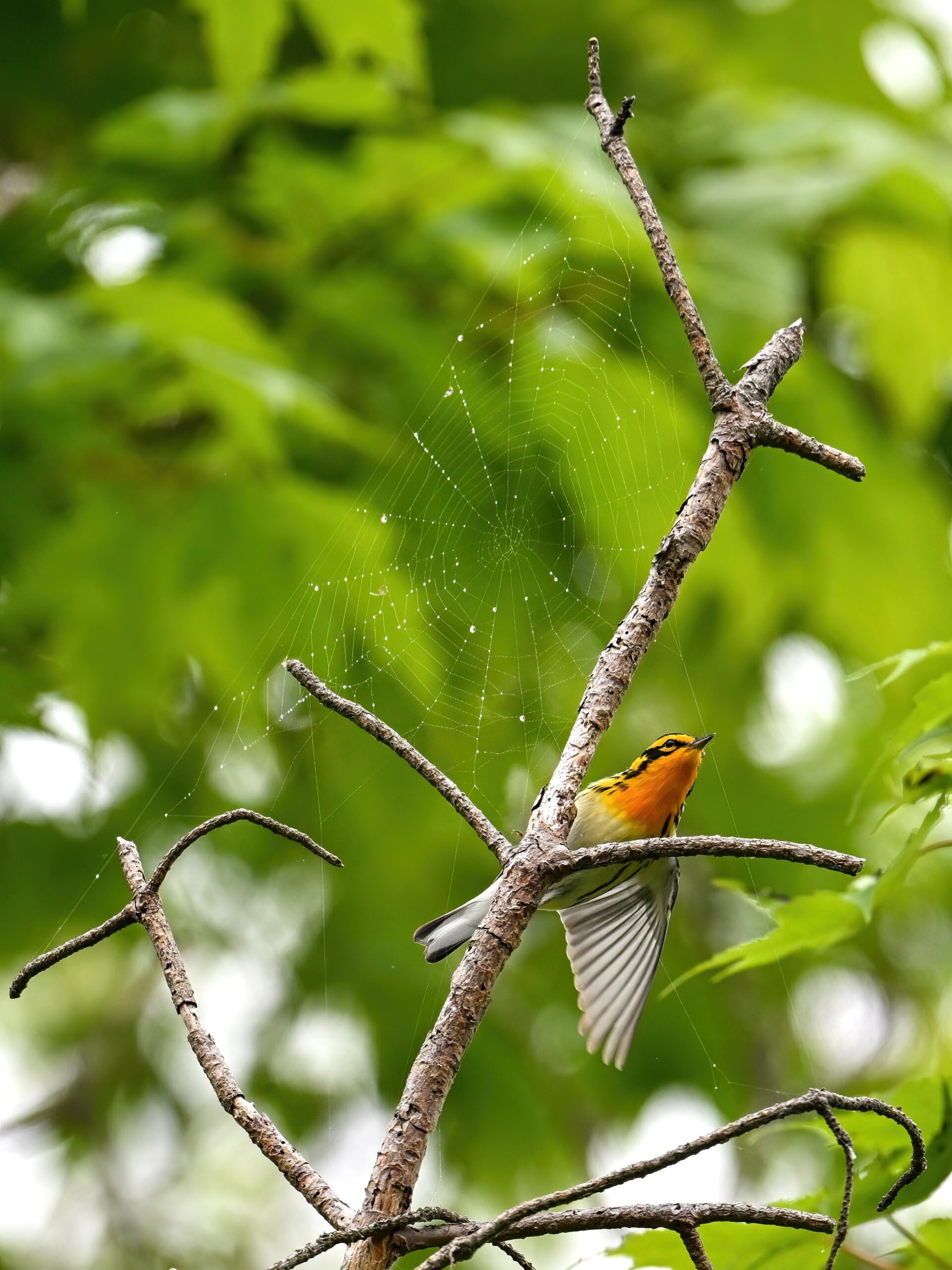
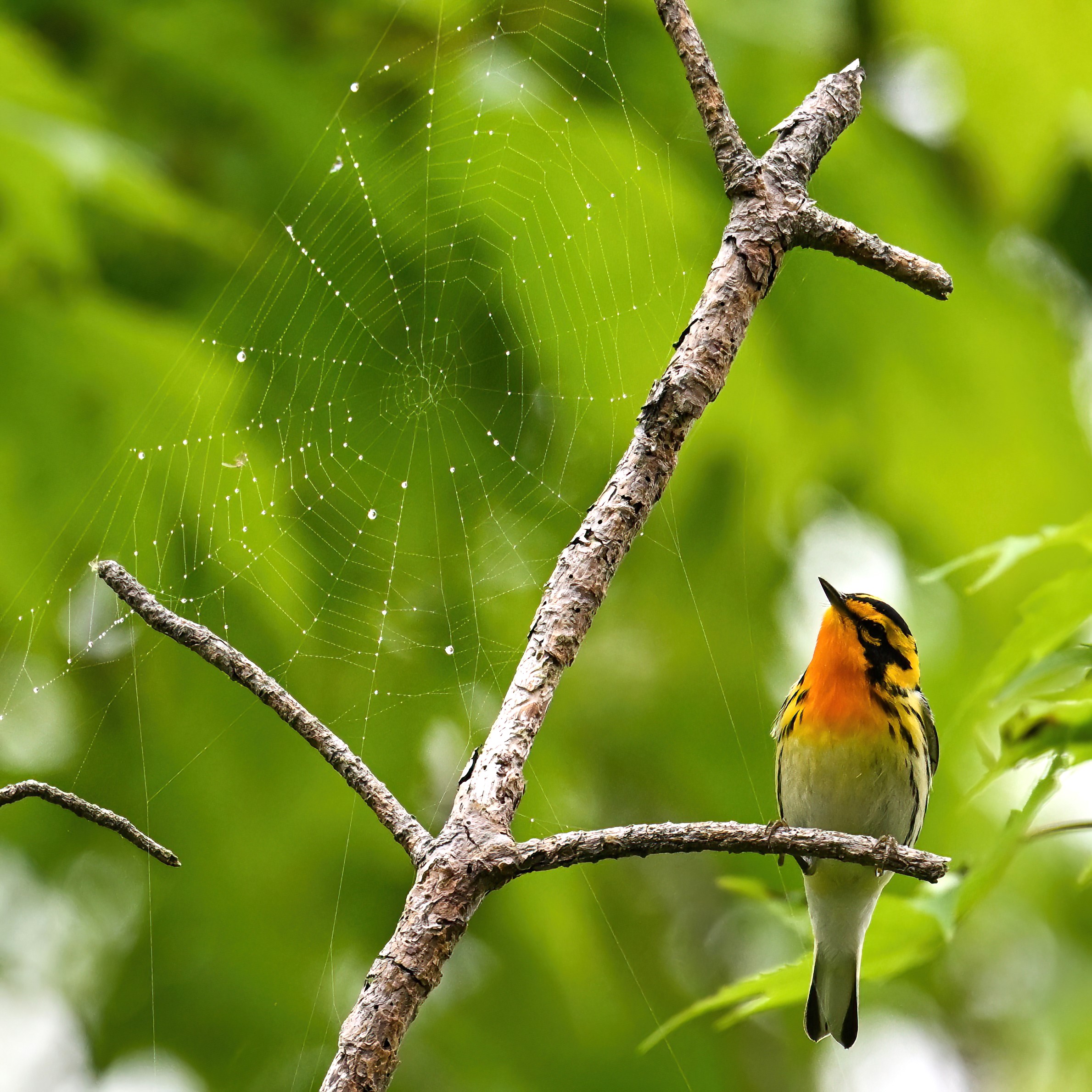
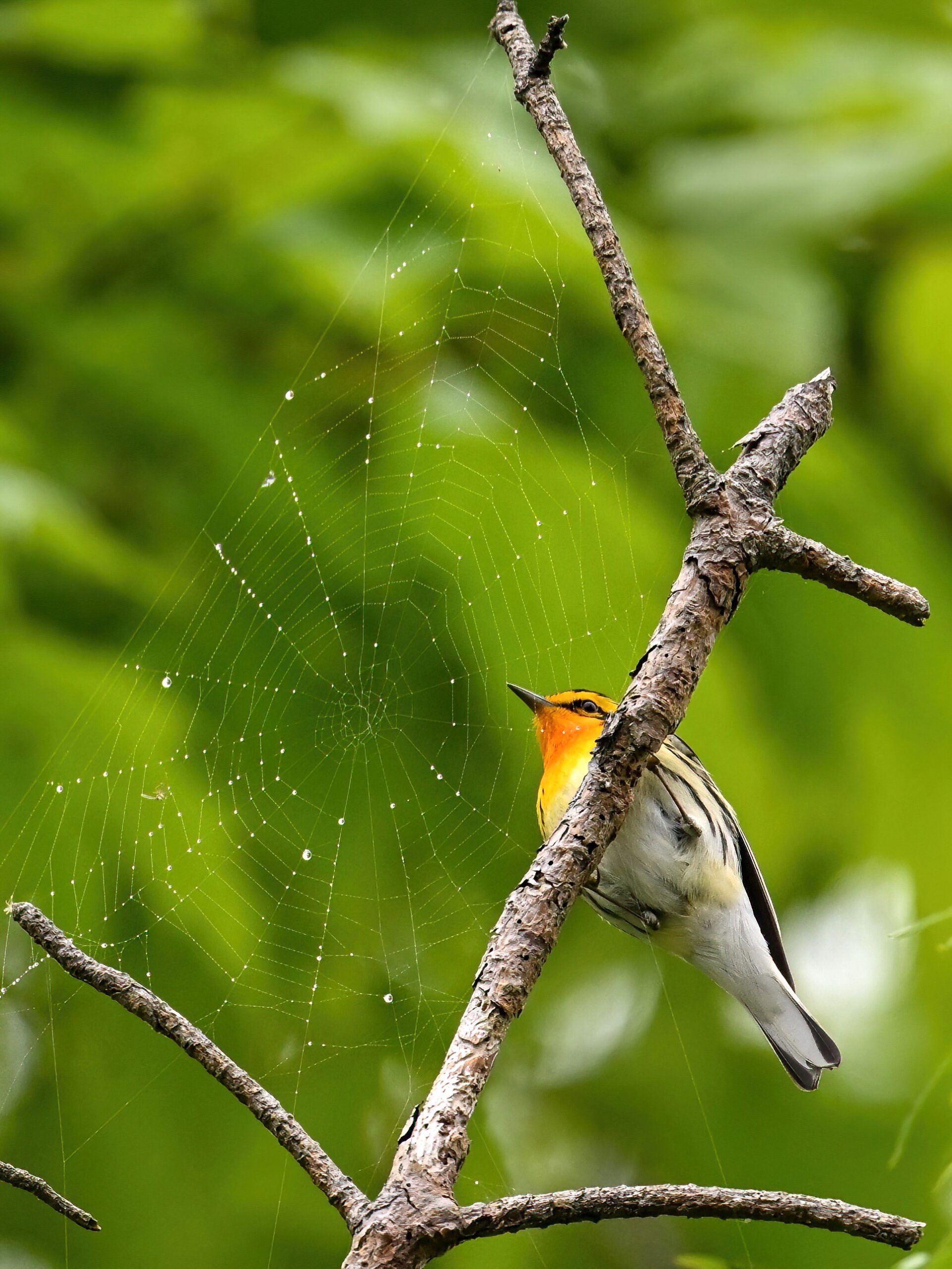
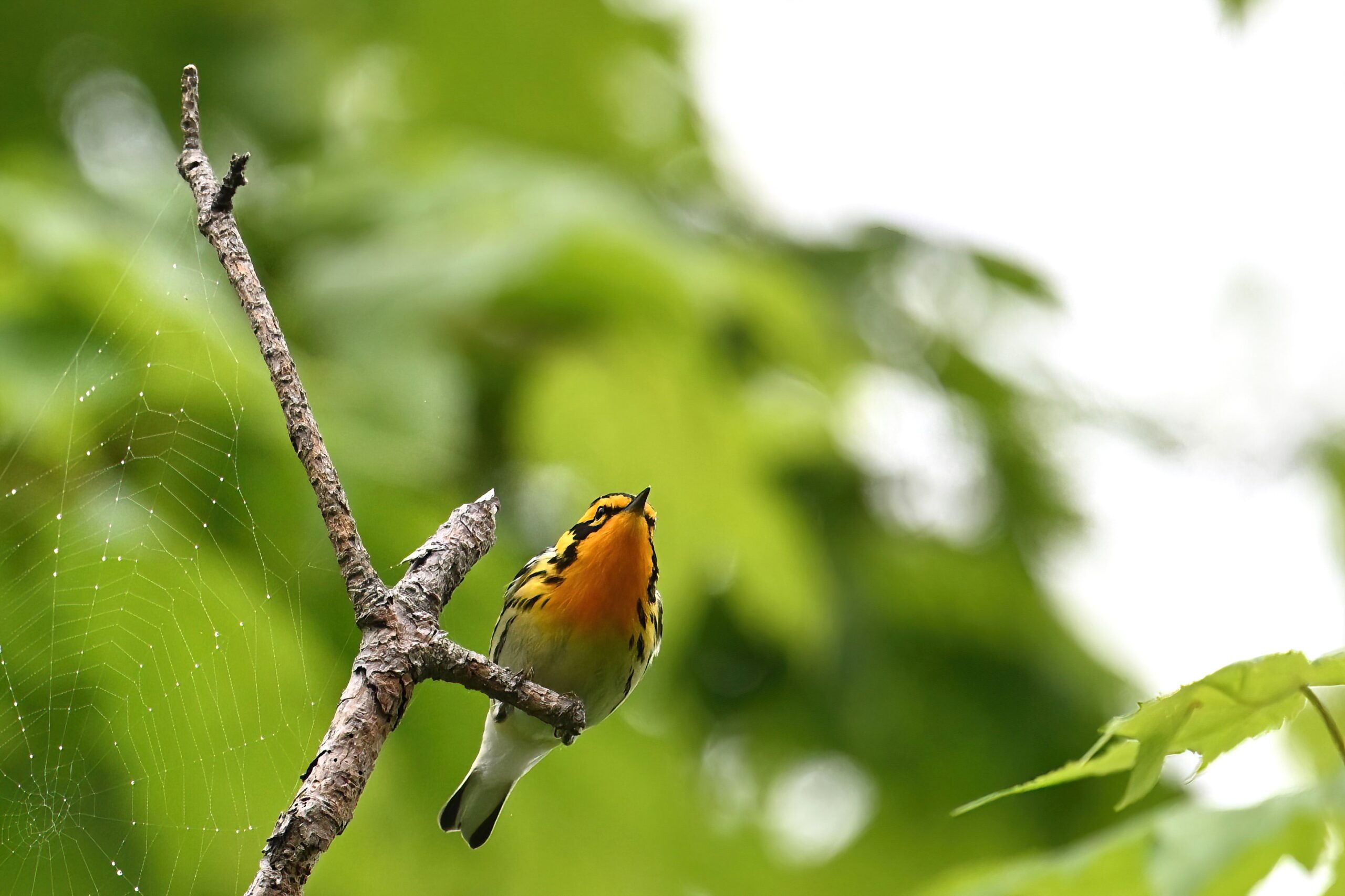
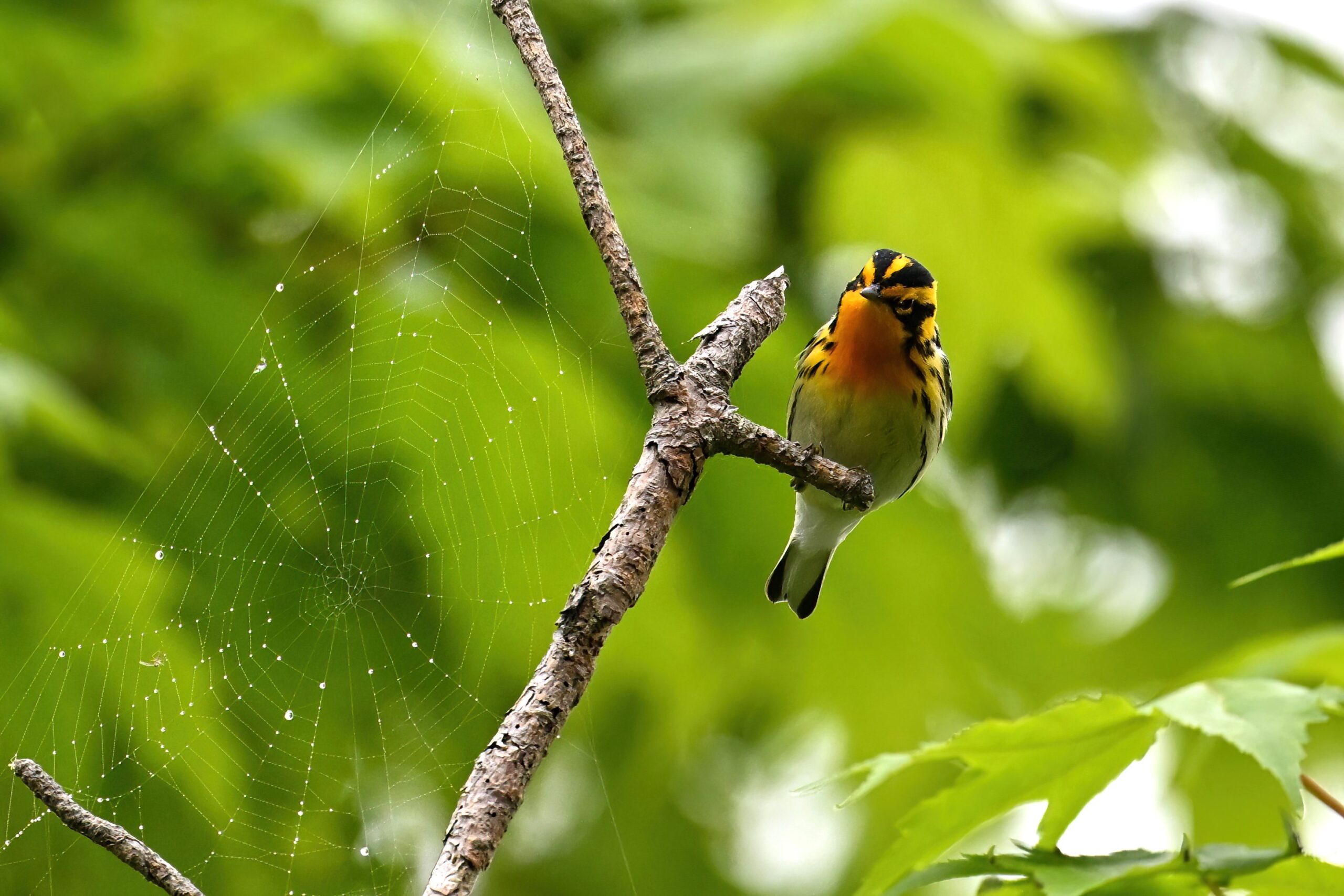
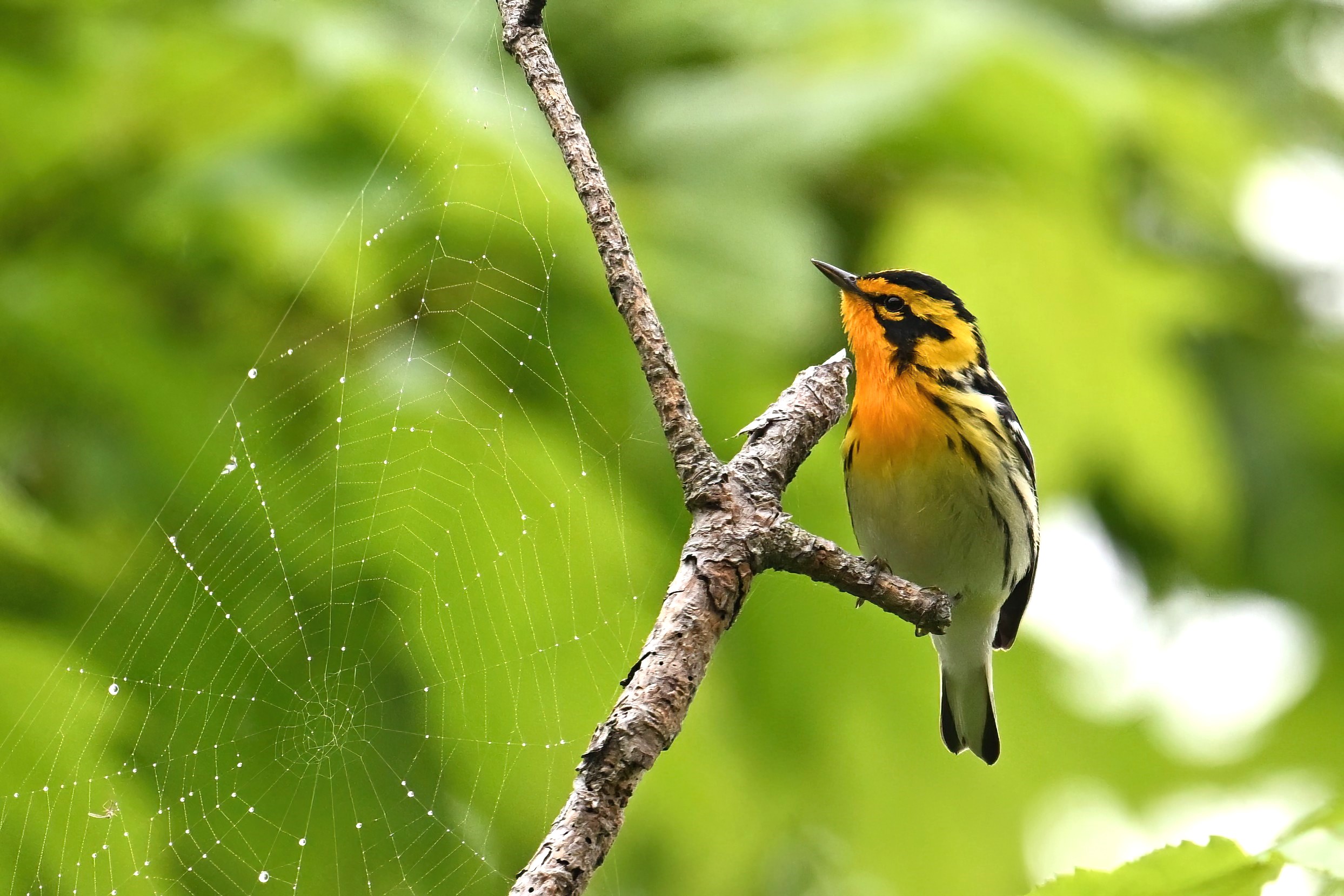
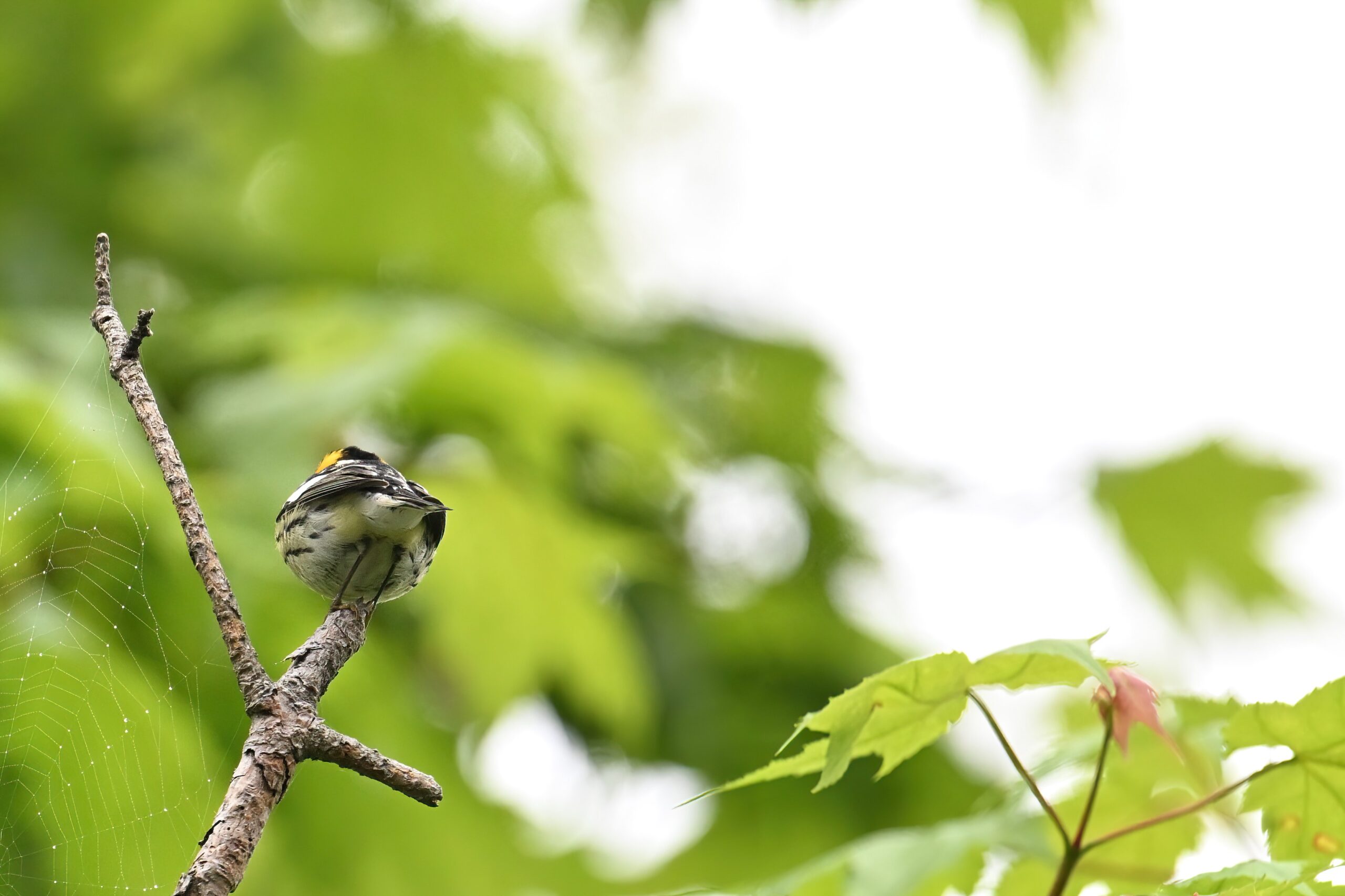
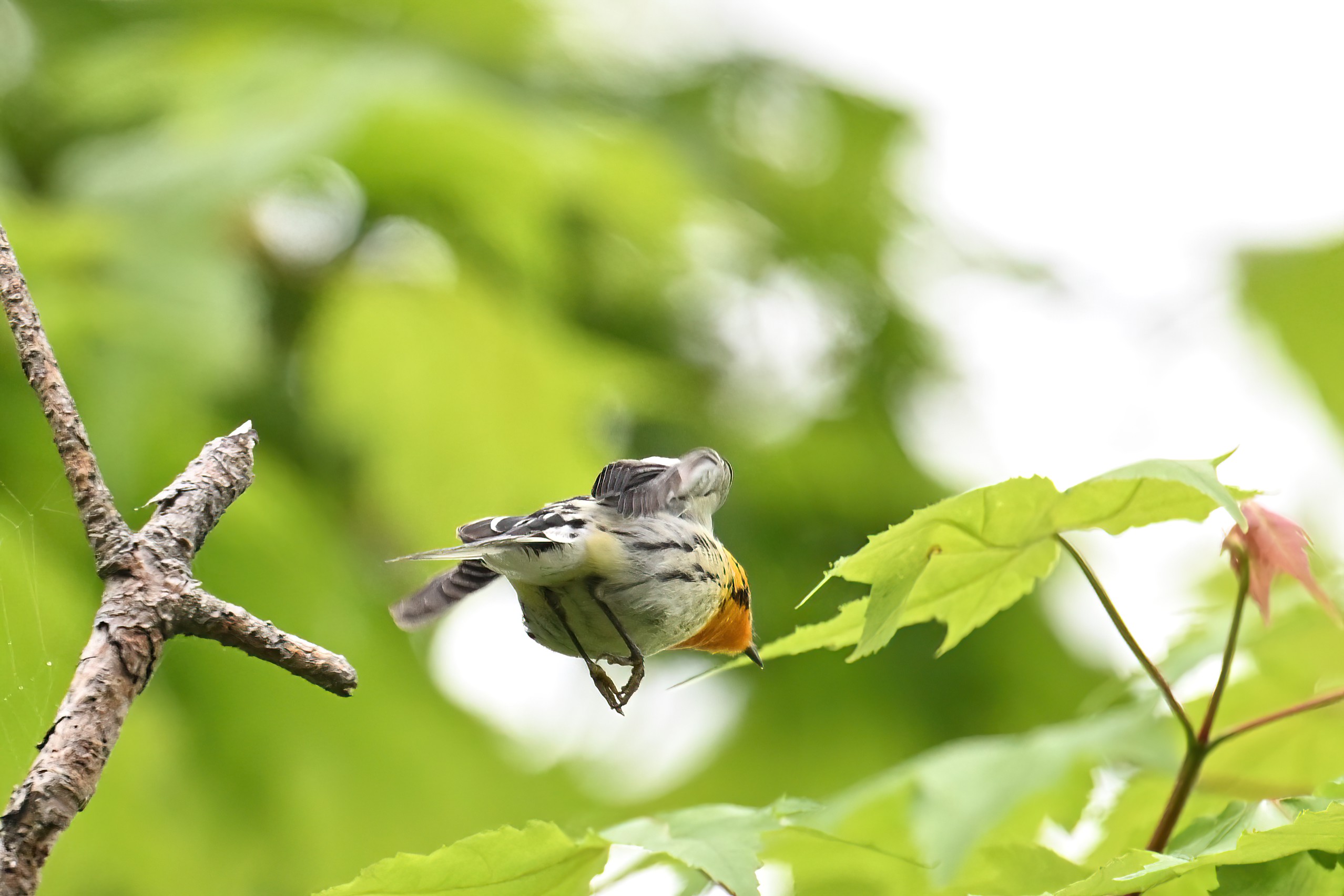
Sorry obscure 18th-century English naturalist Anna Blackburne, but even if you were a nice person, “Blackburnian” is an awful (and awfully arbitrary/random) name for such a beautiful bird. So, it’s pictures from Saturday on the Pine Tree Trail of an amazing male Orange Flame Warbler, in chronological order:
Somehow finagled quick turnaround from the BirdingPI.com photo editing team on these shots from yesterday at Presque Isle State Park along the Gull Point Trail in the afternoon. Guess everyone has warbler fever!
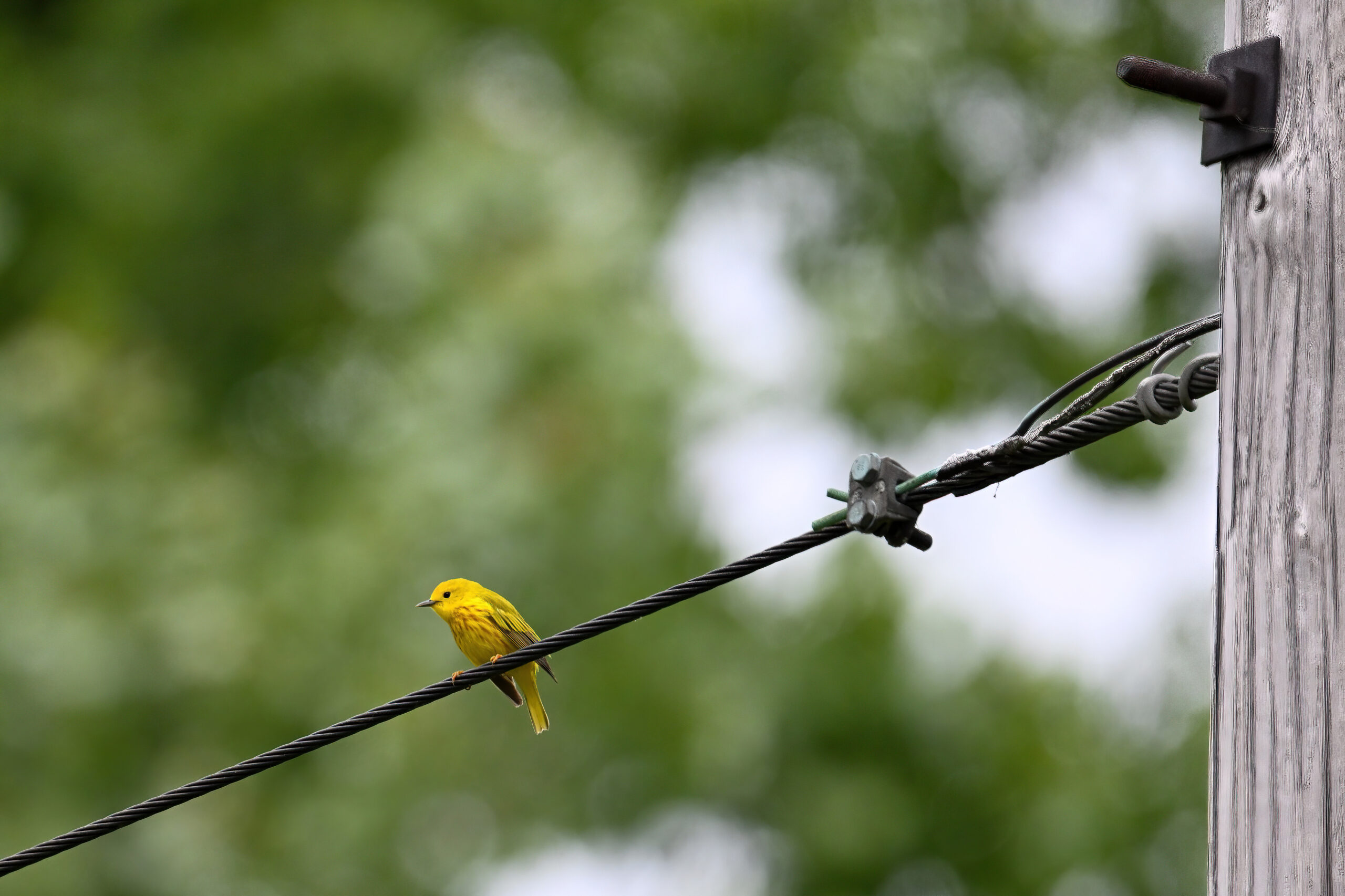
Yellow Warbler by Gull Point Trail trailhead
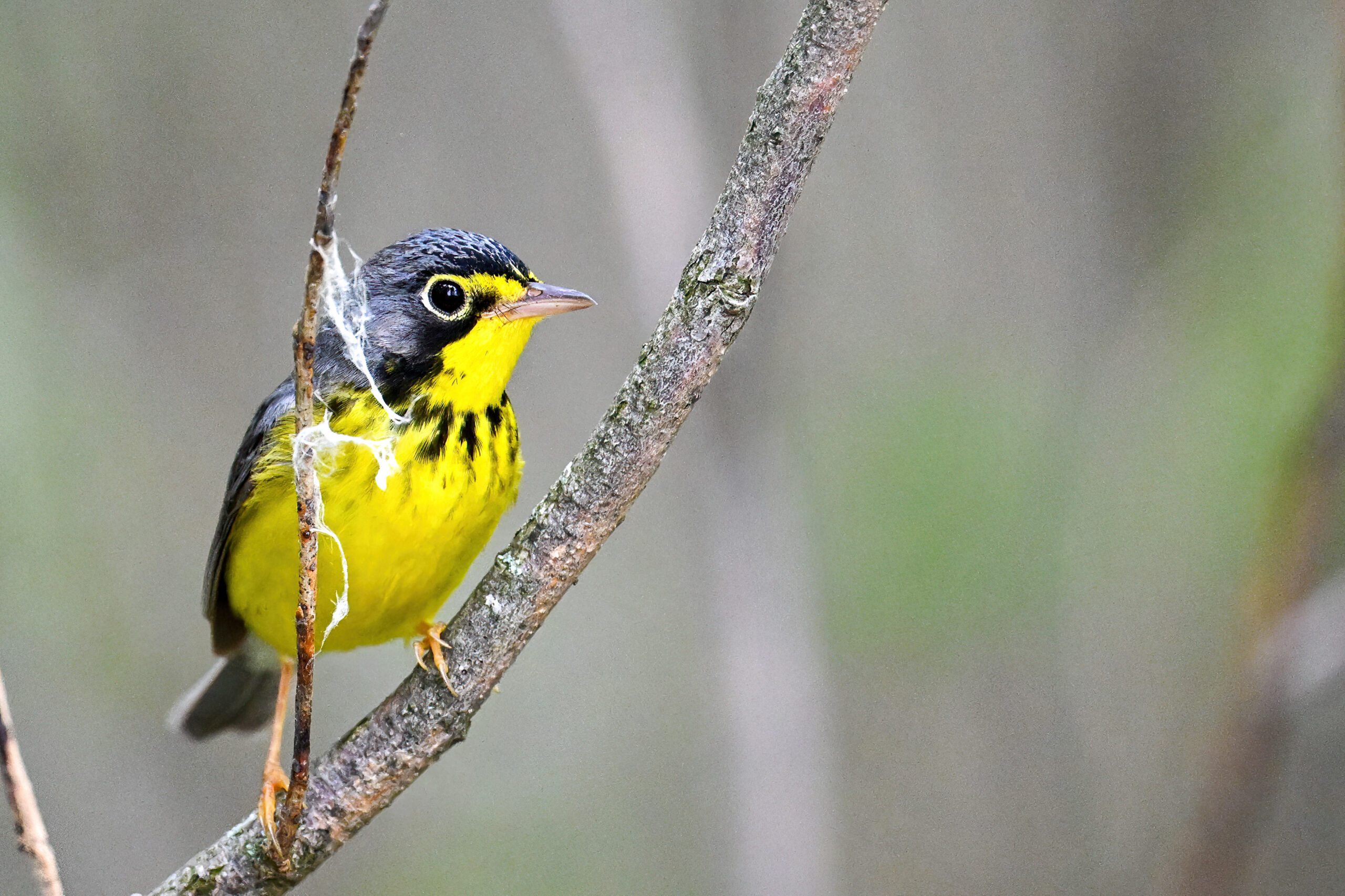
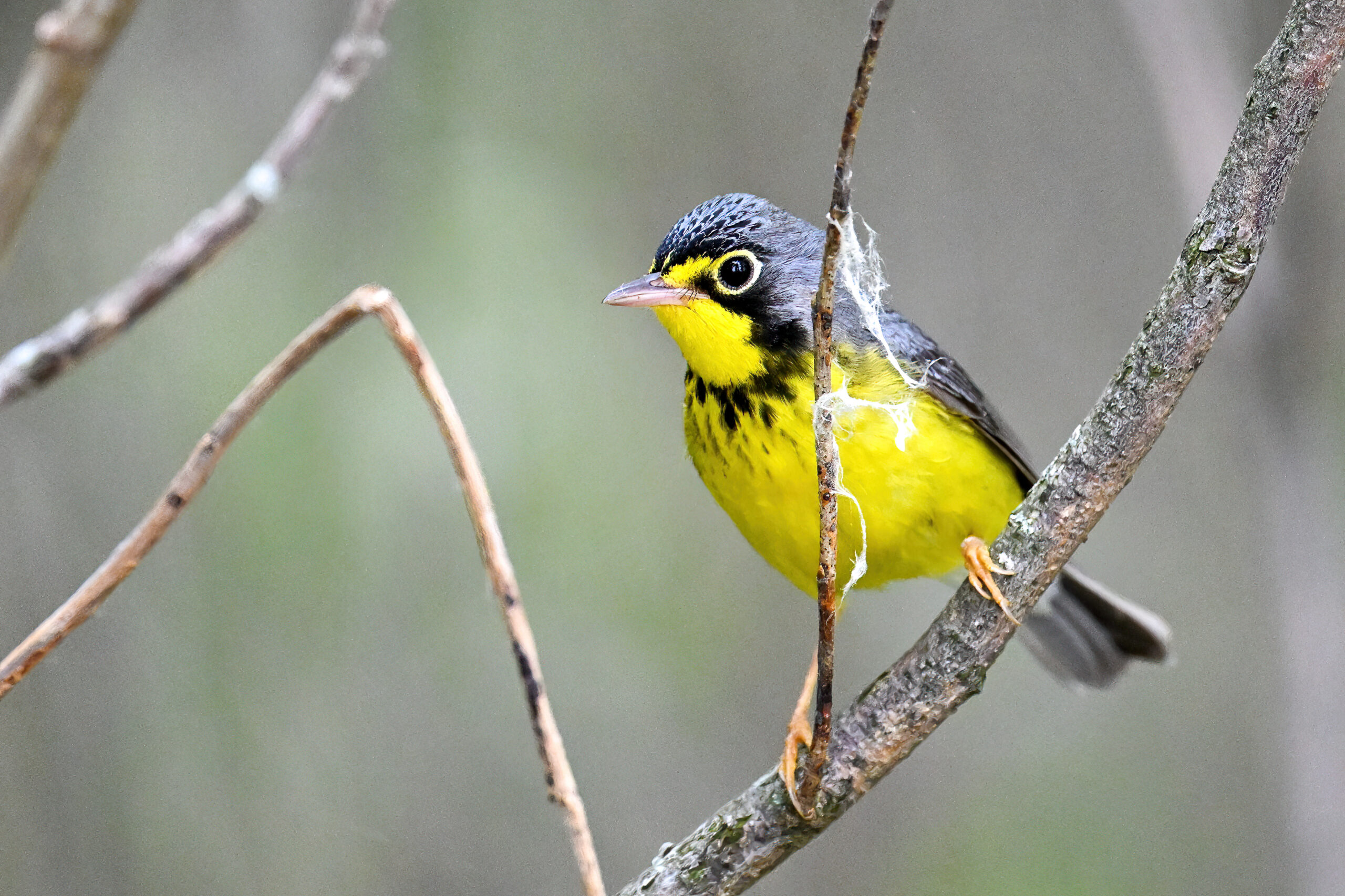
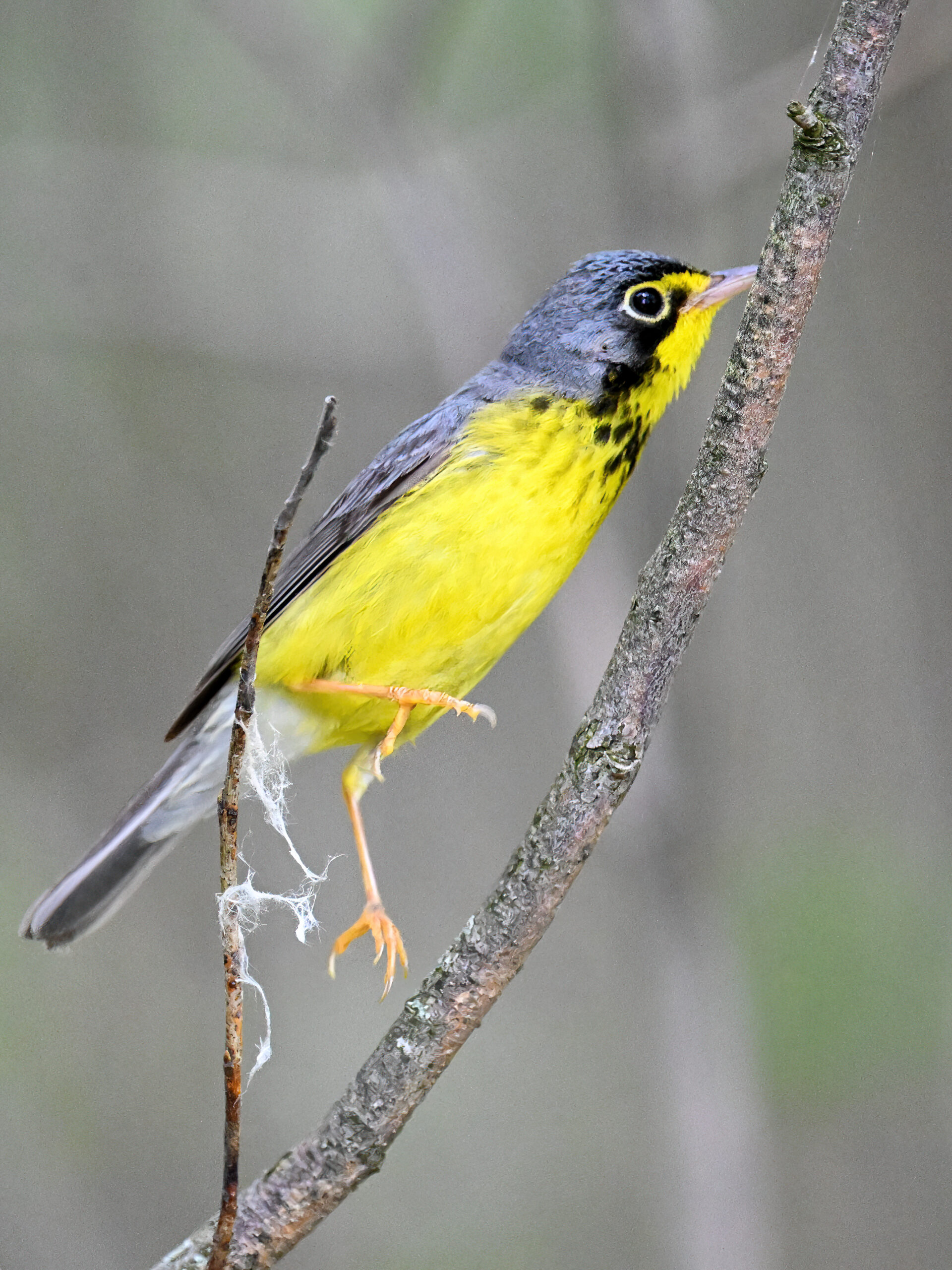
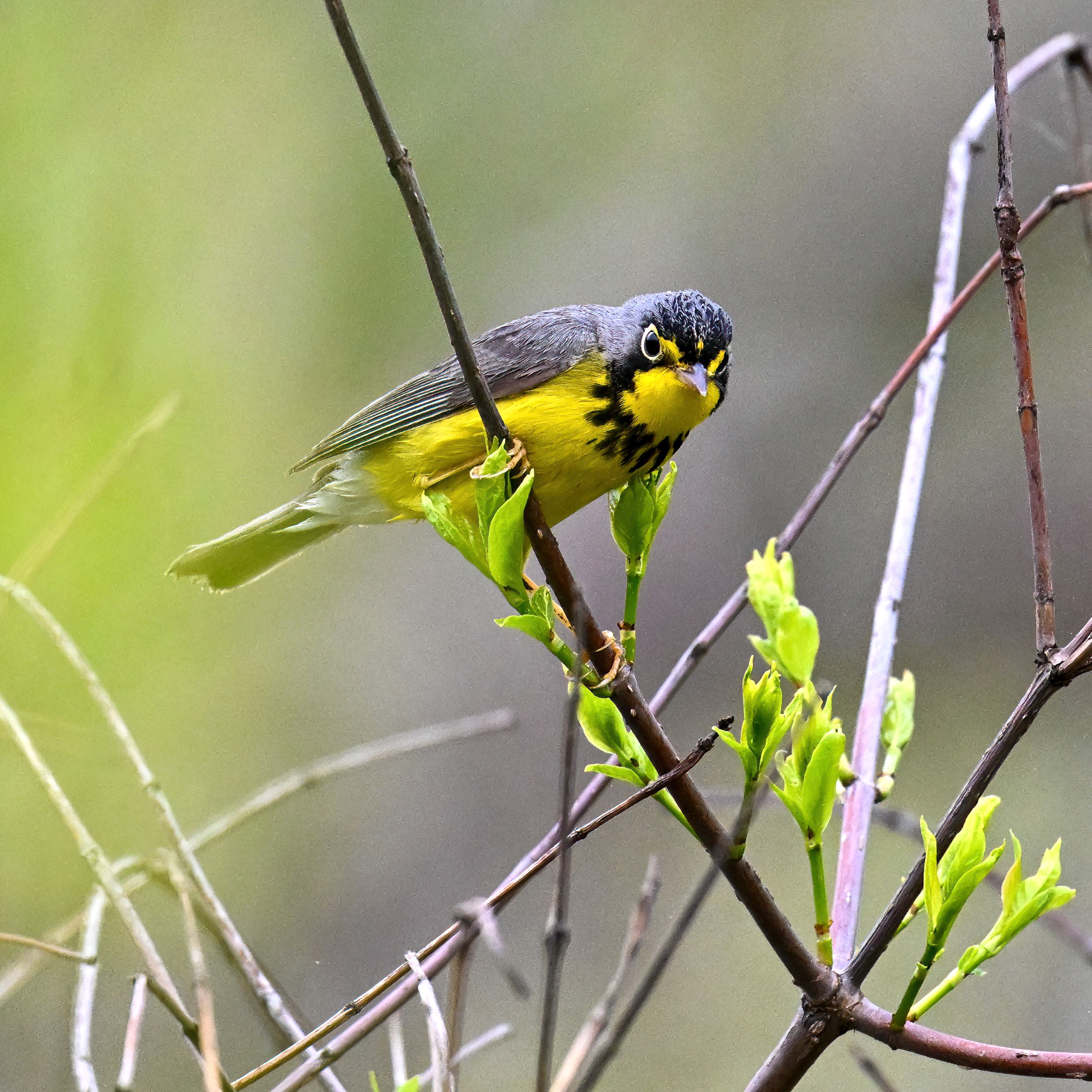
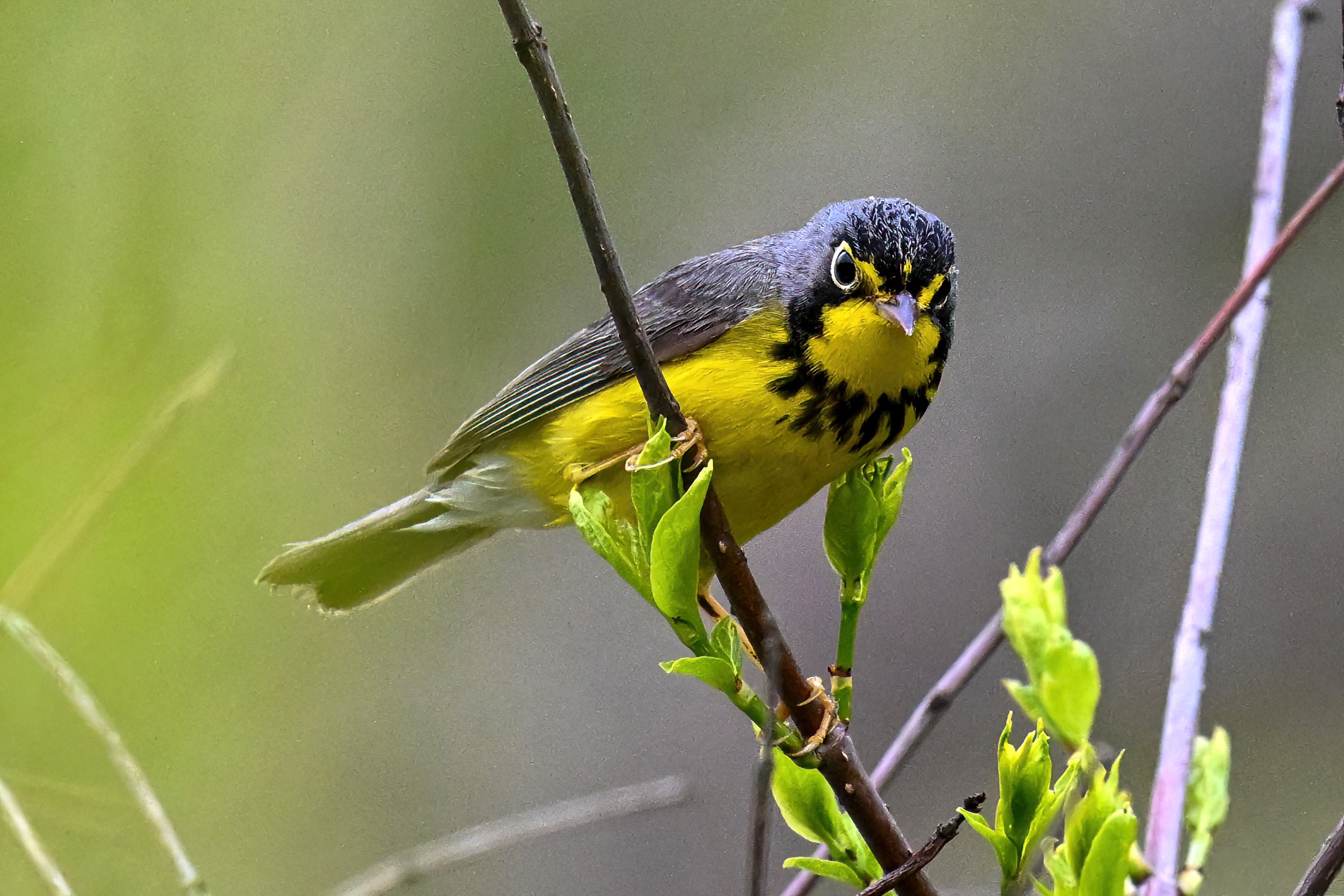
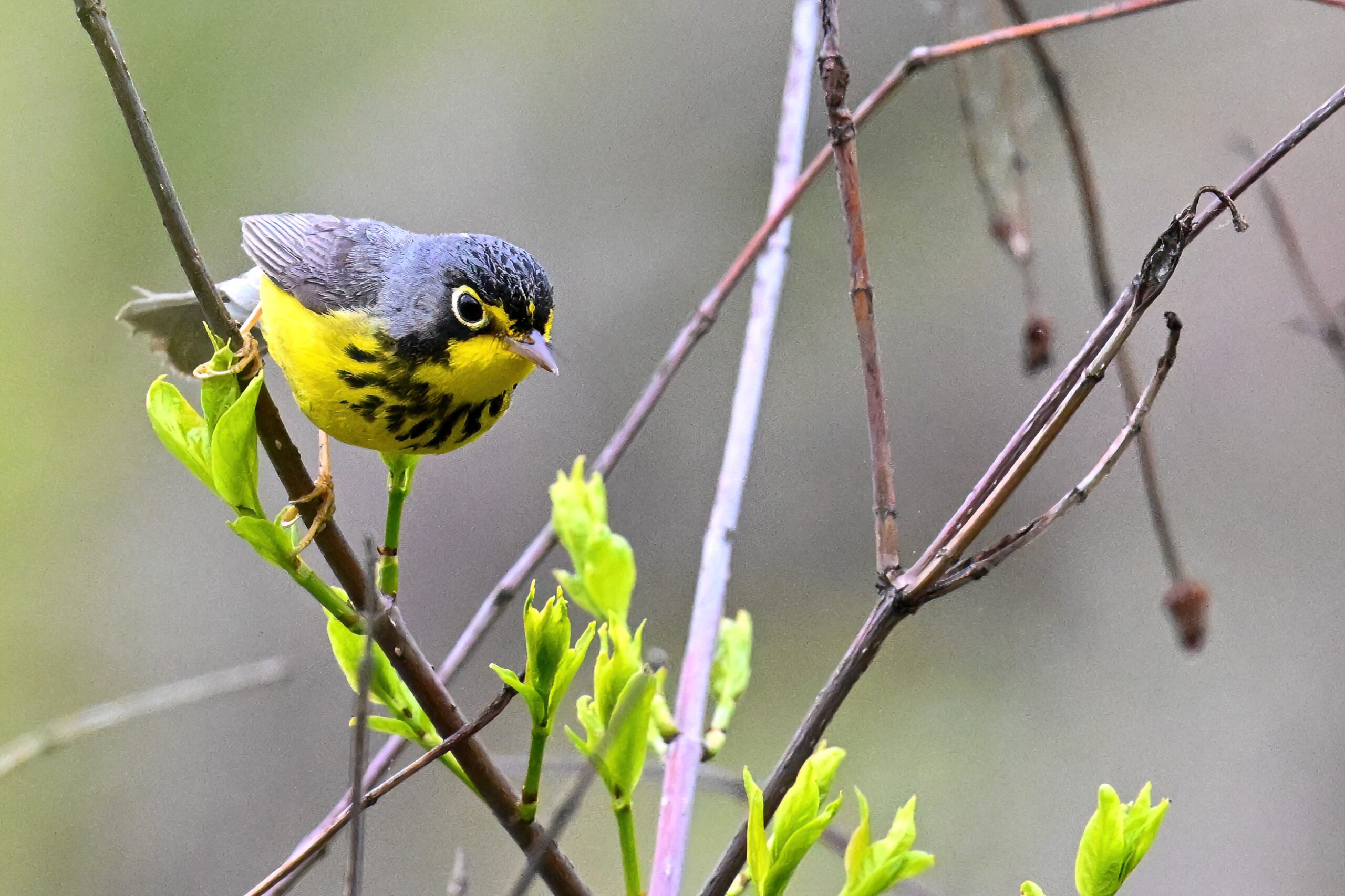
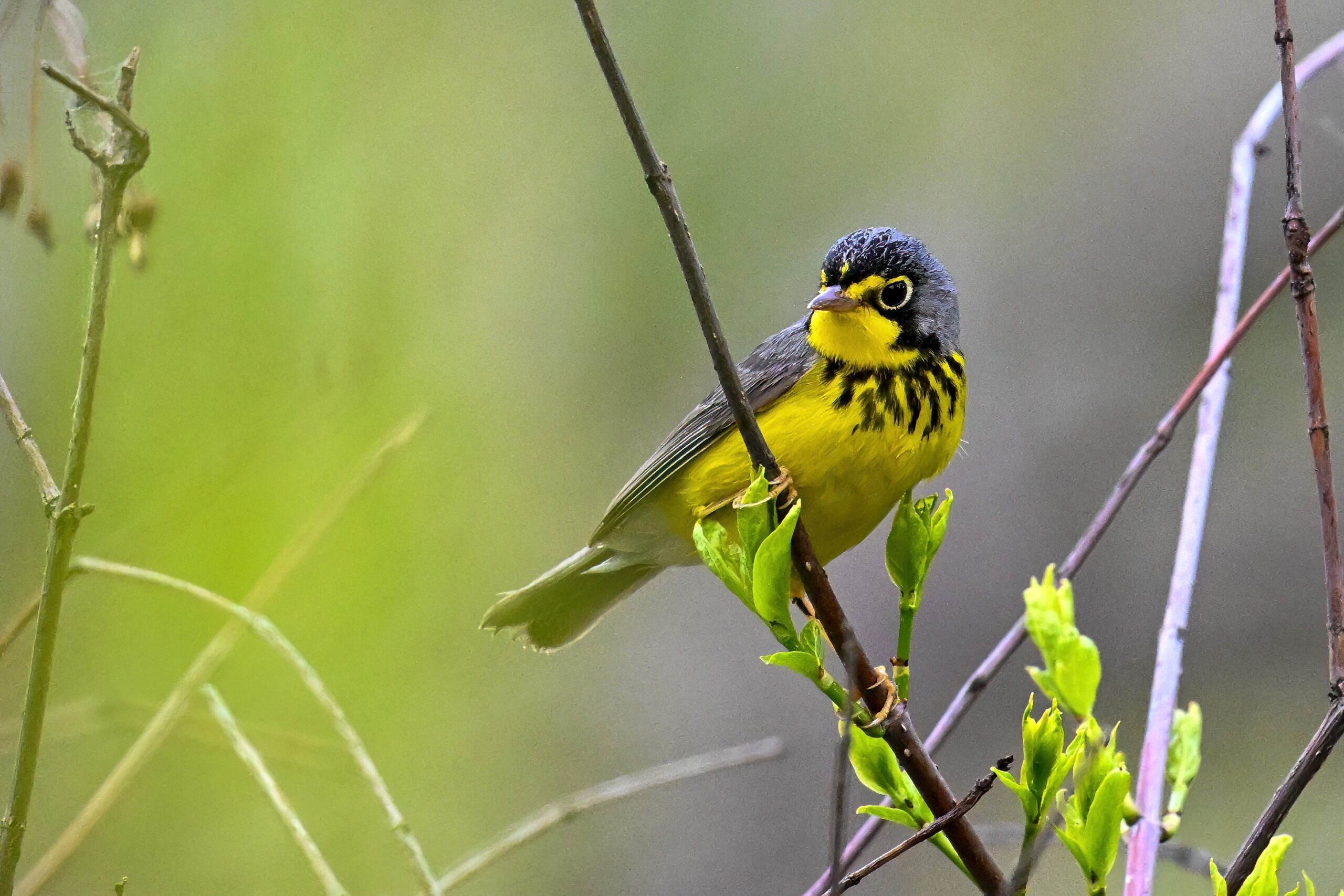
Conditions here and in the Pine Tree Trail area yesterday were rather excellent. Most ‘common’ warbler species spotted except Palm & Black-throated Blue. Even an unprecedented sighting (i.e., two days in a row) of amazing male Canada Warbler, in the willow thickets close to outer Gull Point:
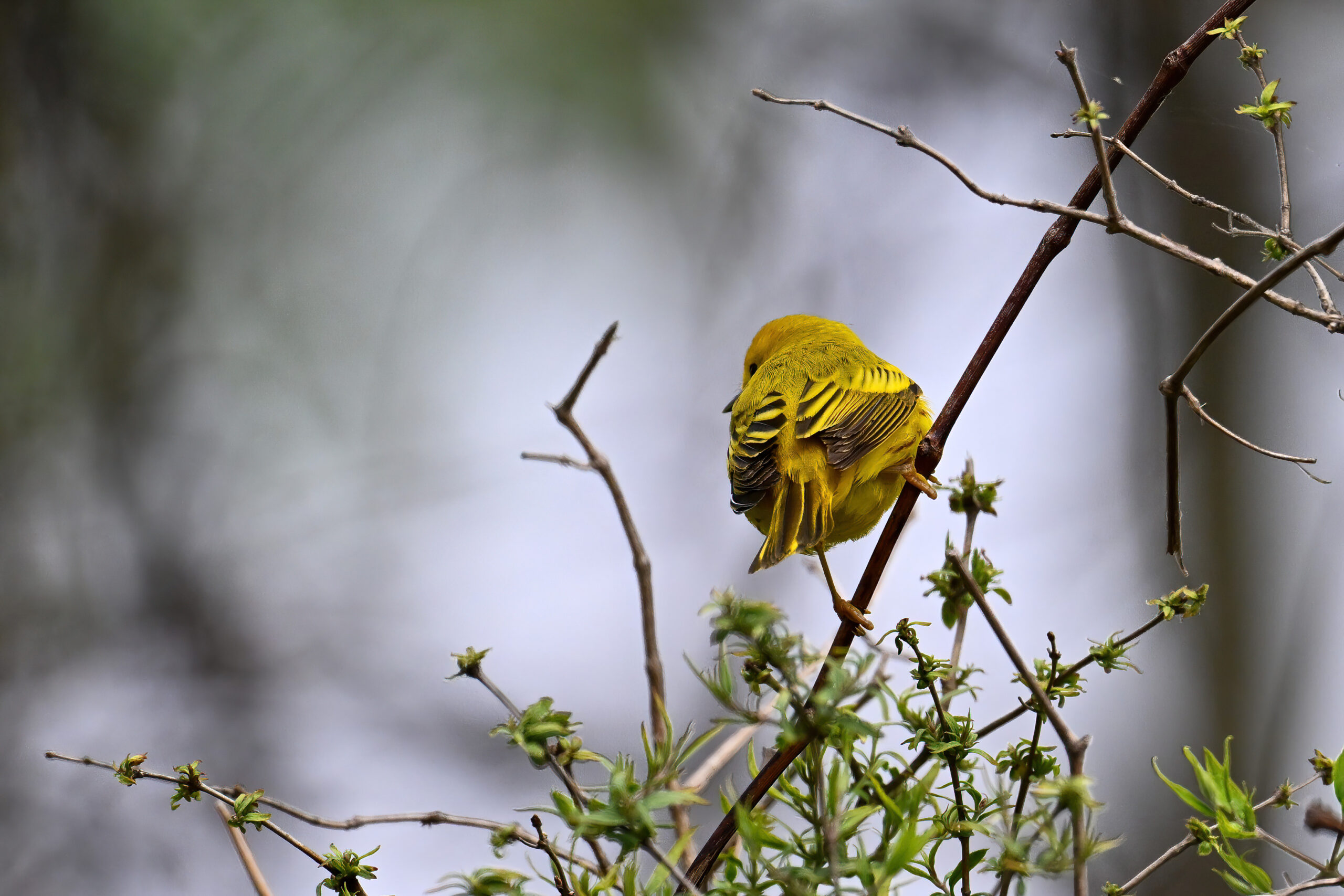
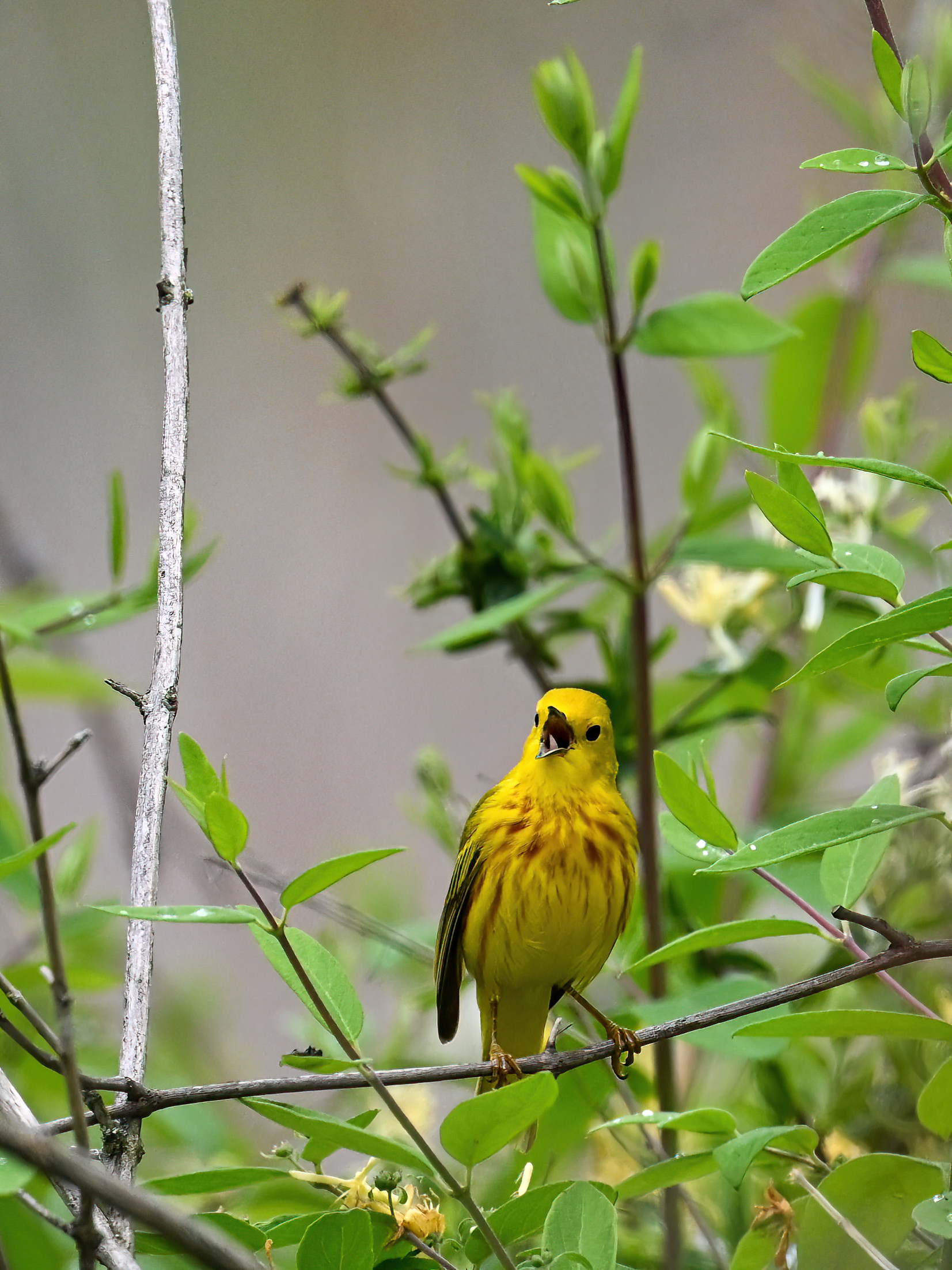
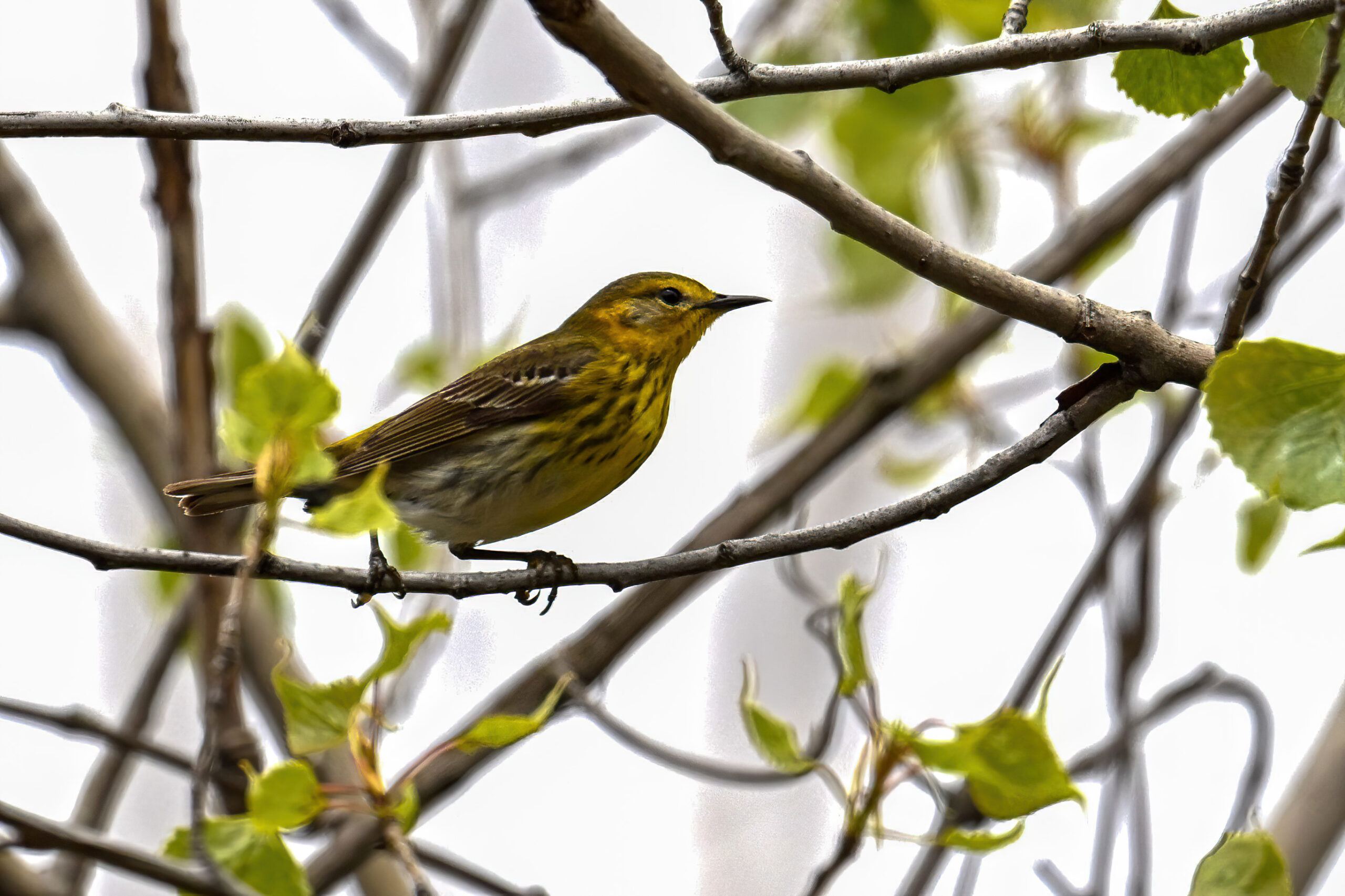
Canada Warbler (m)Yellow Warbler, rear viewYellow Warbler @ singing mode in honeysuckle bushCape May Warbler
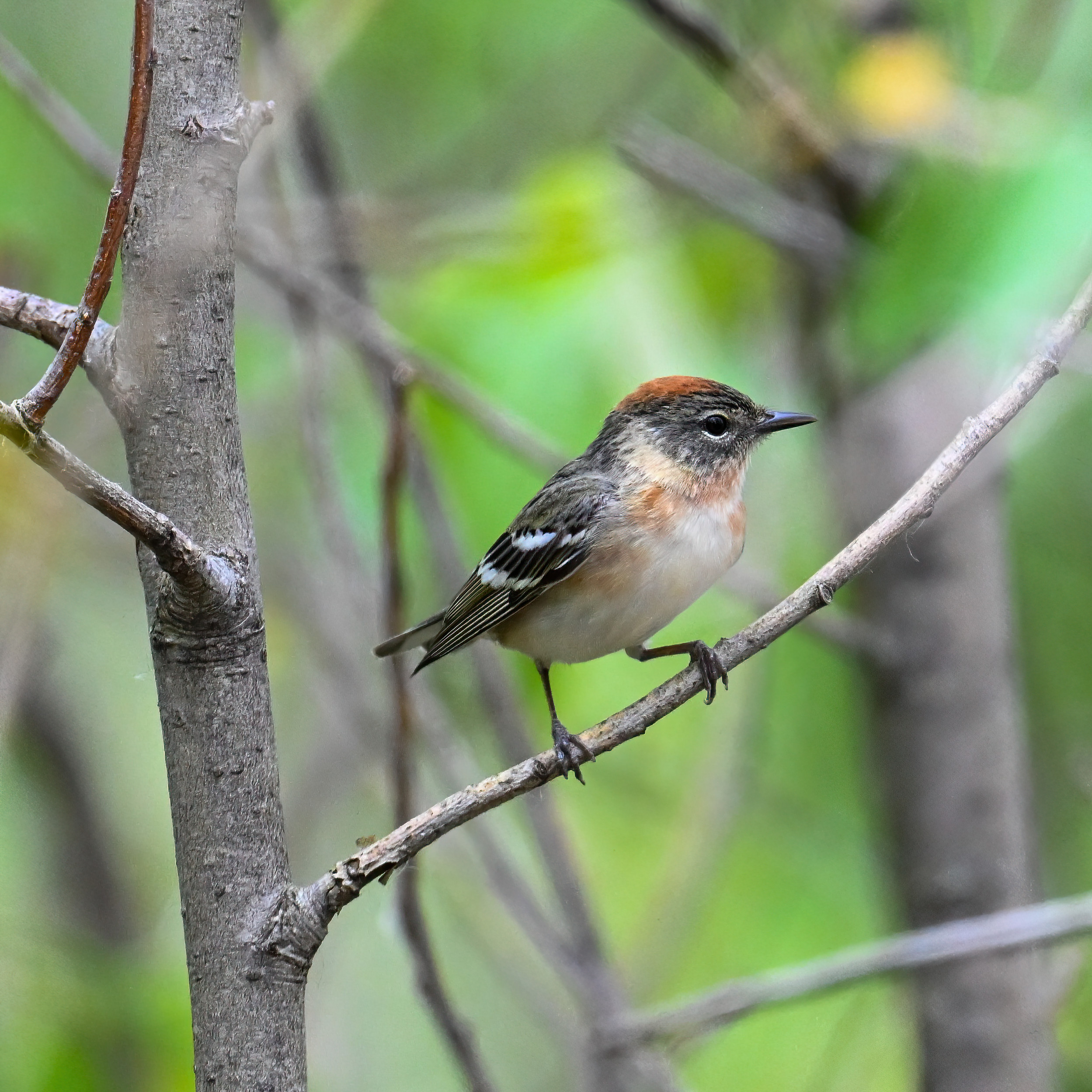
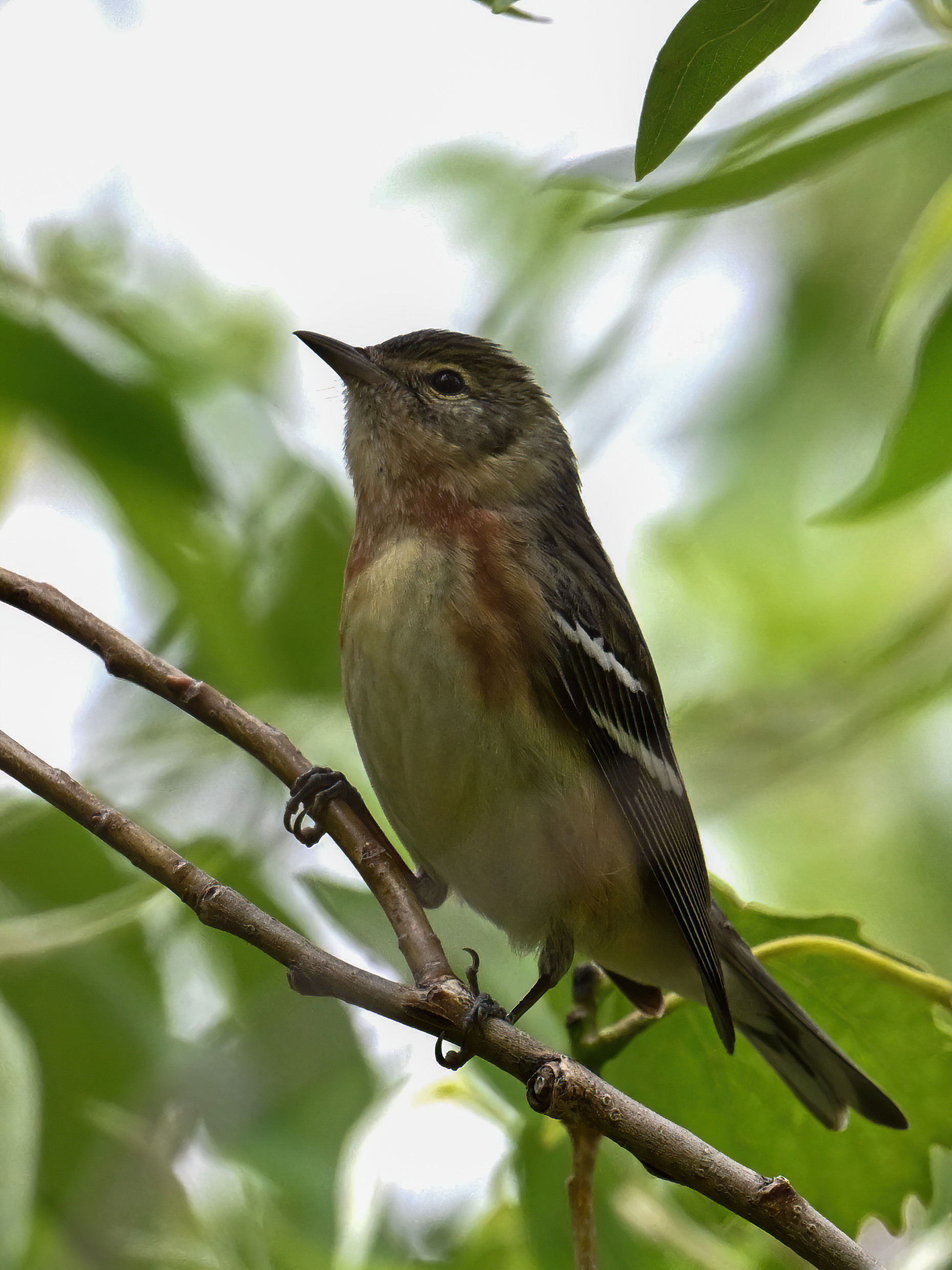
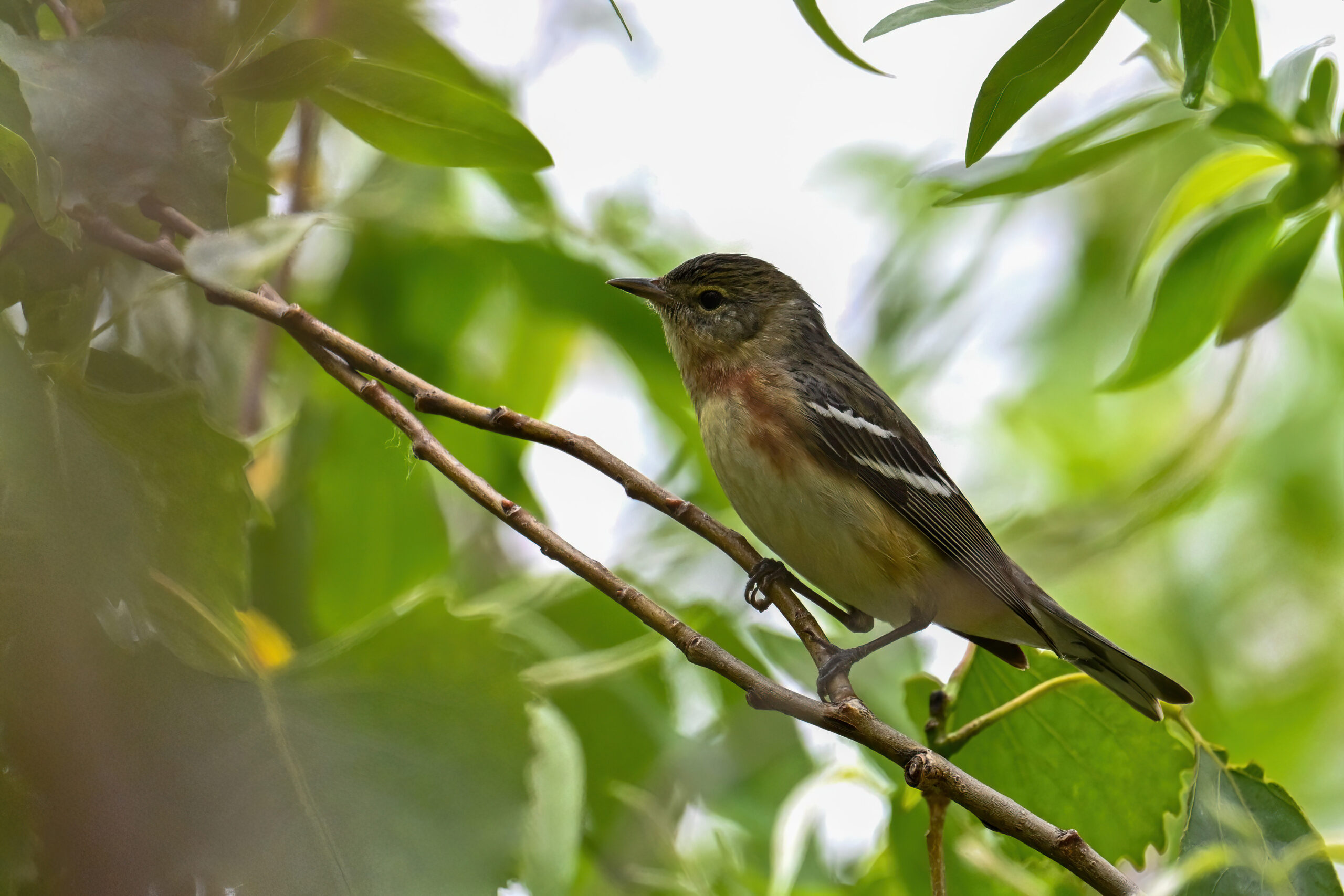
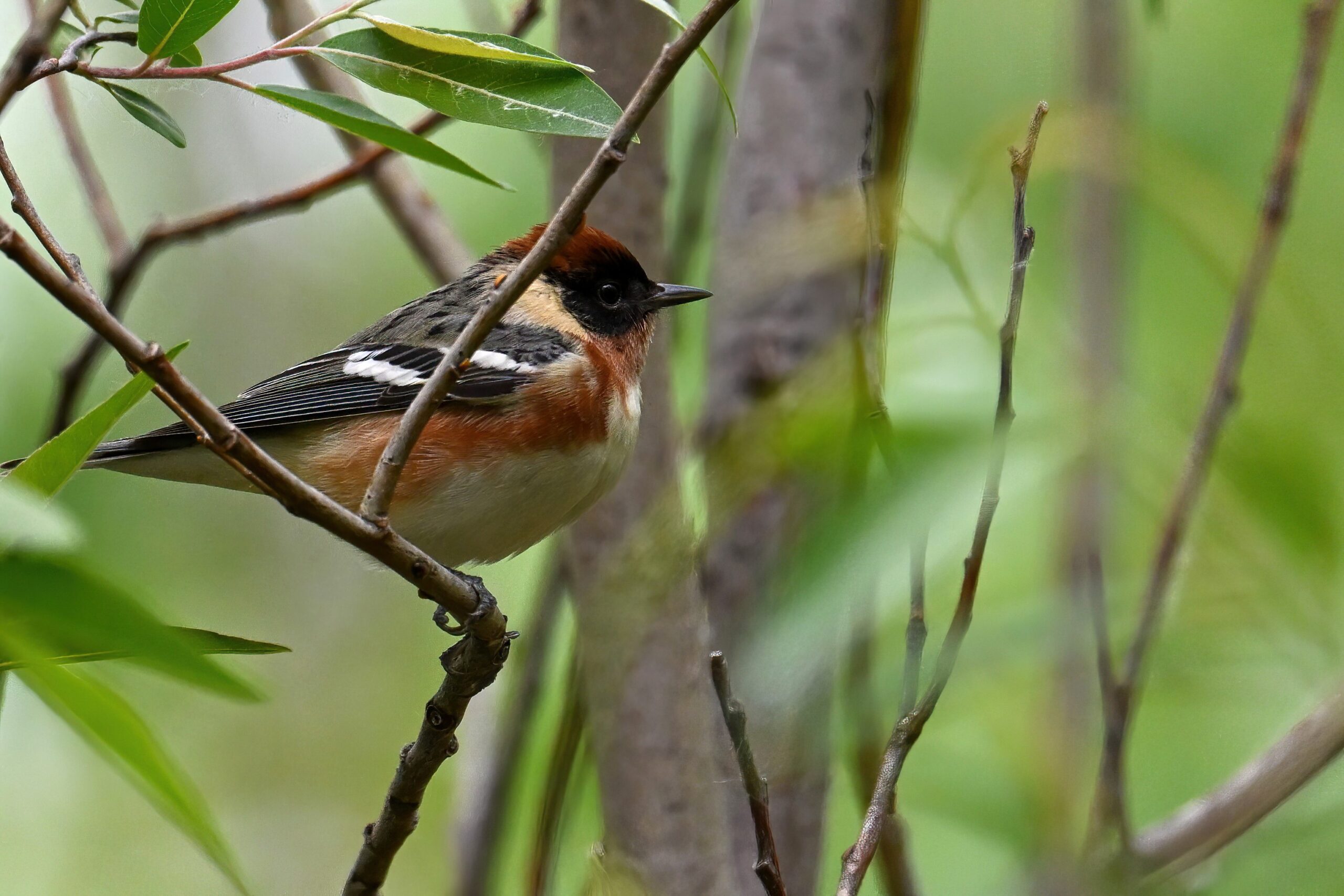
Big news was a significant uptick in Bay-breasted Warbler sightings, like this (probably) lovely female:
Bay-breasted Warbler (f)
(Seems in past year the Bay-breasted Warblers passed through much earlier = some worry it was going to be a light year for this lovely species.)
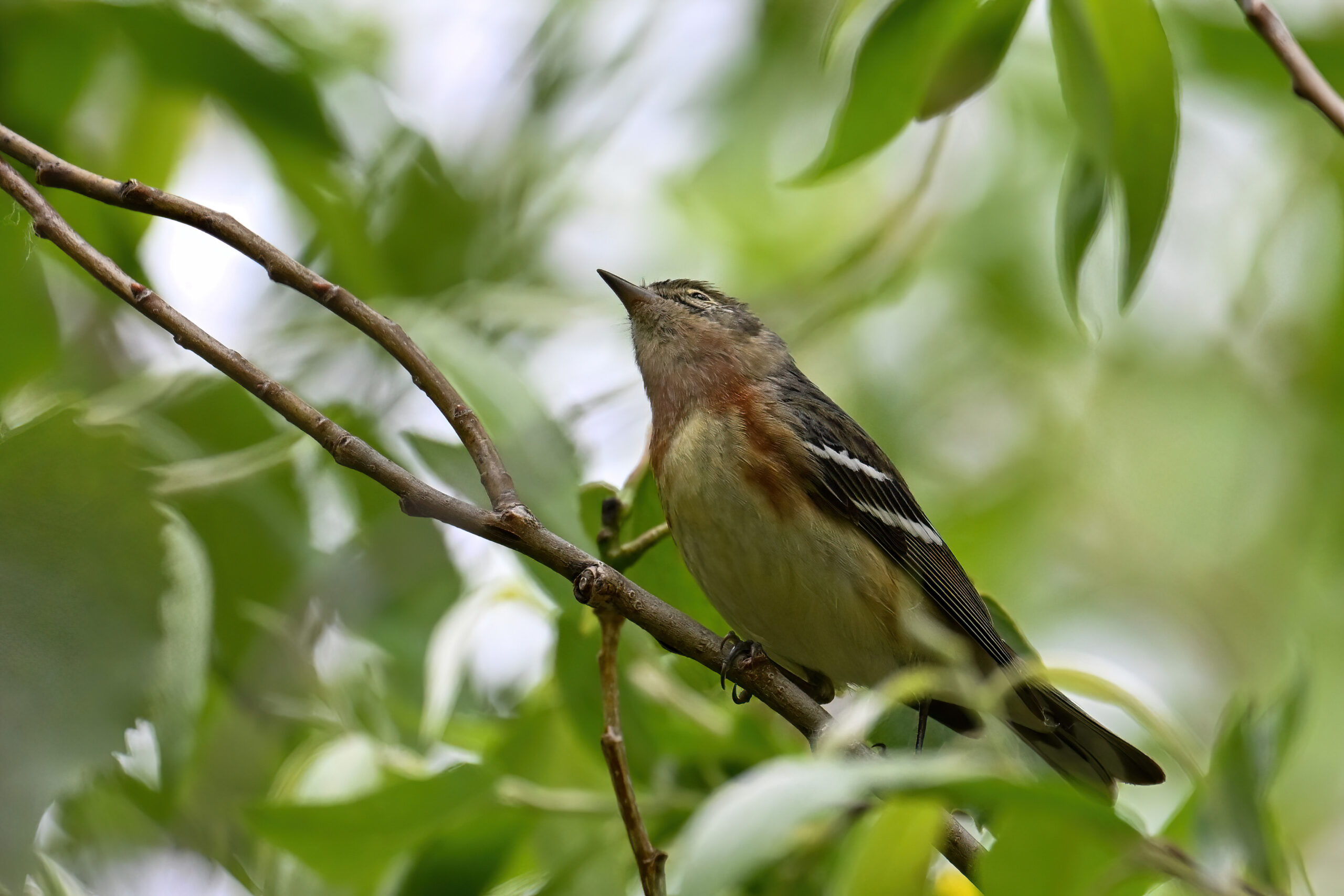
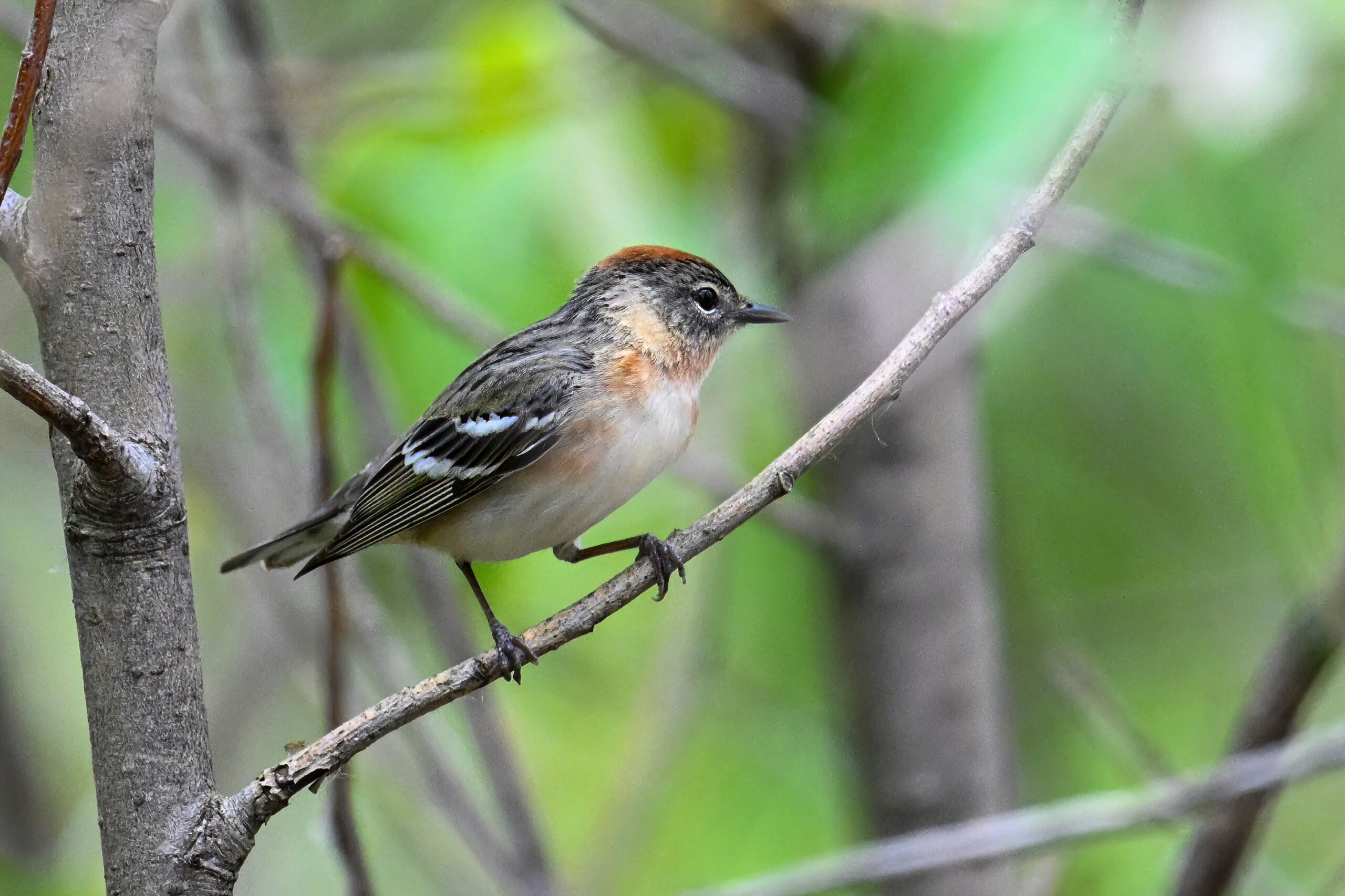
More Bay-breasted Warbler:
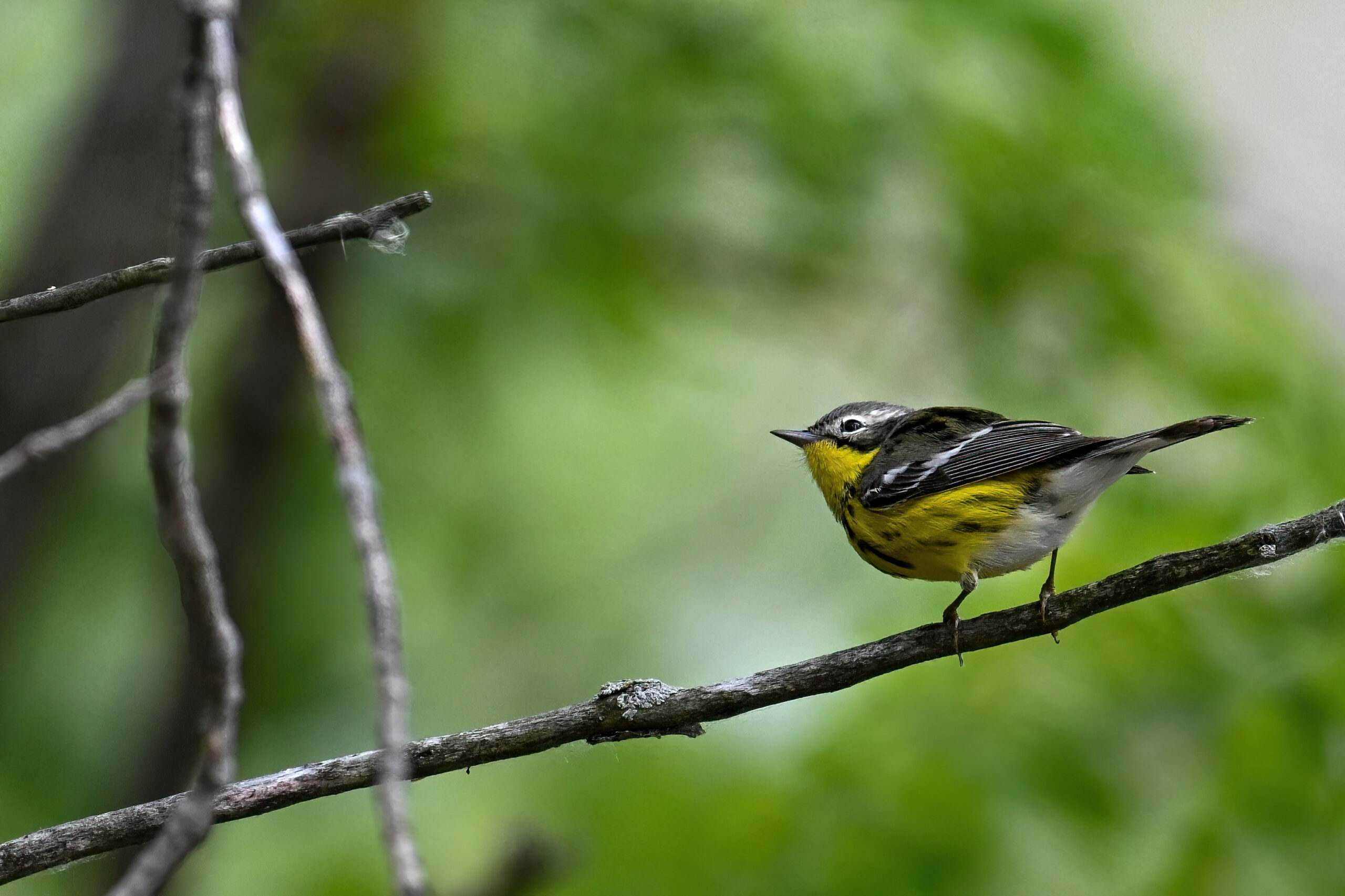
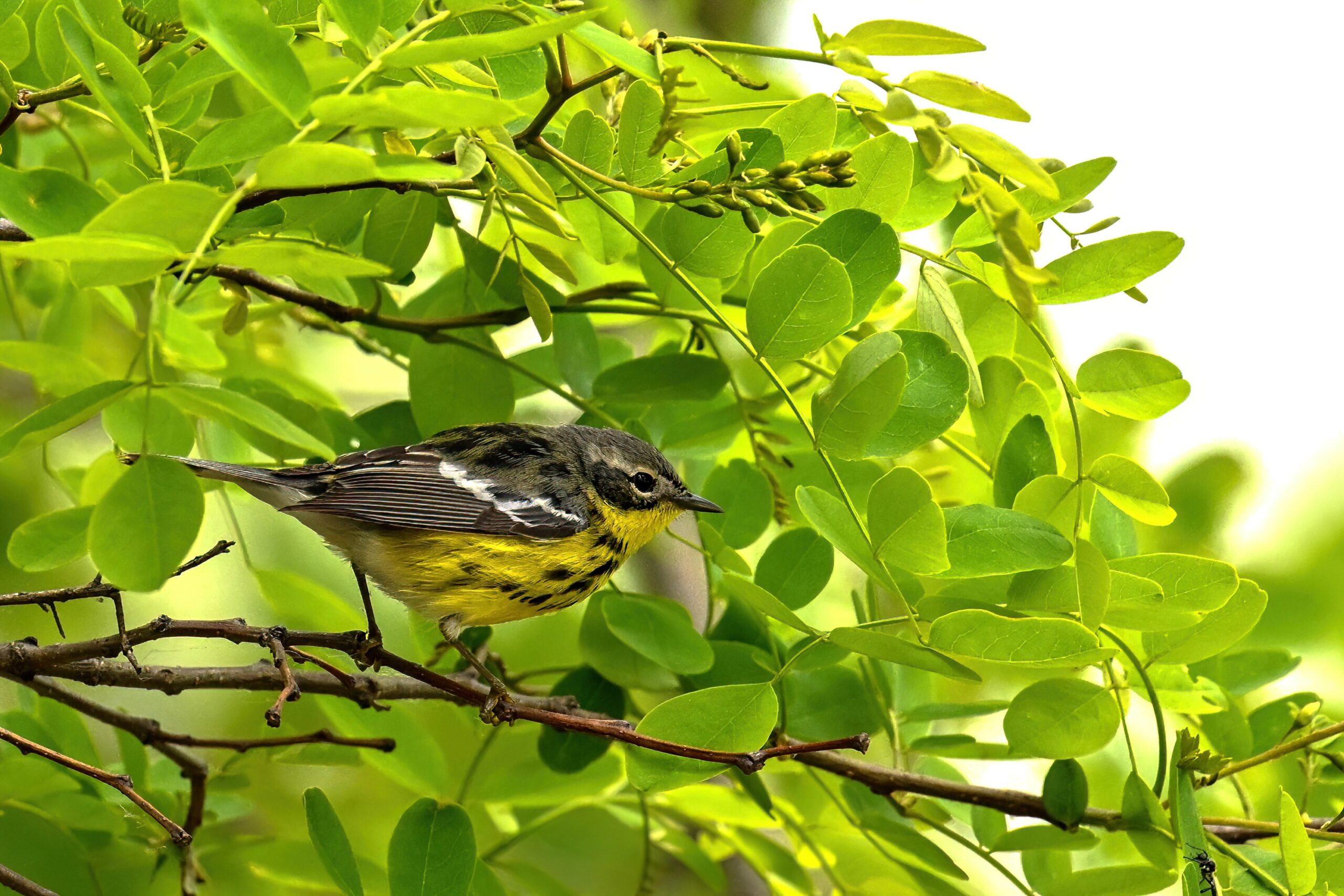
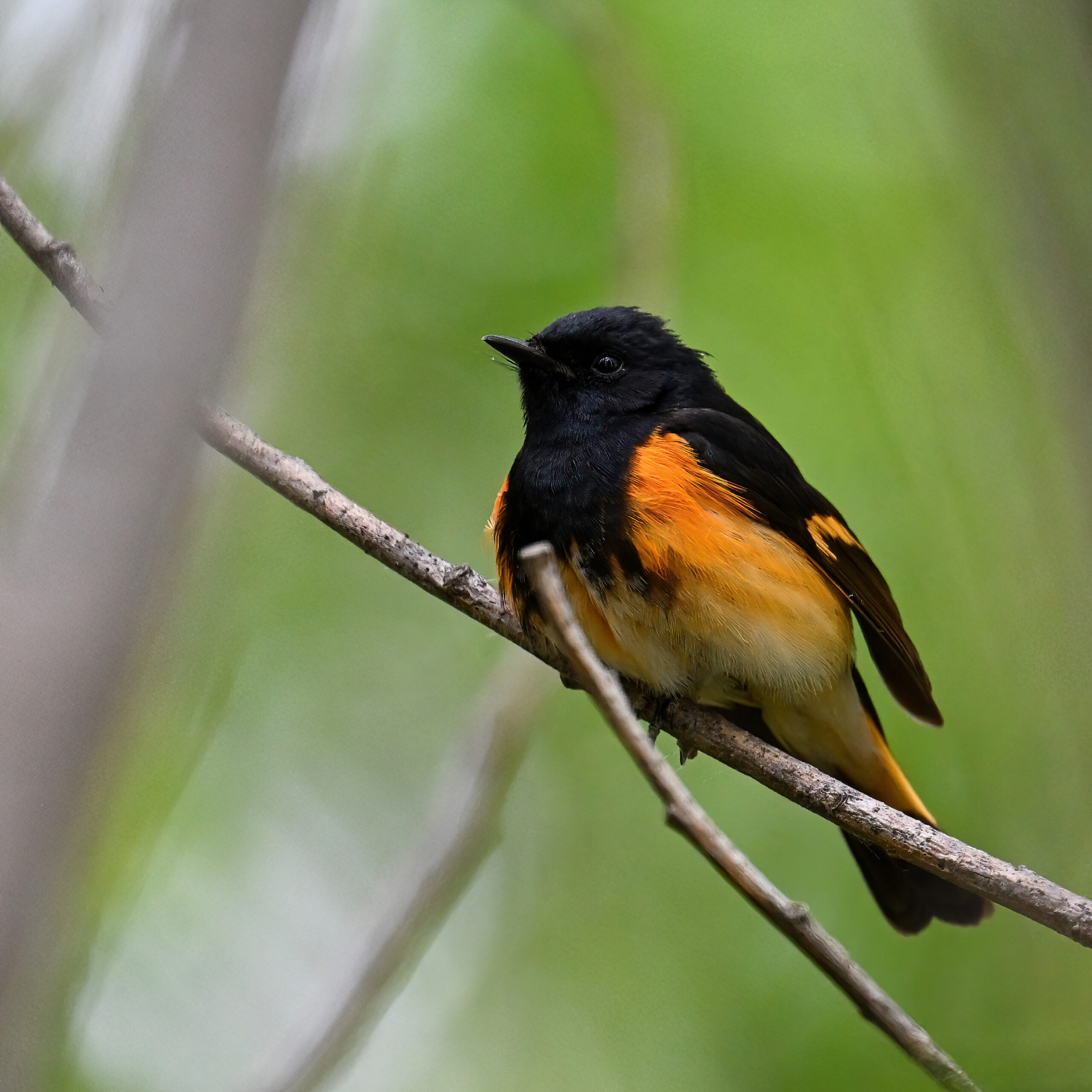
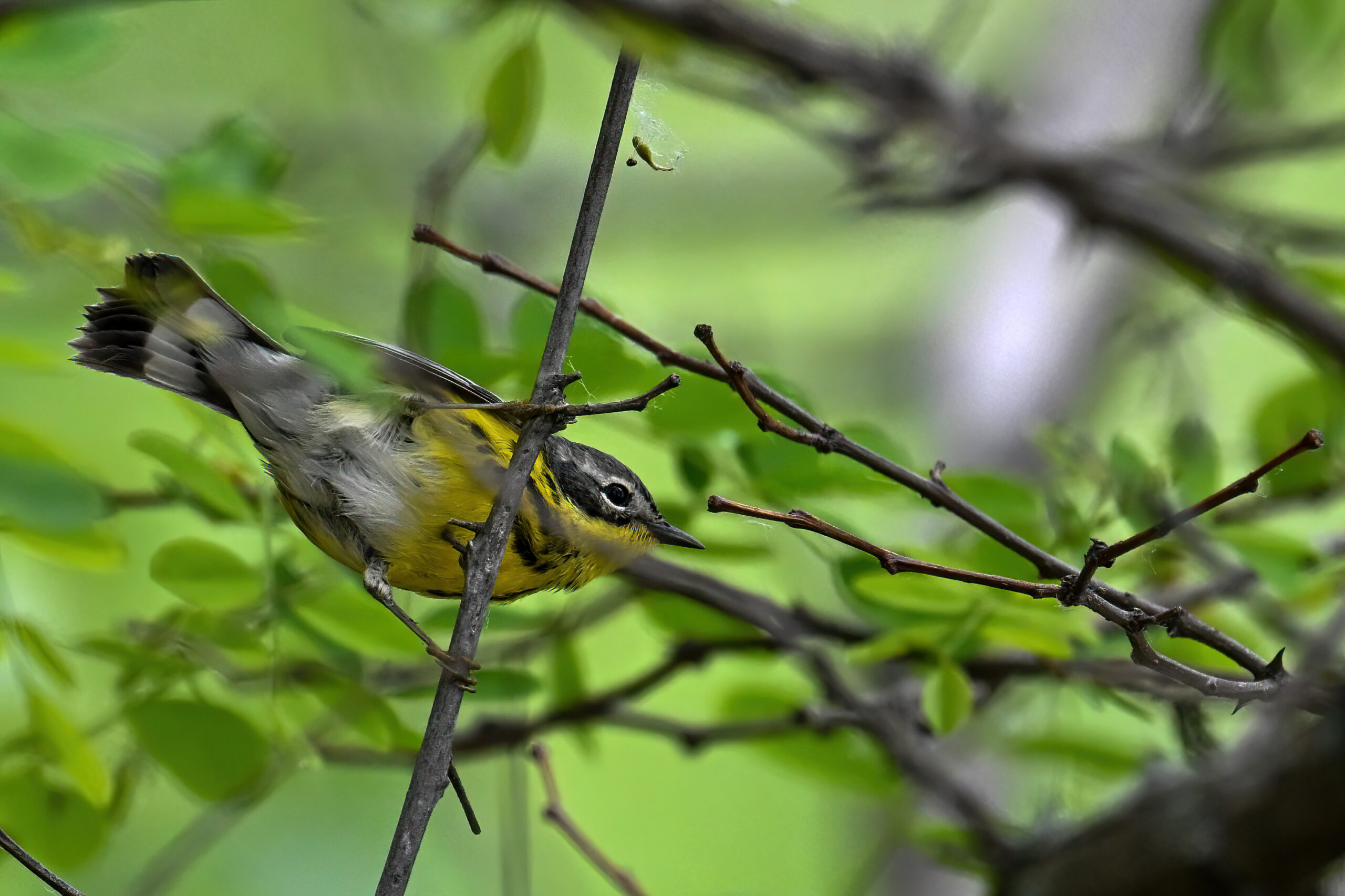
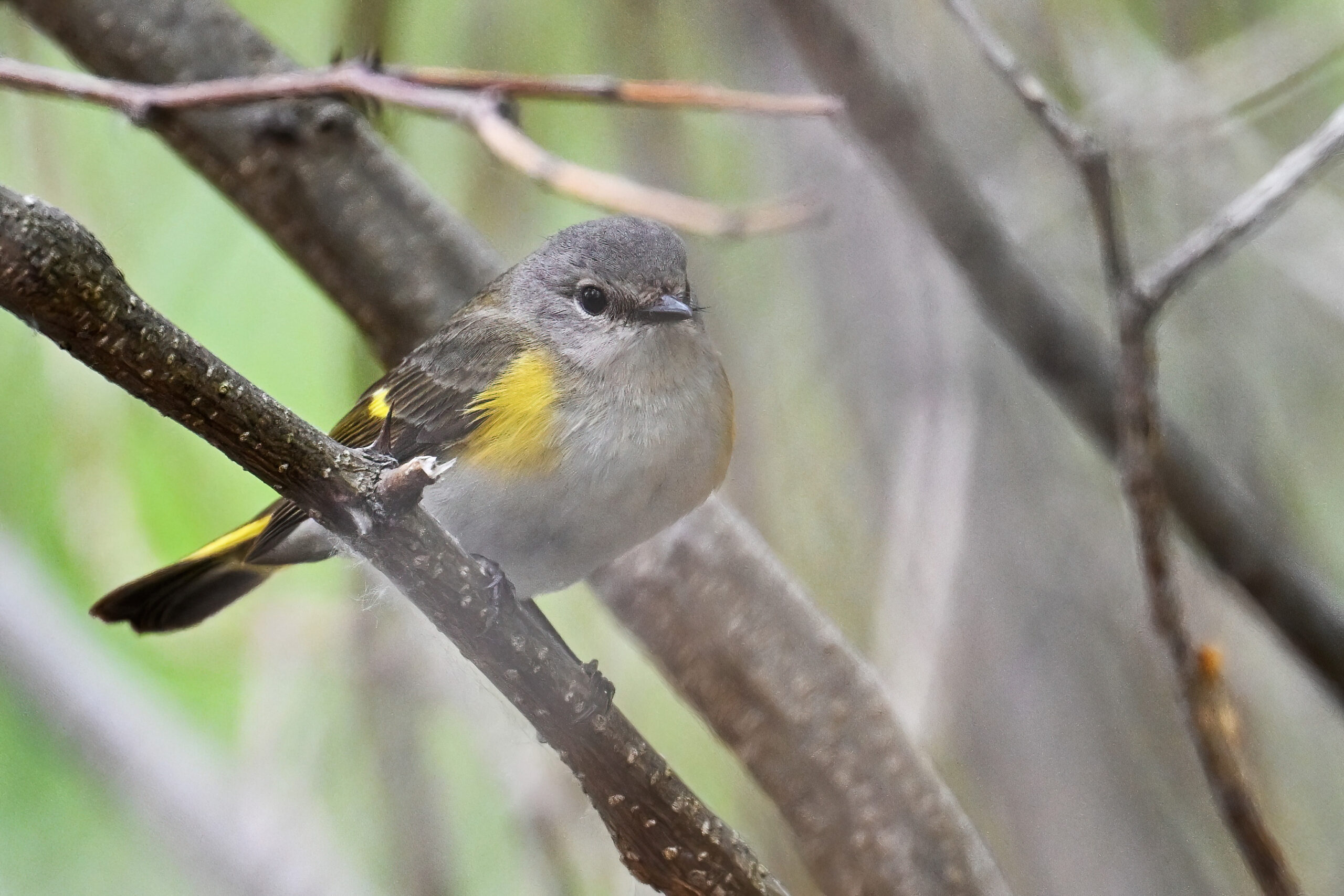
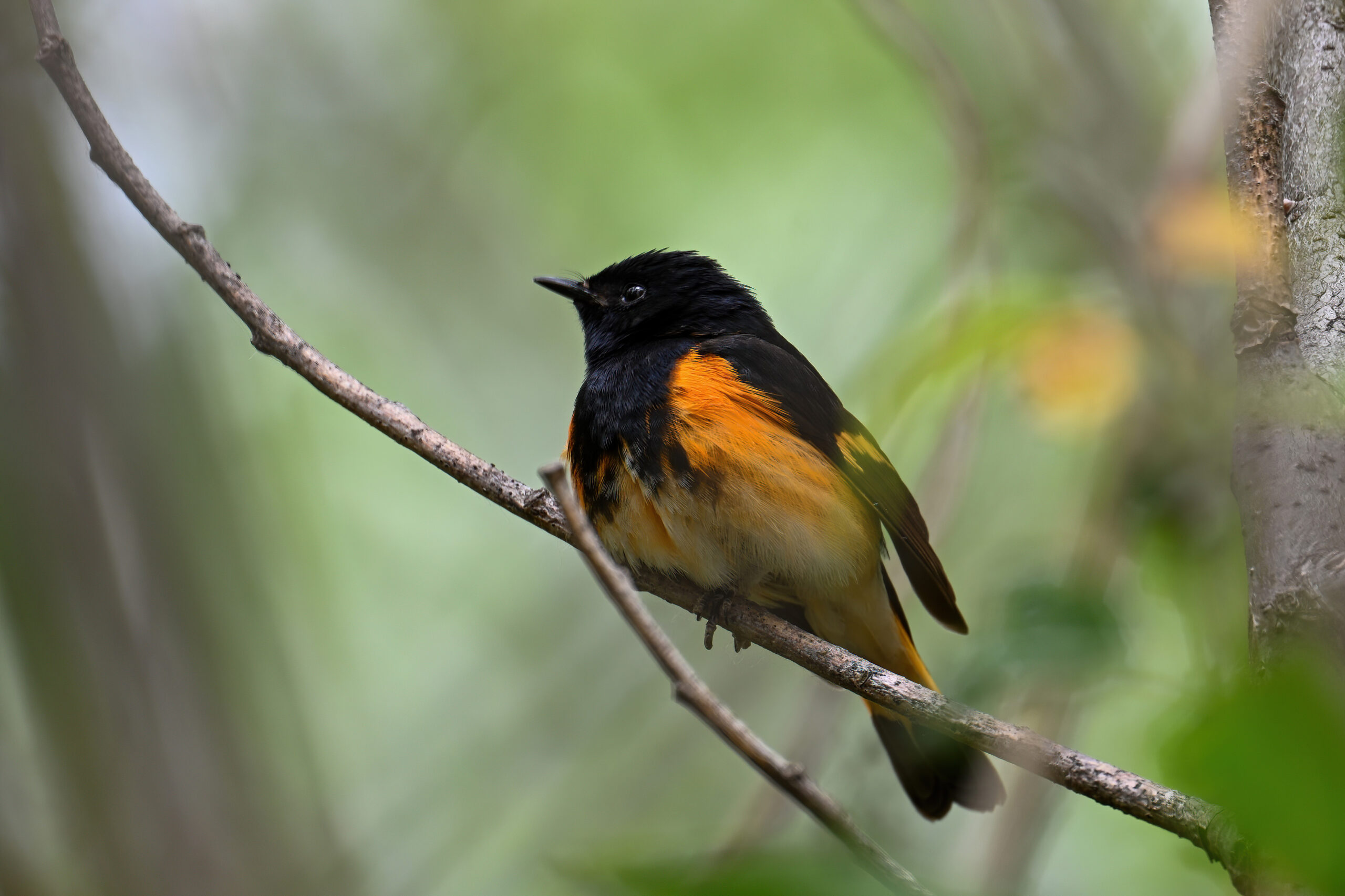
Magnolia Warbler IAnother shot of Bay-breasted WarblerMagnolia Warbler IIAmerican Redstart (m)Magnolia Warbler IIIBay-breasted Warbler (m)American Redstart (f)Another view of American Redstart (m)
Meanwhile, PM shorebird activity on the Point was fairly light. (Yellowlegs, Dunlin, etc.)
Coming up soon, lots of warblers on the Pine Tree Trail!
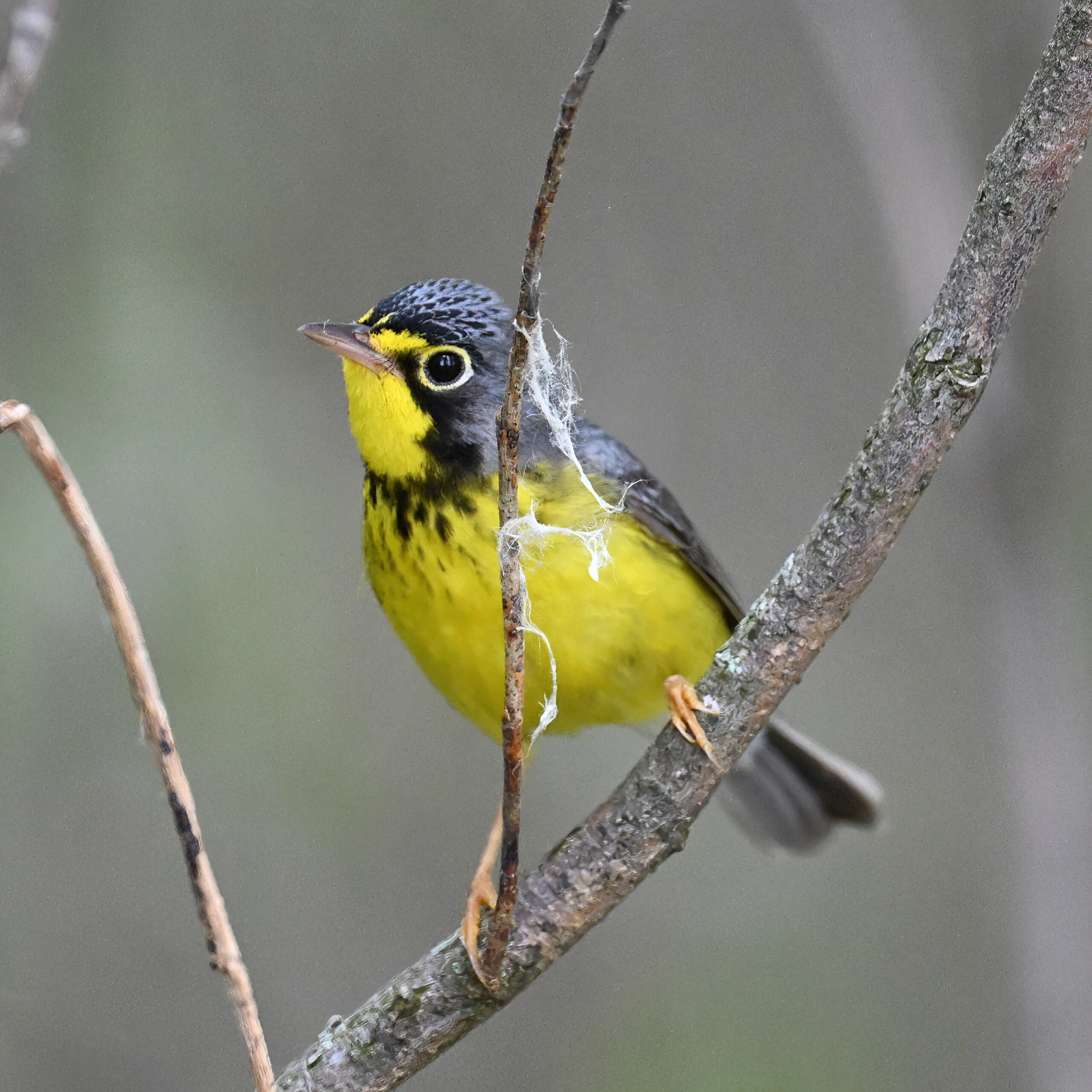
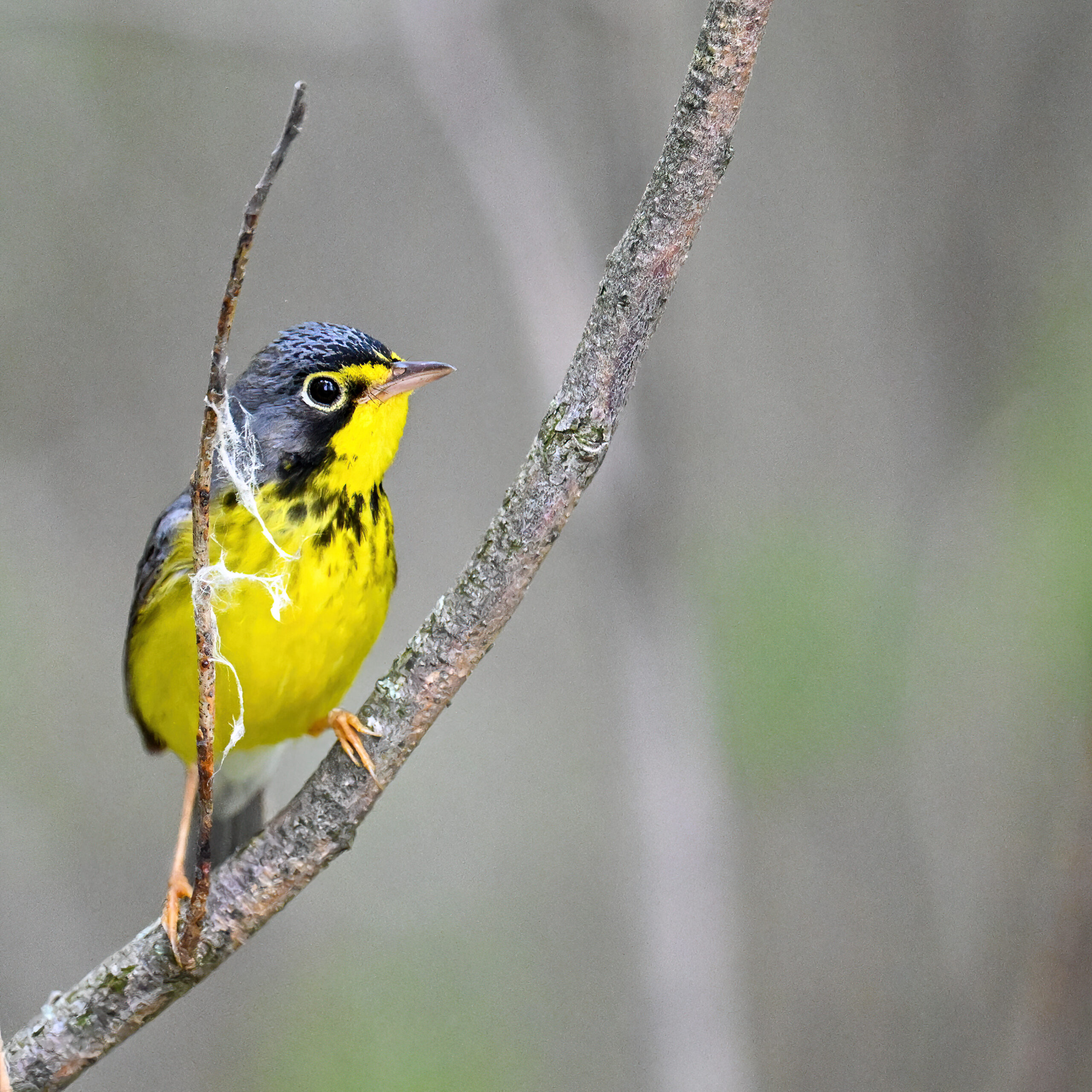
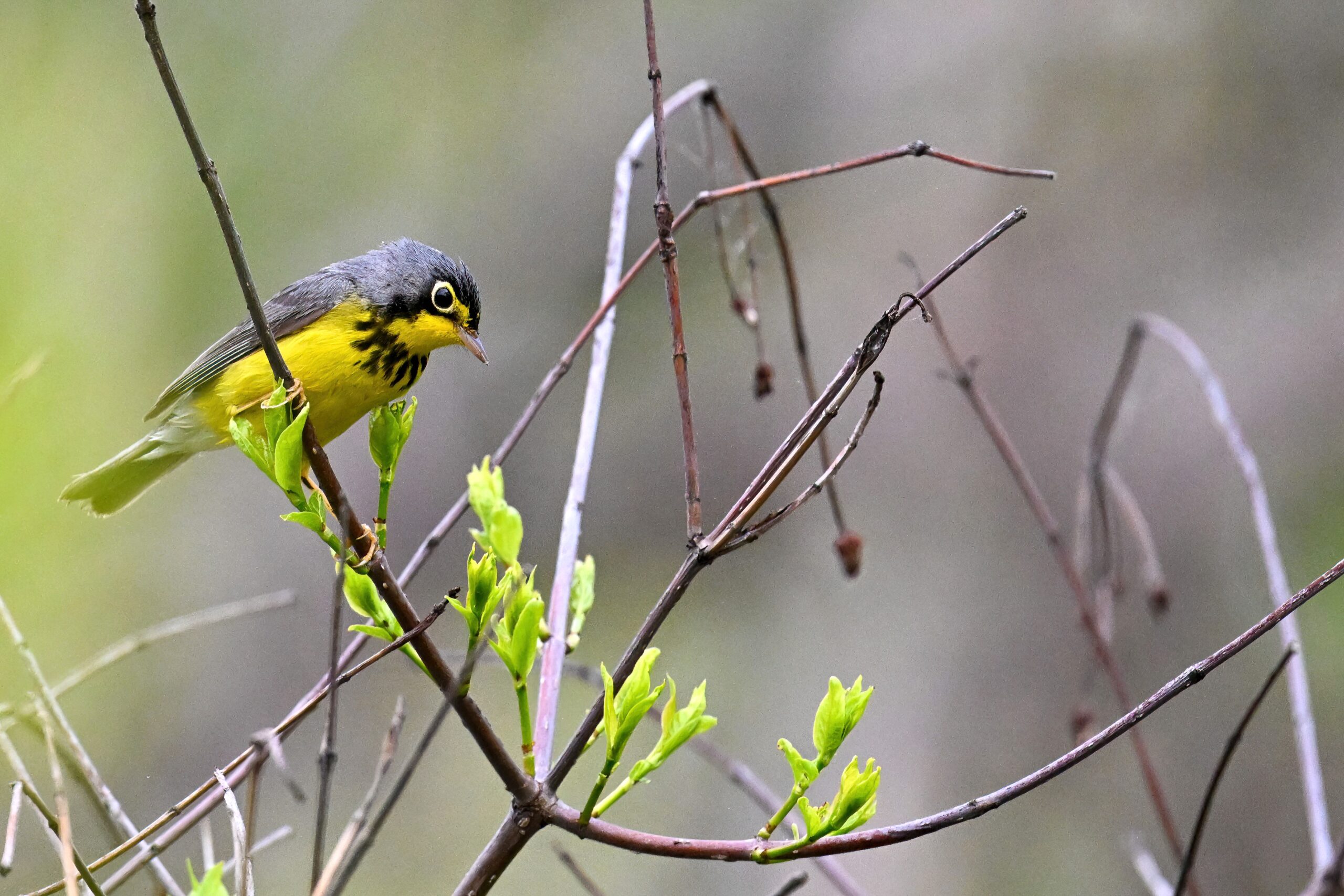
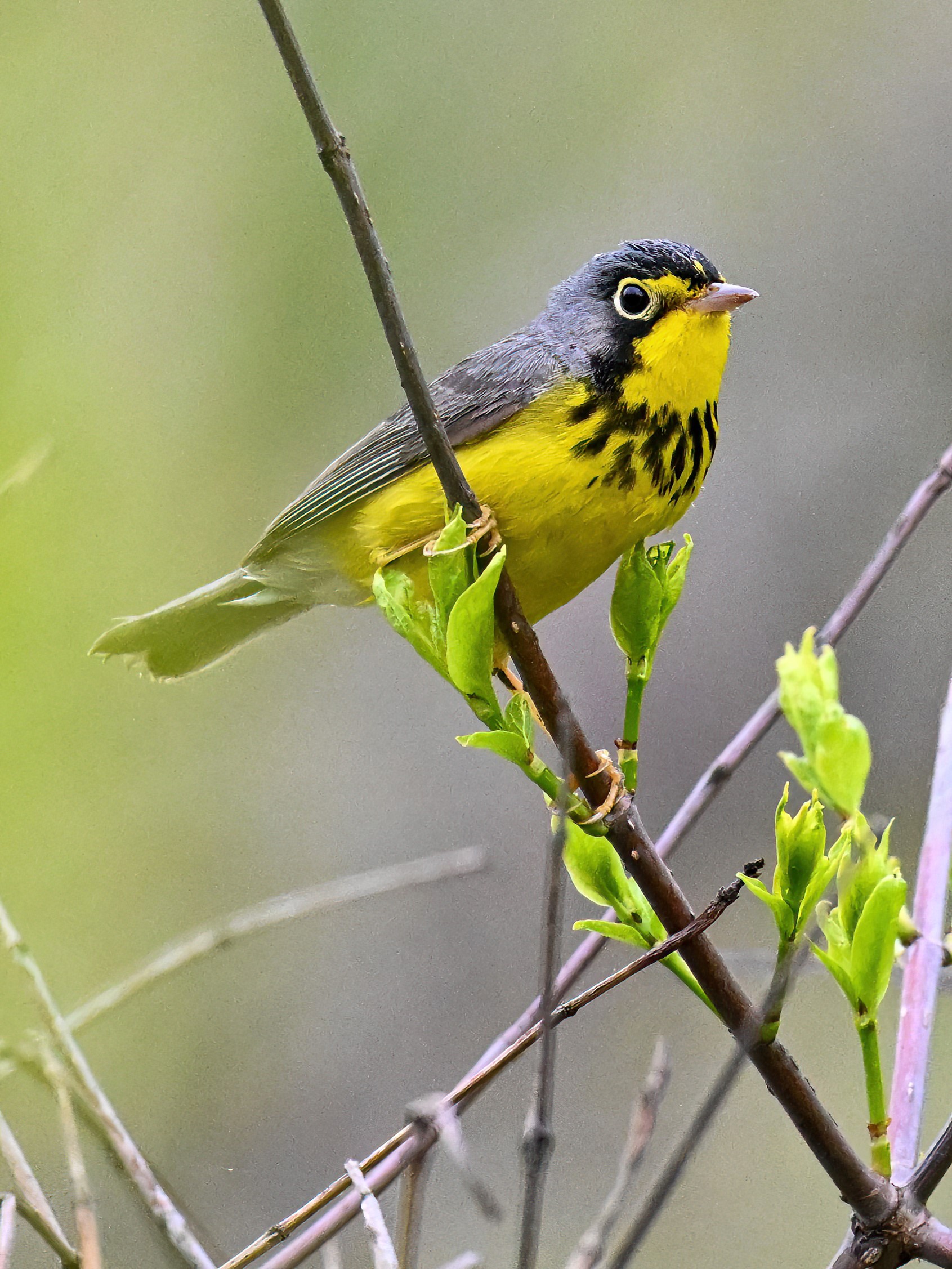
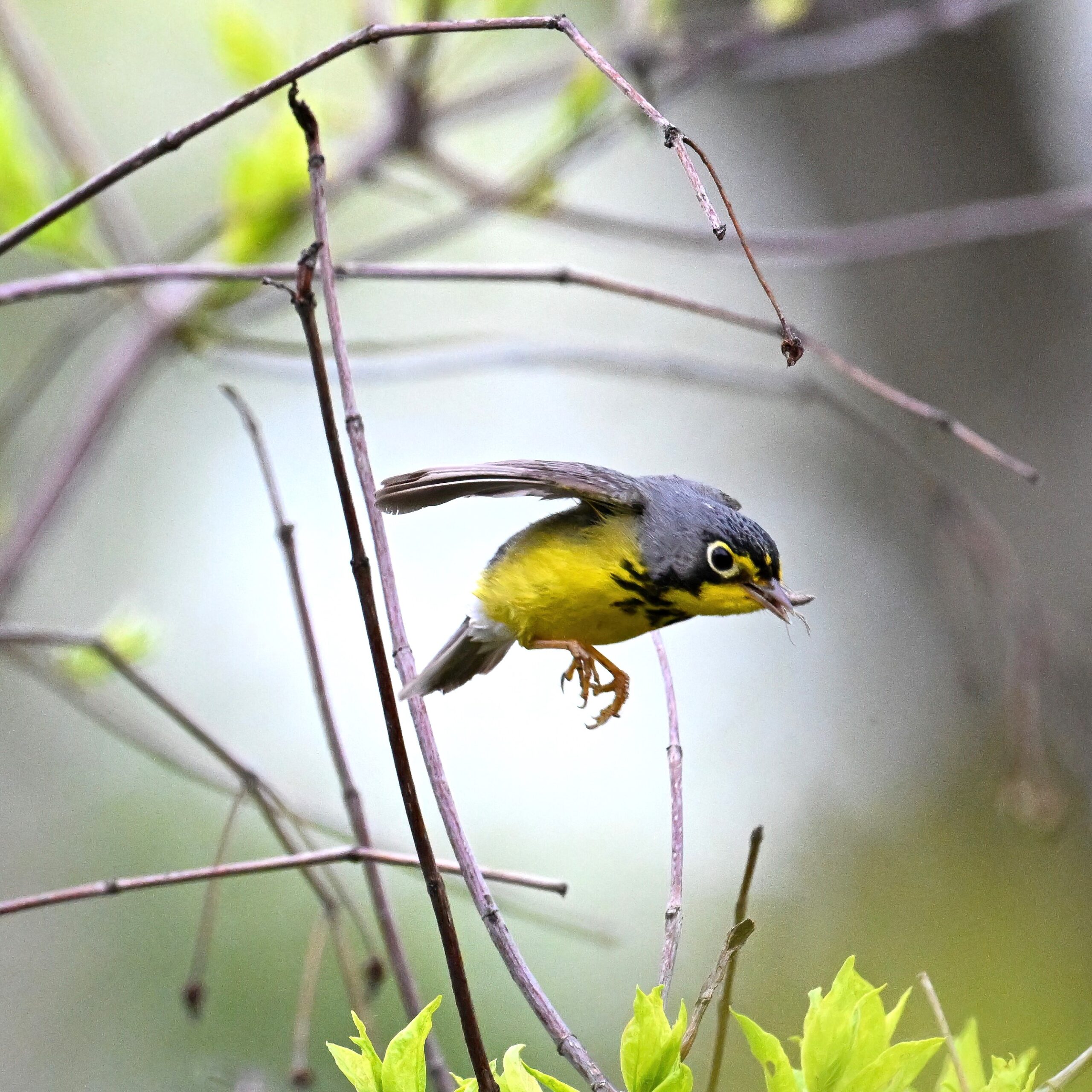
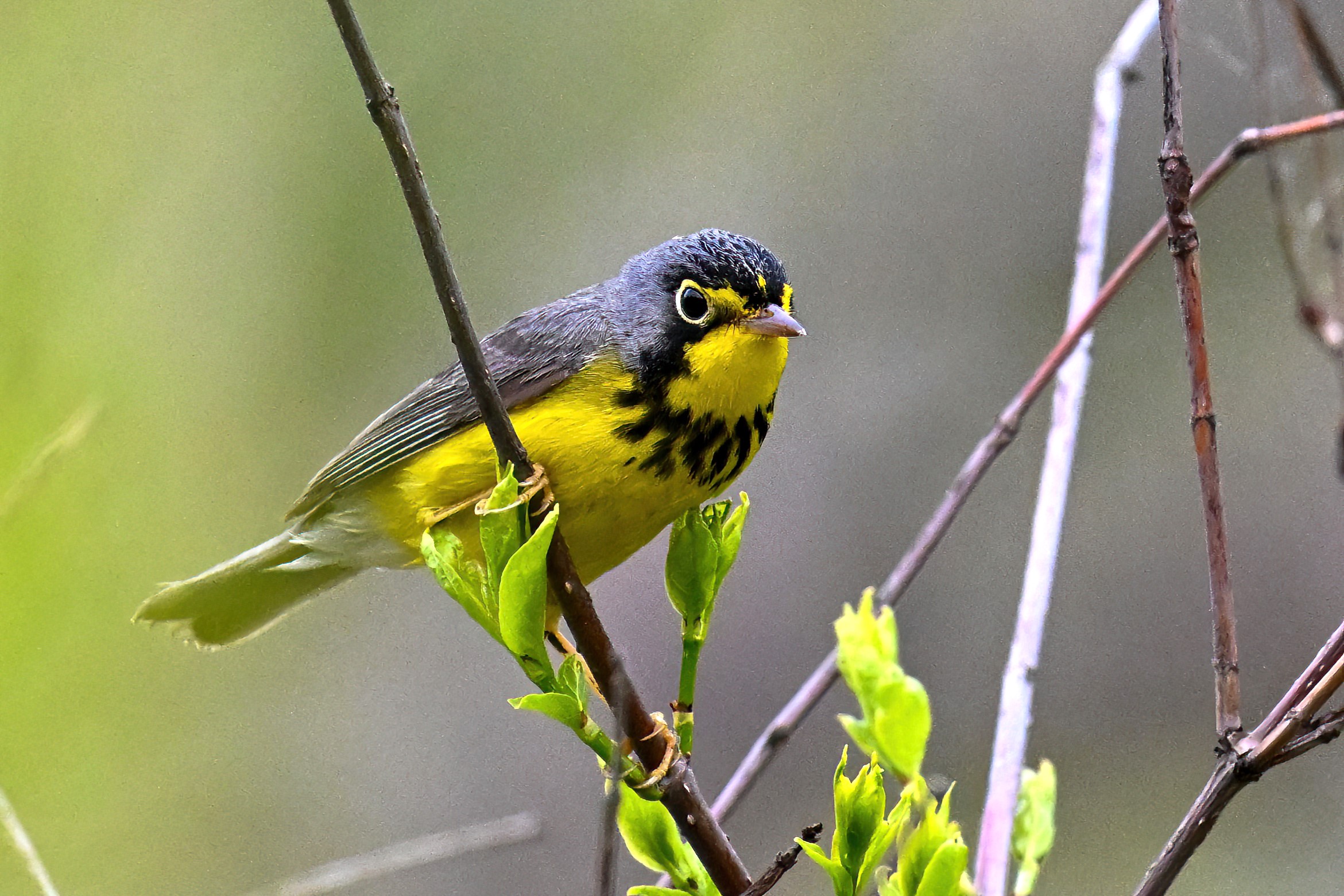
The amazing/beautiful Canada Warbler: uncommon enough at Presque Isle State Park for any sighting to be a special occasion. Throw in a few minutes of a mostly clear view at eye level the other morning along the Duck Pond Trail, and it’s warbler portraiture gold.
Canada Warbler (m)
Bonus action/fly-catching shot:
[Editor’s note: “Bird portraiture:” a bird perched on a branch, standing on ground, or floating in water, not engaged in any particular activity, where the anatomical, etc. features are clear for conveying a sense of species ID.]
So much bird excitement at Presque Isle State Park, running very late on today’s post. (“Spoiler alert:” Canada Warbler!) Ahead of the weekend, lots of ongoing American Robin, Common Grackle, Red-winged Blackbird, Gray Catbird!, Yellow Warbler, Song Sparrow, etc. activity. So much so, hard to keep an eye out for the less common offerings. Warbler activity overall remains good, but erratic. Same with shorebirds, e.g., Semipalmated, Piping, and Black-bellied Plover sighted at Gull Point recently, otherwise fairly quiet other than Spotted Sandpiper.
American Goldfinch (m), lovely wing feather view
More recent sightings forthcoming; here’s Leo’s Landing @ early morning (e.g., 7AM) on Global Big Day last Saturday.
GBHSong SparrowAmerican Goldfinch (m) front viewBaltimore Oriole (f or juvenile) w/ wild mustardMore GoldfinchGBH w/ backlit billYellow Warbler (m)Mallard (m)#more_finchMore GBHYellow, hello!PreeningMore WarblerMore GBH preeningVery yellowBald Eagles @ treeA yellow rear viewStill more GBHYellow Warbler duoEagles departingAnother GoldfinchMore Song SparrowGray Catbird!Baltimore Oriole (m) on branchThe Catbird! disapproves
“Bird of the outing,” beautiful male Blackpoll Warbler:
Recent photographs from Presque Isle-adjacent Scott Park in Millcreek Twp (“Gateway to Presque Isle”), right around sunset:
Cedar WaxwingRuby-throated Hummingbird (m)Waxwing IIGray Catbird!Waxwing IIIAnother view of Ruby-throated HummingbirdWaxwing IV
This next/lengthy sequence captures (as best possible for still photos) a rather amazing behavior – three Cedar Waxwing in a tree, passing a small piece of vegetative matter (seed pod?) back and forth for at least 5 minutes:
Per Internet sources, this is probably social behavior, e.g., passing food between birds as a social activity or so each bird has a chance to eat. (Other option is mating behavior, which doesn’t seem applicable here.) Very cool to see!
Red-bellied WoodpeckerAmerican Redstart (m)The red belly
Finally, it’s BirdingPI.com’s consensus staff favourite yearly post, Canada Goose babies! Yay! By the road at Sidewalk Trail east trailhead (by Misery Bay), Presque Isle State Park, last Saturday afternoon on Global Big Day, in light rain.
Very unusually, this brood consisted of at least 16 goslings. That’s a lot of baby geese! Typical numbers are 5-10, but occasionally possible for two broods to merge, which is probably what happened here.
It’s been a good year for Warbling Vireo in Erie County, PA, both in terms of frequency & “occasional sightings that aren’t way up in a tree.” These of the latter, on Global Big Day, in the morning at Leo’s Landing @ Presque Isle State Park:
Still recovering from Global Big Day weekend, so it’s back to the previous weekend with shots from a hike out to Gull Point @ Presque Isle State Park.
KIF
Mostly overcast = photography/exposure conditions not great. Nevertheless, fun to see this Eastern Kingbird in action:
Twisting upside down to grab a bug mid-airLeast FlycatcherBlack-and-white Warbler
Following is a hoverfly (in genus Eristalis, exact species unknown) on what’s probably invasive Cypress Spurge (Euphorbia cyparissias), all over Presque Isle in sandy areas:
Red Admiral (Vanessa atalanta) on Cypress Spurge
Beautiful Dunlin @ outer Gull Point:
Probably Orange Sulphur butterfly (Colias eurytheme), on left, on Philadelphia Fleabane (Erigeron philadelphicus):
Barn Swallow trioMore butterflyBSIFMore Orange SulphurProbably Cabbage White butterfly (Pieris rapae)
‘Bird of the day’ (or any day) was a surprise early sighting of Whimbrel:
Whimbrel (r) w/ Canada Geese (l)Whimbrel in lagoon
According to the nice folks at eBird, this was the earliest recorded sighting of Whimbrel at this location (or maybe Erie Co. generally) by at least a couple weeks.
Whimbrel on rocky bay-side beachOIF
More Whimbrel:
Based on dark head colouration, this appears to be Semipalmated Plover:
Uncropped view from observation platformCropped view of Semipalmated Plover
Unfortunately, the Whimbrel left soon hereafter, heading out easterly over Lake Erie:
WIFDeparting Whimbrel
[Editor’s note: “KIF” = Killdeer in flight, “BSIF” = Barn Swallow in flight, “OIF” = Osprey in flight, “WIF” = Whimbrel in flight. Note to staff: please stop using “…IF” – thank you.]